👩🏽🎤
The Emoji
Woman Singer: Medium Skin Tone
U+1F469 U+1F3FD U+200D U+1F3A4 · :woman_singer_medium_skin_tone:
Trend 68
Meaning layers
- interpretation
- Used to express a diva moment, confidence, performing energy, or being in your main-character era. Also signals someone who is about to 'serve' or has big performer vibes.
- tiktok usage
- Dropped in captions when someone is performing, lip-syncing, or channeling their inner pop star. Common in 'main character' montage content.
- irony level
- 4 / 10
Platform meanings
- meaning
- Represents a performing energy, mic-drop moment, or pop star persona. Frequently used in lip-sync or dance content.
- trend usage
- Used in trending 'main character' content, music covers, and 'living my best life' montages.
- hashtags
- #maincharacter#singervibes#popstar#performancemode#divaenergy
- virality score
- 72 / 100
Cultural meanings
🇺🇸
Western / Gen-Z
Synonymous with 'diva energy' and main character moments; widely used by young creators to signal confidence and performing arts identity. Often paired with sparkle or microphone emojis.
🇵🇰
Pakistan & India
Used by aspiring singers, music students, and Bollywood/Lollywood fans to express passion for music and admire female playback singers or pop stars.
🌍
Middle East
Relatively neutral; used by music enthusiasts and fans of Arab female vocalists, though less common due to cultural nuances around women in public performance in some areas.
🌐
Global Neutral
Universally understood as a female singer or performer; used cross-culturally to represent music, artistry, and stage presence.
🇧🇩
Bangladesh
Used among younger music fans and aspiring artists to express love for singing or to celebrate local female vocalists in the growing pop scene.
🇱🇰
Sri Lanka
Associated with local female pop and baila artists; used by fans and performers alike to signal musical identity.
🇨🇳
China
Tied to female idol culture and the booming C-pop scene; used by fans of girl groups and talent show contestants on platforms like Weibo and Douyin.
🇯🇵
Japan
Strongly associated with J-pop idols and female performers; frequently used by idol fans and live music attendees to show support.
🇰🇷
South Korea
Deeply linked to K-pop culture; used by fans to celebrate female idols and soloists, and by trainees to signal their aspirations in the industry.
🇹🇼
Taiwan
Used in Mandopop fan communities to show appreciation for Taiwanese female artists and in karaoke-related social posts.
🇭🇰
Hong Kong
Associated with Cantopop divas and female performers; used by fans of classic and contemporary Hong Kong female artists.
🇵🇭
Philippines
Widely used given the country's strong singing culture; represents the beloved OPM (Original Pilipino Music) female artists and amateur singers on social platforms.
🇮🇩
Indonesia
Popular in music fan communities and among aspiring Indonesian female singers; used in posts celebrating local female pop and dangdut artists.
🇹🇭
Thailand
Used by fans of Thai female pop stars and in T-pop idol fan communities; also popular in school talent show or competition posts.
🇻🇳
Vietnam
Associated with V-pop female artists; used by fans and aspiring performers sharing cover videos or concert content.
🇲🇾
Malaysia
Used to celebrate local female artists in the Malaysian pop and indie scene; also appears in karaoke and talent competition contexts.
🇸🇦
Saudi Arabia
Increasingly used by younger generations as entertainment culture expands; associated with global pop stars and emerging local female artists in the post-Vision 2030 era.
🇦🇪
UAE
Used in cosmopolitan contexts to represent appreciation for both international and Arab female performers; common in entertainment and nightlife-adjacent content.
🇪🇬
Egypt
Tied to the rich Egyptian music tradition; used to honor classic and contemporary female Arabic vocalists and pop stars.
🇹🇷
Turkey
Used to celebrate Turkish pop divas and female musicians in a country with a vibrant pop music culture; common in fan accounts and concert posts.
🇮🇷
Iran
Used carefully given restrictions on female public performance; often deployed to show appreciation for pre-revolution female singers or diaspora artists in safe online spaces.
🇳🇬
Nigeria
Associated with Afrobeats and Nigerian pop female artists; used to hype female musicians in a thriving music industry with growing global reach.
🇿🇦
South Africa
Used to celebrate local female Afropop, kwaito, and amapiano artists; signals appreciation for the strong tradition of women in South African music.
🇬🇧
UK & Ireland
Used with pop and indie music culture; associated with British and Irish female artists and deployed in confident, sassier social media contexts.
🇫🇷
France
Linked to French chanson and modern French pop; used to celebrate female artists and in fashionable, artsy social content.
🇩🇪
Germany
Used by music fans and festival-goers to signal appreciation for female performers; appears in posts about live concerts and music productions.
🇪🇸
Spain & Italy
Associated with passionate musical traditions and Latin-influenced pop; used to celebrate flamboyant, powerful female performers and pop divas.
🇧🇷
Brazil
Tied to Brazilian pop, sertanejo, and axé music female stars; widely used with high energy to celebrate vocal powerhouses and confident performers.
🇲🇽
Mexico
Connected to Mexican pop, regional music, and Latin pop female icons; used with pride to celebrate artists and in expressive, high-energy social posts.
🌎
Latin America
Broadly used across Latin America to celebrate female pop, reggaeton, and Latin urban music artists; strong association with powerful, confident women in music.
🇦🇺
Australia & NZ
Used casually in music fan contexts and by aspiring performers; associated with pop and indie music scenes and confident, carefree social expression.
How its meaning shifted
- 2010
This specific emoji did not exist yet; general music emojis like musical notes were used to represent singers.
- 2015
Introduced around this era as part of Unicode's push for diverse and gender-specific emoji; initially used literally to represent female singers.
- 2020
Gained wider cultural use beyond literal meaning, adopted by Gen Z for 'main character' and 'diva energy' expressions, especially on TikTok and Instagram.
- 2026
Firmly established as a symbol of confident self-expression, empowerment, and artistic identity; used fluidly across platforms to signal bold, performative energy.
See it on every platform
Adjacent emojis
- Often confused with
- woman dancingnail polishperforming arts
- Can replace
- microphonemusical notesparkles
Share & embed
Frequently asked
01What does the 👩🏽🎤 Woman Singer: Medium Skin Tone emoji mean?
A woman with medium skin tone depicted as a singer or rock star, often shown with a microphone and stylish outfit.
02What does 👩🏽🎤 mean on TikTok?
Represents a performing energy, mic-drop moment, or pop star persona. Frequently used in lip-sync or dance content.
03What does 👩🏽🎤 mean on WhatsApp?
Signals that someone is feeling themselves, performing, or in a confident mood.
04What does 👩🏽🎤 mean in Gen-Z slang?
Used to express a diva moment, confidence, performing energy, or being in your main-character era. Also signals someone who is about to 'serve' or has big performer vibes.
05Is the 👩🏽🎤 emoji safe to use?
Represents female musical performers, artistic confidence, and creative expression in a positive, empowering way.
06What does 👩🏽🎤 mean in texting?
Evokes feelings of self-expression, empowerment, and artistic identity. Often associated with ambition and the desire to be seen and heard.
07What is the shortcode for 👩🏽🎤?
The shortcode for Woman Singer: Medium Skin Tone is :woman_singer_medium_skin_tone:
08What does 👩🏽🎤 mean in dating?
Can be used flirtatiously to say 'I have charisma and I know it' or to compliment someone's rockstar personality.
Safety & usage
- Safe meaning
- Represents female musical performers, artistic confidence, and creative expression in a positive, empowering way.
- Caution
- Rarely used toxically; could be used sarcastically to mock someone being dramatic or attention-seeking.
Generally very safe. In rare ironic or sarcastic contexts it may be used to belittle someone's perceived over-performance or attention-seeking behavior.
How it looks across platforms
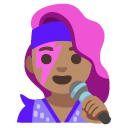


Appearance varies by platform and device. Google Noto, Twemoji, and OpenMoji are open-source.