🦸🏾♀️
The Emoji
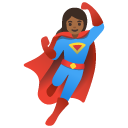
Woman Superhero: Medium-dark Skin Tone
U+1F9B8 U+1F3FE U+200D U+2640 U+FE0F · :woman_superhero_mediumdark_skin_tone:
Trend 74
Meaning layers
- interpretation
- Used to celebrate badass women who handle everything with grace and power — the 'she did that' energy. Often applied to any woman owning her moment, slaying professionally or personally.
- tiktok usage
- Appears in 'she said what she said' moments, women empowerment videos, and any clip where a woman does something impressively unbothered or powerful.
- irony level
- 2 / 10
Platform meanings
- meaning
- Symbol of a woman stepping into her power, doing the impossible, or being celebrated for resilience and excellence.
- trend usage
- Used in transformation videos, 'glow-up' content, empowerment duets, and videos celebrating Black women in particular.
- hashtags
- #BlackGirlMagic#WomenWhoLead#SheHeroed#MelaninMagic#SuperheroVibes
- virality score
- 72 / 100
Cultural meanings
🇺🇸
Western / Gen-Z
Widely used to celebrate Black girl magic and women of color stepping into their power; considered a staple in empowerment and identity expression. Skin tone specificity is respected and appreciated as intentional representation.
🇵🇰
Pakistan & India
Used primarily by urban, online-forward women to signal strength and independence; resonates in feminist spaces and social media circles celebrating women's achievements. The skin tone may be seen as a positive representation of South Asian complexions.
🌍
Middle East
Appreciated in progressive, online communities and among women pushing against traditional gender roles; occasionally used by female activists and young women in empowerment contexts. Less mainstream but growing in relevance.
🌐
Global Neutral
Universally read as a powerful woman doing heroic things; skin tone specificity is acknowledged and respected by most global audiences as a sign of inclusive representation.
🇧🇩
Bangladesh
Used among younger, digitally active women to express strength and ambition; resonates particularly in urban feminist communities and among women in professional sectors fighting for recognition.
🇱🇰
Sri Lanka
Appears in online spaces among young women expressing pride in independence and capability; the superhero imagery aligns with cultural admiration for strong maternal and community-leadership roles.
🇨🇳
China
Less common in mainstream platforms due to domestic emoji ecosystems (WeChat stickers dominate), but used on international apps to signal strong, capable women in professional or academic contexts.
🇯🇵
Japan
Used in empowerment contexts particularly on Twitter/X, celebrating strong female characters in anime and manga or real women breaking societal norms; skin tone diversity is noted as a Western-influenced inclusion element.
🇰🇷
South Korea
Used on platforms like Twitter and Instagram by younger generations to celebrate women's empowerment, feminism (especially in the context of the feminist movement growth since 2018), and strong female K-drama/K-pop icons.
🇹🇼
Taiwan
Used positively among progressive youth to represent female empowerment and strong women in media and real life; aligns with Taiwan's relatively progressive stance on gender equality.
🇭🇰
Hong Kong
Used in social media contexts to express admiration for resilient, strong women; resonates particularly post-2019 where imagery of strong individuals carries additional cultural weight.
🇵🇭
Philippines
Widely embraced to celebrate Filipino women known for their resilience and family leadership; the medium-dark skin tone resonates with Filipina pride movements celebrating morena beauty.
🇮🇩
Indonesia
Used in online feminist and empowerment spaces; the skin tone is positively received in a culture that is increasingly pushing back against colorism and celebrating darker skin tones.
🇹🇭
Thailand
Present in empowerment and feminist online communities; the skin tone element intersects with conversations about colorism in Thai beauty standards, sometimes used as a counter-statement.
🇻🇳
Vietnam
Found in younger feminist online spaces; used to celebrate strong, independent women and career-driven personalities, particularly as Vietnamese women increasingly enter leadership roles.
🇲🇾
Malaysia
Used in empowerment contexts across diverse ethnic communities; the skin tone is especially resonant among Malay and Indian Malaysian women celebrating their complexions.
🇸🇦
Saudi Arabia
Primarily used in private messaging and among young, digitally active women; signals admiration for strength and capability in contexts where women's empowerment is a sensitive but growing topic.
🇦🇪
UAE
More openly used due to cosmopolitan culture; embraced across expat and local communities to celebrate women's professional achievements and personal strength in a rapidly evolving social landscape.
🇪🇬
Egypt
Used among younger, urban Egyptian women on social media to signal strength, independence, and pride; resonates in feminist communities pushing for greater gender equality.
🇹🇷
Turkey
Common in feminist and women's rights spaces on Twitter and Instagram; used to celebrate strong women and signal solidarity, particularly in contexts of political and social resistance.
🇮🇷
Iran
Used among diaspora communities and within Iran on filtered internet access to signal women's strength; resonates deeply in the context of feminist movements and women's rights advocacy.
🇳🇬
Nigeria
Extremely popular — the medium-dark skin tone resonates deeply with Nigerian pride; used to celebrate Naija women, female excellence, and hustle culture with pride and joy.
🇿🇦
South Africa
Warmly embraced to celebrate Black women's strength and resilience; ties into Ubuntu community values and the broader cultural celebration of powerful women across South African communities.
🇬🇧
UK & Ireland
Used in multicultural urban communities to celebrate diversity and women of color; common in empowerment posts and among Black British communities expressing cultural pride.
🇫🇷
France
Used in progressive and Black French (Afro-French) communities; resonates with Afro-descendant women reclaiming visibility and strength in a culture historically resistant to race-based identity expression.
🇩🇪
Germany
Found in feminist and POC communities on German social media; used to celebrate diversity and women's strength, particularly among Afro-German and multicultural communities.
🇪🇸
Spain & Italy
Used in empowerment and diversity circles, particularly by women of African or Latin American descent; resonates with growing conversations about representation and colorism in Southern European media.
🇧🇷
Brazil
Strongly resonates in Afro-Brazilian communities celebrating Black women's power and beauty; tied to movements like 'Mulher Negra' empowerment and widely used with pride and cultural richness.
🇲🇽
Mexico
Used in feminist spaces and among women celebrating indigenous and mestiza strength; the skin tone connects with pride movements celebrating morena beauty and indigenous women's resilience.
🌎
Latin America
Broadly used across Latin America to celebrate women's strength, particularly by Afro-Latina and indigenous communities reclaiming heroic narratives and darker skin tone representation.
🇦🇺
Australia & NZ
Used in multicultural urban communities, particularly among Indigenous Australian, Pacific Islander, and Afro-Australian women; seen as positive representation in increasingly diversity-conscious spaces.
How its meaning shifted
- 2010
This emoji did not exist yet; the concept of diverse superhero emojis was not available and Unicode had minimal representation for women or skin tones in heroic roles.
- 2015
Still pre-release; superhero emojis were not yet in Unicode. Female empowerment online was building through hashtags like #BlackGirlMagic without this specific visual tool.
- 2020
Gained strong momentum during the Black Lives Matter movement resurgence and COVID-era celebrations of essential workers and strong women; became a fixture in diversity and empowerment content.
- 2026
Deeply embedded in empowerment culture, Black girl magic aesthetics, and representation conversations; used across professional, personal, and activist contexts with nuanced cultural awareness of skin tone specificity.
See it on every platform
Compare with
Adjacent emojis
Share & embed
Frequently asked
01What does the 🦸🏾♀️ Woman Superhero: Medium-dark Skin Tone emoji mean?
A woman superhero with medium-dark skin tone, depicted wearing a superhero costume with a cape, representing heroism, strength, and extraordinary abilities.
02What does 🦸🏾♀️ mean on TikTok?
Symbol of a woman stepping into her power, doing the impossible, or being celebrated for resilience and excellence.
03What does 🦸🏾♀️ mean on WhatsApp?
Sent to hype up a friend after they handled something difficult — 'you literally saved the day'
04What does 🦸🏾♀️ mean in Gen-Z slang?
Used to celebrate badass women who handle everything with grace and power — the 'she did that' energy. Often applied to any woman owning her moment, slaying professionally or personally.
05Is the 🦸🏾♀️ emoji safe to use?
Universally positive symbol of female strength, empowerment, and heroism with meaningful skin tone representation.
06What does 🦸🏾♀️ mean in texting?
Taps into the archetype of the protector and the self-sufficient heroine; psychologically resonates with feelings of competence, resilience, and identity affirmation, especially for women of color who historically lacked such representation.
07What is the shortcode for 🦸🏾♀️?
The shortcode for Woman Superhero: Medium-dark Skin Tone is :woman_superhero_mediumdark_skin_tone:
08What does 🦸🏾♀️ mean in dating?
Used to tell a romantic interest 'you're my hero' or to describe oneself as someone who doesn't need saving — projecting independence and confidence.
Safety & usage
- Safe meaning
- Universally positive symbol of female strength, empowerment, and heroism with meaningful skin tone representation.
- Caution
- Extremely rare — could theoretically be used sarcastically to mock someone for overextending themselves or ironically in 'strong independent woman' trope jokes.
No significant safety concerns. Skin tone emojis should be used thoughtfully and authentically — using a specific skin tone emoji for a complexion significantly different from one's own can occasionally be perceived as tone-deaf in highly sensitive communities.
How it looks across platforms
Appearance varies by platform and device. Google Noto, Twemoji, and OpenMoji are open-source.