👢
The Emoji
Woman’s Boot
U+1F462 · :womans_boot:
Trend 58
Meaning layers
- interpretation
- Used to signal confidence, a baddie aesthetic, or someone who is 'that girl.' Also used to describe someone stepping on others metaphorically — as in dominance or power moves.
- tiktok usage
- Appears in outfit checks, GRWM videos, fall/winter fashion content, and 'main character energy' posts. Sometimes used in the phrase 'she boots' as slang for someone acting fierce or fabulous.
- irony level
- 3 / 10
Platform meanings
- meaning
- Represents fall/winter fashion, cowboy aesthetic, and 'baddie' confidence. Used to signal fierce energy or a stylish outfit reveal.
- trend usage
- Heavily used during 'boot season' content (September–November), western/cowgirl trend videos, and 'that girl' aesthetic transitions.
- hashtags
- #BootSeason#CowgirlAesthetic#FallFashion#OOTD#SheBoots
- virality score
- 62 / 100
Cultural meanings
🇺🇸
Western / Gen-Z
Heavily used in fall and winter fashion content, cowgirl/western trends, and 'baddie' aesthetic culture. Signals confidence and style-savviness.
🇵🇰
Pakistan & India
Less culturally prominent; used mainly in urban fashion circles for shopping discussions or referencing Western-style footwear. Occasionally seen in fashion influencer content.
🌍
Middle East
Used in fashion-forward contexts in urban areas; women's boot fashion is popular in cooler months and the emoji appears in shopping and style discussions.
🌐
Global Neutral
Universally recognized as a boot/footwear emoji, used for fashion, shopping, and seasonal style content across cultures.
🇧🇩
Bangladesh
Primarily used in urban fashion contexts and among youth influenced by global trends; less common in everyday chat.
🇱🇰
Sri Lanka
Appears in fashion-related social media among younger demographics; generally understood as a Western footwear reference.
🇨🇳
China
Used in fashion content on Weibo and Xiaohongshu (RED); associated with autumn/winter fashion and Western style aesthetics popular among youth.
🇯🇵
Japan
Used in fashion contexts on Twitter/X and Instagram; associated with gyaru, dark fashion, and seasonal style culture. Boots are very popular in Japanese street fashion.
🇰🇷
South Korea
Frequently used in K-fashion content; boots are a staple of Korean fall fashion and the emoji appears heavily in style content and shopping hauls.
🇹🇼
Taiwan
Used in fashion and lifestyle content; associated with autumn styling and Western-influenced trends popular among younger Taiwanese users.
🇭🇰
Hong Kong
Used in urban fashion contexts; boots are a fall/winter staple and the emoji appears in shopping and style discussions.
🇵🇭
Philippines
Less common due to the tropical climate but appears in fashion influencer content and among users referencing Western aesthetics.
🇮🇩
Indonesia
Primarily used in fashion-forward urban circles; not everyday footwear due to the climate but seen in style content.
🇹🇭
Thailand
Used in Bangkok fashion circles and among influencers; represents a Western/modern fashion aesthetic.
🇻🇳
Vietnam
Seen in fashion content among urban youth; boots are associated with modernity and Western-influenced style.
🇲🇾
Malaysia
Used in fashion contexts; more common in cooler highland areas and among fashion-forward urban users.
🇸🇦
Saudi Arabia
Used among fashion-conscious women in private and online contexts; boots are popular as part of modest yet stylish winter wear.
🇦🇪
UAE
Common in Dubai and Abu Dhabi fashion communities; associated with luxury shopping and winter fashion events.
🇪🇬
Egypt
Used in fashion discussions during cooler months; associated with stylish Western footwear and modern fashion culture.
🇹🇷
Turkey
Boots are a very popular footwear choice in Turkey's cooler climate; this emoji is commonly used in fashion, shopping, and style content.
🇮🇷
Iran
Used in fashion discussions among younger users on Instagram and Telegram; boots are a common choice for cooler months.
🇳🇬
Nigeria
Used in Lagos fashion circles and among influencers; associated with Afrobeats style moments and Western fashion crossover.
🇿🇦
South Africa
Used in fashion content; associated with Western-style footwear and is popular in Cape Town and Johannesburg style communities.
🇬🇧
UK & Ireland
Very commonly used — boots are a staple of British and Irish fashion year-round. Frequently appears in fashion hauls, ASOS posts, and autumnal content.
🇫🇷
France
Used in Parisian fashion contexts; associated with chic autumn/winter style and the classic French wardrobe.
🇩🇪
Germany
Used in fashion and outdoor lifestyle content; Germany's cooler climate makes boots a practical staple, and the emoji reflects both fashion and function.
🇪🇸
Spain & Italy
Used in fashion-forward content, particularly fall/winter styling. Italy's strong leather boot culture makes this emoji especially resonant.
🇧🇷
Brazil
Less climate-appropriate but used in fashion content, particularly in the south during cooler months and in urban style discussions.
🇲🇽
Mexico
Associated with both Western cowboy culture (botas vaqueras) and modern fashion; used in style content and regional cultural pride.
🌎
Latin America
Widely understood; in Andean and southern regions, boots have practical and cultural significance. Also used in urban fashion contexts across Latin America.
🇦🇺
Australia & NZ
Used in fashion content, particularly during the autumn/winter months; associated with both practical outdoor wear and stylish urban fashion.
How its meaning shifted
- 2010
Primarily used at face value as a footwear emoji in early smartphone messaging. Very literal — 'I bought new boots 👢'
- 2015
Began appearing in fashion-focused social media posts and online shopping contexts. Instagram popularized its use in OOTDs and fall content.
- 2020
Expanded into aesthetic culture — dark academia, cottagecore, and western aesthetics drove significant use. The baddie culture also adopted it for confidence signaling.
- 2026
Now a core emoji in the western/cowgirl revival trend (Beyoncé effect), 'that girl' aesthetics, and fall content. Also used in 'she boots' slang and as a shorthand for fierce, unbothered energy.
See it on every platform
Compare with
Emoji combinations
Adjacent emojis
- Opposite
- flip flopsbare feetsnowflake
- Often confused with
- mans shoehigh heeled shoecowboy hat face
- Can replace
- high heeled shoemans shoeshopping bags
Share & embed
Frequently asked
01What does the 👢 Woman’s Boot emoji mean?
A tall boot typically worn by women, shown in brown or black leather with a heel, representing footwear, fashion, and style.
02What does 👢 mean on TikTok?
Represents fall/winter fashion, cowboy aesthetic, and 'baddie' confidence. Used to signal fierce energy or a stylish outfit reveal.
03What does 👢 mean on WhatsApp?
Casually used when discussing shopping for boots, outfit planning, or complimenting someone's footwear in a chat.
04What does 👢 mean in Gen-Z slang?
Used to signal confidence, a baddie aesthetic, or someone who is 'that girl.' Also used to describe someone stepping on others metaphorically — as in dominance or power moves.
05Is the 👢 emoji safe to use?
A fashion and footwear emoji used for discussing boots, shopping, fall/winter style, and personal aesthetics.
06What does 👢 mean in texting?
Footwear has long been tied to identity and self-expression. Boots in particular carry cultural associations with strength, independence, and assertiveness, making this emoji an emblem of personal power and fashion confidence.
07What is the shortcode for 👢?
The shortcode for Woman’s Boot is :womans_boot:
08What does 👢 mean in dating?
Can be used flirtatiously to compliment someone's style or legs, or to hint at a dominant/bold personality. 'She came in with the 👢' implies someone who owns the room.
Safety & usage
- Safe meaning
- A fashion and footwear emoji used for discussing boots, shopping, fall/winter style, and personal aesthetics.
- Caution
- Rarely used toxically; occasionally used metaphorically to imply 'stepping on' or dominating someone, but this is mild and usually not harmful.
No significant safety concerns. In very rare contexts, could be part of fetish-coded content (boot fetish), but this is uncommon and highly contextual.
How it looks across platforms
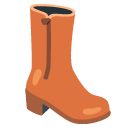


Appearance varies by platform and device. Google Noto, Twemoji, and OpenMoji are open-source.