👩🏿🤝👩🏽
The Emoji
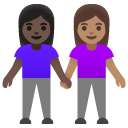
Women Holding Hands: Dark Skin Tone, Medium Skin Tone
U+1F469 U+1F3FF U+200D U+1F91D U+200D U+1F469 U+1F3FD · :women_holding_hands_dark_skin_tone_medium_skin_tone:
Trend 65
Meaning layers
- interpretation
- Used to express female friendship, sisterhood, WLW (women loving women) relationships, or solidarity between women of different backgrounds. Often used to celebrate diverse friendships or queer relationships.
- tiktok usage
- Appears in videos celebrating diverse female friendships, WLW content, BFF duos, and intersectional feminist posts. Frequently used in 'day in my life' content with a bestie.
- irony level
- 2 / 10
Platform meanings
- meaning
- Represents female friendship, WLW relationships, and diverse sisterhood in short-form video content.
- trend usage
- Frequently used in 'bestie' duets, WLW storytime videos, diversity celebration challenges, and intersectional feminist content.
- hashtags
- #girlsupportgirls#wlw#diversefriends#sisterhood#inclusivity
- virality score
- 72 / 100
Cultural meanings
🇺🇸
Western / Gen-Z
Widely recognized as both a WLW relationship symbol and a diverse female friendship icon; heavily used in queer and feminist online spaces without much stigma.
🇵🇰
Pakistan & India
Interpreted primarily as two female friends or sisters; the romantic WLW connotation is less recognized and may be considered taboo in conservative contexts, while younger urban users understand the queer meaning.
🌍
Middle East
Generally read as a symbol of female friendship or family bonds; the romantic interpretation is largely absent or avoided due to cultural and legal attitudes toward same-sex relationships.
🌐
Global Neutral
Universally understood as representing two women with different skin tones in a close relationship, whether friendly or romantic, emphasizing diversity and female connection.
🇧🇩
Bangladesh
Interpreted as two female friends of different backgrounds; the diverse skin-tone pairing may be noted positively as a representation of cross-cultural friendship, with romantic connotation largely unrecognized.
🇱🇰
Sri Lanka
Seen as a symbol of female friendship and sisterhood; diversity aspect is positively received in cosmopolitan areas, while LGBTQ+ context is not widely acknowledged.
🇨🇳
China
Read as two women who are close friends (闺蜜); the romantic WLW reading exists in progressive youth circles but is less mainstream, and the skin tone diversity is an interesting novelty.
🇯🇵
Japan
Associated with female friendship (yuri culture) and may be interpreted in both platonic and romantic girl-love (GL) contexts by younger users familiar with manga and anime tropes.
🇰🇷
South Korea
Used in female friendship contexts and increasingly recognized in WLW spaces among younger Koreans; the skin tone diversity adds a multicultural dimension uncommon in homogeneous cultural contexts.
🇹🇼
Taiwan
Recognized as both a female friendship and WLW couple symbol in one of Asia's most LGBTQ+-progressive countries; the diverse skin tones are seen as a positive representation of inclusivity.
🇭🇰
Hong Kong
Understood as female friendship or WLW partnership among progressive youth; the interracial skin tone pairing resonates in the cosmopolitan context of the city.
🇵🇭
Philippines
Generally interpreted as close female friends or 'besties'; WLW connotation is understood in LGBTQ+ circles, and the diverse skin tones reflect the multicultural reality of Filipino society.
🇮🇩
Indonesia
Primarily seen as female friendship; the romantic WLW interpretation is sensitive given predominant religious values, though younger digital-native users in urban areas understand the queer context.
🇹🇭
Thailand
Embraced in both friendship and WLW romantic contexts, given Thailand's relatively open LGBTQ+ culture; the skin tone diversity is appreciated in a country with diverse ethnic communities.
🇻🇳
Vietnam
Mainly read as female friendship or sisterhood; WLW romantic context is emerging among younger Vietnamese users influenced by global social media but remains niche.
🇲🇾
Malaysia
Interpreted as platonic female friendship in mainstream usage; the romantic meaning is sensitive in a context where LGBTQ+ expression is legally and culturally restricted.
🇸🇦
Saudi Arabia
Understood as female friendship or family bond; the WLW romantic connotation is not acknowledged in public discourse, and its use in public contexts is confined to the platonic meaning.
🇦🇪
UAE
Seen as female friendship, particularly between women of different nationalities, reflecting the multicultural expatriate context; WLW meaning is private and not publicly expressed.
🇪🇬
Egypt
Read as female friendship or sisterhood, with the cross-skin-tone aspect potentially representing cross-cultural bonds; romantic interpretation remains taboo culturally.
🇹🇷
Turkey
Interpreted as close female friendship among most users; younger progressive users in urban areas may recognize the WLW connotation, while broader society focuses on the friendship meaning.
🇮🇷
Iran
Seen as female friendship or family solidarity; due to strict social norms, the WLW meaning is not publicly associated with this emoji, though underground LGBTQ+ communities understand it.
🇳🇬
Nigeria
Primarily read as female friendship or sisterhood; the diverse skin tones are especially meaningful in a country with varied ethnic groups, though WLW romantic context is sensitive.
🇿🇦
South Africa
Given South Africa's relatively progressive constitution, recognized in both friendship and WLW contexts; the diverse skin tones carry additional resonance in a post-apartheid society.
🇬🇧
UK & Ireland
Widely understood in both female friendship and WLW romantic contexts; the diverse skin-tone combination is celebrated in multicultural British and Irish society.
🇫🇷
France
Interpreted as female friendship or WLW couple; French users appreciate the diversity aspect in a country with strong republican values of equality and an increasingly visible LGBTQ+ community.
🇩🇪
Germany
Recognized in both friendship and WLW couple contexts; the diversity of skin tones is positively noted in a country with active DEI discourse.
🇪🇸
Spain & Italy
Mostly used as a female friendship symbol; WLW context is understood in progressive circles, and the diverse skin tones reflect the growing multicultural reality of southern Europe.
🇧🇷
Brazil
Used enthusiastically in female friendship and WLW couple contexts given Brazil's vibrant LGBTQ+ culture; the interracial skin-tone pairing resonates deeply in one of the world's most racially diverse nations.
🇲🇽
Mexico
Interpreted as female friendship or sisterhood, with WLW meaning recognized in progressive urban communities; the cross-skin-tone element reflects Mexico's mixed-race heritage.
🌎
Latin America
Broadly read as female friendship or solidarity; WLW recognition varies by country, while the diverse skin tones are relatable across the racially diverse Latin American region.
🇦🇺
Australia & NZ
Recognized in both female friendship and WLW couple contexts; the diverse skin tones are positively embraced in multicultural Oceanian societies with active LGBTQ+ communities.
How its meaning shifted
- 2010
This specific emoji did not exist in 2010; general hand-holding or couple emojis were just beginning to emerge, and skin tone modifiers did not yet exist in the Unicode standard.
- 2015
Skin tone modifiers were introduced in Unicode 8.0 (2015), and same-sex couple emojis began appearing, but diverse cross-skin-tone multi-person emojis were not yet standardized.
- 2020
Gained significant usage following increased visibility of diversity and inclusion conversations and the Black Lives Matter movement; recognized as a symbol of cross-racial female solidarity and WLW representation.
- 2026
Mainstream across social platforms as a symbol of diverse female friendship and WLW relationships; used routinely in DEI content, queer spaces, and everyday female friendship expression without needing explanation.
See it on every platform
Compare with
Adjacent emojis
- Often confused with
- woman and man holding handspeople holding handshandshake
- Can replace
- two heartsrainbow flagred heart
Share & embed
Frequently asked
01What does the 👩🏿🤝👩🏽 Women Holding Hands: Dark Skin Tone, Medium Skin Tone emoji mean?
Two women holding hands, with the left woman having dark skin tone and the right woman having medium skin tone, representing female friendship, partnership, solidarity, or romantic relationship between women of different skin tones.
02What does 👩🏿🤝👩🏽 mean on TikTok?
Represents female friendship, WLW relationships, and diverse sisterhood in short-form video content.
03What does 👩🏿🤝👩🏽 mean on WhatsApp?
Sent between close female friends to express solidarity, affection, or to celebrate their friendship across cultural or racial differences.
04What does 👩🏿🤝👩🏽 mean in Gen-Z slang?
Used to express female friendship, sisterhood, WLW (women loving women) relationships, or solidarity between women of different backgrounds. Often used to celebrate diverse friendships or queer relationships.
05Is the 👩🏿🤝👩🏽 emoji safe to use?
Represents female friendship, sisterhood, diverse female bonds, and WLW romantic relationships in a positive and affirming way.
06What does 👩🏿🤝👩🏽 mean in texting?
Evokes feelings of connection and safety. The cross-skin-tone pairing amplifies the emotional resonance of diversity and acceptance, touching on deep psychological needs for belonging and representation.
07What is the shortcode for 👩🏿🤝👩🏽?
The shortcode for Women Holding Hands: Dark Skin Tone, Medium Skin Tone is :women_holding_hands_dark_skin_tone_medium_skin_tone:
08What does 👩🏿🤝👩🏽 mean in dating?
Used by women to subtly signal interest in other women, or to indicate WLW identity in dating app bios and DMs. Can serve as a soft flirtation signal in queer spaces.
Safety & usage
- Safe meaning
- Represents female friendship, sisterhood, diverse female bonds, and WLW romantic relationships in a positive and affirming way.
- Caution
- Extremely rare toxic usage; could theoretically be used to mock diversity efforts or be deployed in fetishizing contexts, but this is uncommon.
Generally a safe and positive emoji. In conservative cultural contexts, the WLW implication may be considered inappropriate or offensive. Care should be taken when using it in professional or cross-cultural communications where LGBTQ+ expression is sensitive.
How it looks across platforms


Appearance varies by platform and device. Google Noto, Twemoji, and OpenMoji are open-source.