👩🏻🤝👩🏿
The Emoji
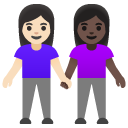
Women Holding Hands: Light Skin Tone, Dark Skin Tone
U+1F469 U+1F3FB U+200D U+1F91D U+200D U+1F469 U+1F3FF · :women_holding_hands_light_skin_tone_dark_skin_tone:
Trend 68
Meaning layers
- interpretation
- Used to celebrate female friendships, WLW (women loving women) relationships, and interracial solidarity. Often dropped in captions to signal a close bond, queer identity, or to highlight a 'bestie' relationship that transcends racial and social boundaries.
- tiktok usage
- Appears in 'bestie' duet videos, pride content, and interracial friendship montages. Often used in the caption of BFF content or queer couple reveals.
- irony level
- 2 / 10
Platform meanings
- meaning
- Represents female best friends, WLW couples, and interracial solidarity in videos and captions.
- trend usage
- Used in pride content, 'meet my best friend' videos, interracial friendship day posts, and queer couple storytimes.
- hashtags
- #WLW#BestieVibes#InterracialFriendship#PrideMonth#GirlsWhoLoveGirls
- virality score
- 72 / 100
Cultural meanings
🇺🇸
Western / Gen-Z
Widely embraced as a symbol of WLW relationships and diverse female friendships, especially in progressive and LGBTQ+ circles. Frequently used on social media to celebrate queer identity and multicultural bonds.
🇵🇰
Pakistan & India
Primarily interpreted as a symbol of deep female friendship rather than romantic love due to cultural norms around same-sex relationships. In urban, progressive spaces it may carry LGBTQ+ meaning, but cautiously.
🌍
Middle East
Generally interpreted as a friendship symbol; LGBTQ+ connotations are rarely acknowledged publicly due to social and legal constraints in many countries. Used mostly to celebrate close female bonds.
🌐
Global Neutral
Universally readable as two women sharing a connection, with the skin tone contrast emphasizing diversity and inclusivity regardless of cultural context.
🇧🇩
Bangladesh
Understood as a symbol of close female friendship; the interracial element may be noted as a curiosity. LGBTQ+ interpretations are largely absent from mainstream usage.
🇱🇰
Sri Lanka
Seen as a warm expression of female friendship and sisterhood, with the contrasting skin tones representing multicultural harmony. LGBTQ+ meaning is niche and not mainstream.
🇨🇳
China
Typically read as a friendship emoji between two women; the skin tone diversity is seen as a Western inclusivity symbol. LGBTQ+ usage is underground due to platform censorship.
🇯🇵
Japan
Interpreted as a close female friendship ('yuri' aesthetics may give it a romantic undertone in fan communities). Skin tone diversity is noted as a multicultural statement.
🇰🇷
South Korea
Used to represent close female friendships ('우정') and, in progressive online spaces, WLW relationships. The interracial aspect is appreciated as a diversity statement.
🇹🇼
Taiwan
Taiwan's LGBTQ+ friendly culture means this emoji is readily used for both WLW relationships and interracial friendships, celebrated openly across social media.
🇭🇰
Hong Kong
Used in both friendship and LGBTQ+ contexts, especially in progressive urban communities. The skin tone combination is seen as a positive representation of Hong Kong's multicultural population.
🇵🇭
Philippines
Primarily seen as a friendship emoji between two women; the interracial skin tones resonate in a multicultural society. In LGBTQ+ communities it carries romantic connotations.
🇮🇩
Indonesia
Most commonly interpreted as a symbol of female friendship and diversity. LGBTQ+ connotations are largely avoided in public digital spaces due to conservative social norms.
🇹🇭
Thailand
In a society with relatively visible LGBTQ+ acceptance, this emoji can represent both close female friendships and WLW relationships, with the skin tones celebrating diversity.
🇻🇳
Vietnam
Primarily used as a friendship symbol between women; the diversity aspect is appreciated. LGBTQ+ meaning is emerging in younger, urban digital communities.
🇲🇾
Malaysia
Generally used to represent female friendship and multicultural harmony, resonating in Malaysia's diverse society. LGBTQ+ usage is rare publicly due to legal and social constraints.
🇸🇦
Saudi Arabia
Understood strictly as a friendship or sisterhood symbol; any LGBTQ+ connotation would be taboo and is not part of mainstream usage.
🇦🇪
UAE
Used to represent female friendship and multicultural bonds, fitting the UAE's diverse population. LGBTQ+ interpretations exist within expat communities but are not public.
🇪🇬
Egypt
Interpreted as a symbol of female friendship and solidarity; the interracial element resonates in a context of pan-Arab and African identity. LGBTQ+ meaning is absent from mainstream usage.
🇹🇷
Turkey
Used to celebrate female friendships and diversity; in younger, progressive Turkish social media spaces it may carry subtle LGBTQ+ meaning but is not widely explicit.
🇮🇷
Iran
Understood as a symbol of female friendship; LGBTQ+ connotations are entirely absent from public usage due to severe legal restrictions.
🇳🇬
Nigeria
Primarily represents close female friendship and sisterhood. The interracial skin tone combination is noted as a Western-influenced diversity symbol. LGBTQ+ usage is very rare due to social and legal norms.
🇿🇦
South Africa
In South Africa's diverse society, this emoji resonates strongly as a symbol of interracial female friendship and solidarity. In urban LGBTQ+ communities it also carries WLW meaning.
🇬🇧
UK & Ireland
Widely used for both WLW relationships and interracial female friendships in progressive British and Irish culture. Frequently seen in Pride content and diversity campaigns.
🇫🇷
France
Used to celebrate female friendship, WLW love, and interracial bonds, reflecting France's multicultural urban identity and relatively open attitude toward LGBTQ+ representation.
🇩🇪
Germany
Embraced in LGBTQ+ and multicultural spaces as a symbol of inclusive female partnership. Used in Pride content, diversity posts, and friendship captions.
🇪🇸
Spain & Italy
Used in friendly and LGBTQ+ contexts to represent female bonds and diversity. Spain's progressive LGBTQ+ laws make WLW usage more open; Italy's usage leans more toward friendship.
🇧🇷
Brazil
In Brazil's vibrant LGBTQ+ and multicultural culture, this emoji represents both WLW love and interracial female friendship. Frequently used during Pride events and on social media.
🇲🇽
Mexico
Used to represent close female friendships and, in progressive communities, WLW relationships. The interracial skin tones reflect Mexico's multicultural identity.
🌎
Latin America
Across Latin America, primarily used for female friendship and solidarity. In more progressive countries and urban queer communities it carries WLW connotations.
🇦🇺
Australia & NZ
Widely used in LGBTQ+ positive Australian and New Zealand culture to represent WLW partnerships and diverse female friendships, especially during Pride events.
How its meaning shifted
- 2010
This specific multi-skin-tone variant did not exist in 2010; the basic holding hands emoji was only starting to emerge and was not yet available in most platforms.
- 2015
Multi-skin-tone emoji support was just being introduced; this combination was not yet a standard option and had minimal usage across platforms.
- 2020
Gained significant traction as platform support for skin tone modifier combinations improved, used actively during Pride Month and BLM solidarity moments to represent diverse female bonds.
- 2026
Established as a recognized symbol for WLW relationships, interracial female friendships, and diversity advocacy, with consistent usage across all major social media platforms, particularly during Pride and cultural solidarity events.
See it on every platform
Adjacent emojis
- Often confused with
- people holding handstwo women holding hands medium skin tonehandshake
- Can replace
- rainbow flagred hearttwo hearts
Share & embed
Frequently asked
01What does the 👩🏻🤝👩🏿 Women Holding Hands: Light Skin Tone, Dark Skin Tone emoji mean?
Two women holding hands, with the left figure having light skin tone and the right figure having dark skin tone, representing female friendship, partnership, solidarity, or romantic connection between women of different ethnicities.
02What does 👩🏻🤝👩🏿 mean on TikTok?
Represents female best friends, WLW couples, and interracial solidarity in videos and captions.
03What does 👩🏻🤝👩🏿 mean on WhatsApp?
Sent between close female friends to affirm their bond, especially in multicultural friend groups.
04What does 👩🏻🤝👩🏿 mean in Gen-Z slang?
Used to celebrate female friendships, WLW (women loving women) relationships, and interracial solidarity. Often dropped in captions to signal a close bond, queer identity, or to highlight a 'bestie' relationship that transcends racial and social boundaries.
05Is the 👩🏻🤝👩🏿 emoji safe to use?
A positive symbol of female friendship, WLW love, and interracial solidarity. Widely accepted in inclusive and progressive spaces.
06What does 👩🏻🤝👩🏿 mean in texting?
The pairing of contrasting skin tones in a holding-hands gesture psychologically signals intentional solidarity and the celebration of diversity, triggering feelings of warmth, belonging, and progressive affirmation in both the sender and receiver.
07What is the shortcode for 👩🏻🤝👩🏿?
The shortcode for Women Holding Hands: Light Skin Tone, Dark Skin Tone is :women_holding_hands_light_skin_tone_dark_skin_tone:
08What does 👩🏻🤝👩🏿 mean in dating?
Used between women to signal romantic interest or to subtly hint at a WLW crush; sending this to another woman can be a soft, low-risk way to signal queer attraction.
Safety & usage
- Safe meaning
- A positive symbol of female friendship, WLW love, and interracial solidarity. Widely accepted in inclusive and progressive spaces.
- Caution
- Rarely weaponized, but can be used mockingly in anti-LGBTQ+ or racist contexts to demean same-sex or interracial relationships.
In culturally conservative regions, using this emoji to signal LGBTQ+ identity could inadvertently out someone or attract negative attention. Context-awareness is advised.
How it looks across platforms


Appearance varies by platform and device. Google Noto, Twemoji, and OpenMoji are open-source.