👩🏻🤝👩🏾
The Emoji
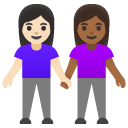
Women Holding Hands: Light Skin Tone, Medium-dark Skin Tone
U+1F469 U+1F3FB U+200D U+1F91D U+200D U+1F469 U+1F3FE · :women_holding_hands_light_skin_tone_mediumdark_skin_tone:
Trend 62
Meaning layers
- interpretation
- Used to represent BFF energy, female solidarity, sapphic relationships, or the iconic 'bestie' bond between women of different backgrounds. Often signals queer visibility and interracial friendship without needing words.
- tiktok usage
- Appears in videos celebrating female friendships, WLW (women loving women) content, diversity appreciation posts, and 'main character' duo aesthetics.
- irony level
- 2 / 10
Platform meanings
- meaning
- Represents female duo energy, WLW relationships, interracial friendships, or sapphic pride in short-form video captions and comments.
- trend usage
- Frequently used in 'bestie check' trends, POC and white ally solidarity content, and queer visibility challenges.
- hashtags
- #WLW#GirlsWhoLoveGirls#BestFriendGoals#DiversityAndInclusion#SapphicTikTok
- virality score
- 68 / 100
Cultural meanings
🇺🇸
Western / Gen-Z
Widely understood as a symbol of WLW relationships or diverse best-friend bonds, celebrated openly in Gen Z's inclusive social spaces.
🇵🇰
Pakistan & India
Generally interpreted as two female friends rather than a romantic couple; the mixed skin tones may represent cross-regional or cross-community friendship.
🌍
Middle East
Typically read as female friendship or sisterhood; romantic implications are largely avoided in public usage due to cultural and legal contexts.
🌐
Global Neutral
Universally understood as two women sharing a close bond, with the diverse skin tones adding an inclusive and multicultural dimension.
🇧🇩
Bangladesh
Primarily used to represent close female friendship or sisterly bonds; the skin tone diversity may symbolize urban multicultural connections.
🇱🇰
Sri Lanka
Used to express female friendship and solidarity; interracial connotation may resonate in cosmopolitan contexts but is less prominent.
🇨🇳
China
Interpreted mostly as close female friends or 'sisters' (姐妹); LGBTQ+ connotations are understated or avoided on Chinese platforms.
🇯🇵
Japan
Often used for female friendship or 'yuri' (百合) themes in online spaces; the skin tone diversity is noted but less culturally prominent.
🇰🇷
South Korea
Used among female friends to express closeness; in younger online spaces it may also carry subtle WLW or ally signaling.
🇹🇼
Taiwan
Used openly to represent both deep female friendships and WLW relationships, given Taiwan's relatively progressive LGBTQ+ environment.
🇭🇰
Hong Kong
Similar to Taiwan, used for both friendship and queer female relationships, with younger users comfortable with both interpretations.
🇵🇭
Philippines
Primarily represents female best friends or 'besties'; the mixed skin tones often celebrate the naturally diverse Filipino population.
🇮🇩
Indonesia
Generally interpreted as female friendship; romantic connotations are downplayed due to cultural and religious norms.
🇹🇭
Thailand
Used for female friendship and, in LGBTQ+-positive spaces, to represent female romantic partners, given Thailand's visible queer culture.
🇻🇳
Vietnam
Mainly used to show female camaraderie; skin tone diversity resonates in cities but the romantic WLW meaning is less commonly used.
🇲🇾
Malaysia
Mostly used for close female friendships; LGBTQ+ implications are rarely made explicit given the conservative cultural climate.
🇸🇦
Saudi Arabia
Used strictly to represent female friendship or sisterhood; any romantic connotation is culturally and legally inappropriate.
🇦🇪
UAE
Similar to Saudi Arabia, used for female friendship in public contexts; in private or expat communities, WLW meaning may be implied.
🇪🇬
Egypt
Represents female friendship and solidarity; LGBTQ+ associations are avoided publicly due to social and legal constraints.
🇹🇷
Turkey
Used for female friendship; in younger, progressive urban circles it may also signal LGBTQ+ solidarity or WLW appreciation.
🇮🇷
Iran
Strictly used to represent female friendship or sisterhood; any queer interpretation is suppressed due to legal context.
🇳🇬
Nigeria
Used to celebrate close female friendships; the diverse skin tones resonate in a context of varied skin tones across Nigerian communities.
🇿🇦
South Africa
Used for female friendship and, in inclusive communities, to represent WLW relationships, reflecting South Africa's constitutional LGBTQ+ protections.
🇬🇧
UK & Ireland
Widely used for both close female friendships and WLW relationships, with high visibility during Pride events and feminist movements.
🇫🇷
France
Used to represent female friendship and solidarity; in younger, progressive circles it also signals WLW relationships and LGBTQ+ pride.
🇩🇪
Germany
Used openly for female friendship and queer female relationships, with strong cultural acceptance in major urban centers.
🇪🇸
Spain & Italy
Represents female friendship warmly; in Spain especially, also commonly used to signal WLW relationships given a vibrant LGBTQ+ culture.
🇧🇷
Brazil
Used enthusiastically for female BFF bonds and WLW relationships, especially in online spaces where queer visibility is celebrated.
🇲🇽
Mexico
Used for female friendship and increasingly for WLW relationships in urban youth culture, though more conservative regions read it as platonic.
🌎
Latin America
Primarily represents female friendship; WLW usage is growing in progressive urban youth communities across Latin America.
🇦🇺
Australia & NZ
Used freely for both female friendship and WLW relationships, with strong LGBTQ+ acceptance making both interpretations comfortable.
How its meaning shifted
- 2010
Multi-skin-tone emoji sequences did not yet exist; basic hand-holding or friendship emojis were used without skin tone or gender specificity.
- 2015
Skin tone modifiers were introduced but gender-specific holding hands combinations were not yet available; users improvised with basic emojis.
- 2020
Emoji was available and used increasingly as WLW representation grew on social media, coinciding with rising visibility of LGBTQ+ content and diverse representation.
- 2026
Widely recognized and used as a symbol of both female friendship and WLW relationships, with strong interracial and inclusive connotations embedded in its standard usage.
See it on every platform
Compare with
Adjacent emojis
- Often confused with
- people holding handshandshakewomen holding hands medium skin tone
- Can replace
- two heartsrainbow flagred heart
Share & embed
Frequently asked
01What does the 👩🏻🤝👩🏾 Women Holding Hands: Light Skin Tone, Medium-dark Skin Tone emoji mean?
Two women holding hands, with the left woman having a light skin tone and the right woman having a medium-dark skin tone, representing female companionship, friendship, solidarity, or romantic partnership across different skin tones.
02What does 👩🏻🤝👩🏾 mean on TikTok?
Represents female duo energy, WLW relationships, interracial friendships, or sapphic pride in short-form video captions and comments.
03What does 👩🏻🤝👩🏾 mean on WhatsApp?
Sent between close female friends to express deep friendship, especially across cultural or ethnic differences.
04What does 👩🏻🤝👩🏾 mean in Gen-Z slang?
Used to represent BFF energy, female solidarity, sapphic relationships, or the iconic 'bestie' bond between women of different backgrounds. Often signals queer visibility and interracial friendship without needing words.
05Is the 👩🏻🤝👩🏾 emoji safe to use?
Represents female friendship, sisterhood, solidarity, and WLW romantic relationships in a warm, inclusive, and positive way.
06What does 👩🏻🤝👩🏾 mean in texting?
Holding hands is one of the most universally recognized gestures of emotional connection and trust. The dual skin tone adds a layer of intentional inclusivity, signaling that the bond transcends racial or cultural boundaries.
07What is the shortcode for 👩🏻🤝👩🏾?
The shortcode for Women Holding Hands: Light Skin Tone, Medium-dark Skin Tone is :women_holding_hands_light_skin_tone_mediumdark_skin_tone:
08What does 👩🏻🤝👩🏾 mean in dating?
Commonly used by women to signal interest in another woman, hint at sapphic attraction, or openly represent a WLW relationship without explicit labels.
Safety & usage
- Safe meaning
- Represents female friendship, sisterhood, solidarity, and WLW romantic relationships in a warm, inclusive, and positive way.
- Caution
- Extremely rare potential for misuse; could theoretically be used mockingly in anti-LGBTQ+ or racist contexts, but this is uncommon.
Generally very safe. In conservative cultural or religious contexts, the WLW interpretation may cause discomfort; users should be aware of their audience. No significant NSFW risk.
How it looks across platforms


Appearance varies by platform and device. Google Noto, Twemoji, and OpenMoji are open-source.