👩🏾🤝👩🏻
The Emoji
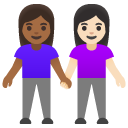
Women Holding Hands: Medium-dark Skin Tone, Light Skin Tone
U+1F469 U+1F3FE U+200D U+1F91D U+200D U+1F469 U+1F3FB · :women_holding_hands_mediumdark_skin_tone_light_skin_tone:
Trend 65
Meaning layers
- interpretation
- Used to express close female friendships, girl power, sapphic relationships, or solidarity between women of different backgrounds. Gen Z uses it to signal queer identity, best friend energy, or interracial friendship without needing to explain it explicitly.
- tiktok usage
- Appears in 'bestie' content, sapphic relationship reveals, 'found my person' videos, interracial friendship appreciation posts, and LGBTQ+ coming-out storytelling.
- irony level
- 2 / 10
Platform meanings
- meaning
- Represents WLW couples, best friend duos, interracial friendships, and sapphic solidarity. Used in video captions, comment sections, and bios.
- trend usage
- Appears in friendship tags, couple reveal videos, Pride content, and 'things that just make sense' compilations about female friendships.
- hashtags
- #WLW#GirlsWhoLikeGirls#Besties#SapphicTikTok#PrideTikTok
- virality score
- 72 / 100
Cultural meanings
🇺🇸
Western / Gen-Z
Widely understood and used as a symbol of WLW relationships or strong female friendships, often embraced enthusiastically in LGBTQ+ and ally communities. The skin tone variation is seen as a meaningful representation of interracial bonds.
🇵🇰
Pakistan & India
Primarily interpreted as a symbol of close female friendship or sisterhood rather than romantic partnership, as same-sex relationships remain socially sensitive. The different skin tones may symbolize cross-cultural or inter-community female solidarity.
🌍
Middle East
Generally understood as two women who are close friends or family members. LGBTQ+ connotations are largely absent from mainstream interpretation due to social and legal contexts, though LGBTQ+ individuals in the region may use it to signal identity discreetly.
🌐
Global Neutral
Universally recognizable as two women together, representing friendship, partnership, or solidarity across cultures, with the skin tone diversity adding a layer of multicultural representation.
🇧🇩
Bangladesh
Interpreted almost exclusively as close female friendship or sisterly bond. The emoji is used to celebrate women's friendships without LGBTQ+ connotation in most contexts.
🇱🇰
Sri Lanka
Used to represent close female friendships, often between women from different communities or backgrounds. Romantic interpretation is rare in mainstream usage.
🇨🇳
China
Primarily seen as a symbol of close female friendship or 'sisters' (姐妹). While LGBTQ+ communities use it to signal WLW identity, broader society interprets it as platonic. The skin tone difference may symbolize international friendship.
🇯🇵
Japan
Associated with female friendship, 'yuri' (girls' love) culture, and sisterly bonds. The skin tone diversity is appreciated as a nod to inclusivity, and the emoji is used both platonically and romantically depending on context.
🇰🇷
South Korea
Used to represent close female friendships, 'unnie' relationships, or female idol group dynamics. LGBTQ+ communities use it to signal WLW identity, though this is less visible in mainstream Korean social media.
🇹🇼
Taiwan
Taiwan's progressive LGBTQ+ landscape means this emoji is openly used to represent WLW couples and female solidarity. It is one of the more LGBTQ+-affirming East Asian contexts for this emoji.
🇭🇰
Hong Kong
Used in both friendship and romantic contexts within LGBTQ+ communities, while mainstream users tend to interpret it as close female friendship. Pride events see increased usage.
🇵🇭
Philippines
Commonly used to express close female friendships and sisterhood. Within LGBTQ+ communities, it represents WLW relationships. The skin tone diversity resonates in a multicultural Filipino context.
🇮🇩
Indonesia
Primarily interpreted as female friendship or sisterhood. LGBTQ+ connotations are largely avoided in mainstream use due to social conservatism, but LGBTQ+ communities use it privately.
🇹🇭
Thailand
Used to represent female friendships and, within Thailand's relatively visible LGBTQ+ community, to signal WLW relationships. Thai 'tom-dee' culture may use it as part of identity expression.
🇻🇳
Vietnam
Generally used to express close female friendships. LGBTQ+ visibility is growing, and younger Vietnamese users may use it to signal WLW identity in supportive online spaces.
🇲🇾
Malaysia
Interpreted primarily as female friendship due to social conservatism. LGBTQ+ communities use it discreetly to signal identity, but public romantic interpretation is uncommon.
🇸🇦
Saudi Arabia
Understood as two women who are friends or family. LGBTQ+ interpretations are absent from mainstream usage. Sometimes used to celebrate women's friendships in the context of growing female social freedoms.
🇦🇪
UAE
Primarily used to represent close female friendships or professional female partnerships. LGBTQ+ connotations are not prominent in public usage, though expatriate communities may use it more broadly.
🇪🇬
Egypt
Interpreted as female friendship or sisterhood. The diverse skin tones may represent cross-cultural or cross-national female bonds, which resonate in cosmopolitan Egyptian circles.
🇹🇷
Turkey
Used to express close female friendships. Among younger, progressive Turkish users, it may carry LGBTQ+ connotations, while mainstream usage remains platonic.
🇮🇷
Iran
Predominantly used to express close female friendship and solidarity. LGBTQ+ use is largely private due to social and legal constraints, but the emoji signals strong female bonds in acceptable contexts.
🇳🇬
Nigeria
Used to celebrate female friendships, 'sister circles,' and women's solidarity. LGBTQ+ interpretation is largely absent in mainstream usage due to social norms, but progressive communities may use it to signal allyship.
🇿🇦
South Africa
Given South Africa's constitution protecting LGBTQ+ rights, this emoji is used both for WLW relationships and close female friendships. The skin tone diversity is particularly meaningful in the post-apartheid context of interracial bonding.
🇬🇧
UK & Ireland
Well understood as representing both WLW relationships and close female friendships. Widely used during Pride Month and in everyday LGBTQ+-inclusive communication, with the skin tone diversity appreciated as inclusive representation.
🇫🇷
France
Used to represent female friendship, solidarity, or romantic partnership between women. French progressive culture embraces it in LGBTQ+ contexts, while it also carries general female empowerment connotations.
🇩🇪
Germany
Used openly for both WLW relationships and female friendships in Germany's inclusive social landscape. The skin tone diversity is viewed positively as a sign of multicultural representation.
🇪🇸
Spain & Italy
Used to celebrate female friendships and, particularly in progressive Spanish contexts, WLW relationships. Italy's more conservative regions may interpret it primarily as platonic friendship.
🇧🇷
Brazil
Widely used in Brazil's vibrant LGBTQ+ community to represent WLW couples and female solidarity. The skin tone diversity resonates strongly in Brazil's multiracial cultural context.
🇲🇽
Mexico
Used to celebrate female friendships and, in urban and progressive circles, WLW relationships. The skin tone diversity is meaningful in Mexico's mestizo cultural context.
🌎
Latin America
Across Latin America, the emoji represents female friendship and solidarity, with LGBTQ+ connotations growing in visibility as Pride movements strengthen. The skin tone diversity celebrates the region's multicultural heritage.
🇦🇺
Australia & NZ
Widely embraced for both WLW relationships and interracial female friendships in the socially progressive Australian and New Zealand context. Commonly used during Pride events and in everyday inclusive communication.
How its meaning shifted
- 2010
This specific emoji did not exist in 2010. Gender and skin-tone-specific holding hands emojis had not yet been developed, and the concept of diverse emoji representation was still years away from Unicode consideration.
- 2015
The emoji was not yet available in this form. Basic holding hands emojis existed, but multi-skin-tone combinations for same-sex couples were still being advocated for by diversity inclusion groups.
- 2020
By 2020, this emoji was available and seeing growing adoption following Unicode 12.0 updates. It was used predominantly in LGBTQ+ and female solidarity contexts, gaining visibility during Pride Month and the growing social discourse on diversity and representation.
- 2026
Widely recognized and commonly used across platforms for WLW relationships, interracial female friendships, and female solidarity. The emoji is considered a standard part of LGBTQ+ and multicultural emoji vocabulary, with usage normalized across generational and cultural lines.
See it on every platform
Compare with
Adjacent emojis
- Often confused with
- handshakepeople holding handsraised hands
- Can replace
- two heartsrainbow flagsparkling heart
Share & embed
Frequently asked
01What does the 👩🏾🤝👩🏻 Women Holding Hands: Medium-dark Skin Tone, Light Skin Tone emoji mean?
Two women holding hands, with the left woman having medium-dark skin tone and the right woman having light skin tone, representing female friendship, partnership, solidarity, or romantic partnership between women of different skin tones.
02What does 👩🏾🤝👩🏻 mean on TikTok?
Represents WLW couples, best friend duos, interracial friendships, and sapphic solidarity. Used in video captions, comment sections, and bios.
03What does 👩🏾🤝👩🏻 mean on WhatsApp?
Sent between close female friends to express that they are each other's ride-or-die, or between WLW partners to represent their relationship.
04What does 👩🏾🤝👩🏻 mean in Gen-Z slang?
Used to express close female friendships, girl power, sapphic relationships, or solidarity between women of different backgrounds. Gen Z uses it to signal queer identity, best friend energy, or interracial friendship without needing to explain it explicitly.
05Is the 👩🏾🤝👩🏻 emoji safe to use?
Represents female friendship, sisterhood, interracial solidarity, or a loving same-sex female partnership. Entirely positive and affirming in intent.
06What does 👩🏾🤝👩🏻 mean in texting?
This emoji triggers feelings of inclusion, affirmation, and connection. For LGBTQ+ individuals, it can carry deep emotional validation. For others, it signals allyship and the celebration of diverse bonds, reinforcing the psychological need for belonging and representation.
07What is the shortcode for 👩🏾🤝👩🏻?
The shortcode for Women Holding Hands: Medium-dark Skin Tone, Light Skin Tone is :women_holding_hands_mediumdark_skin_tone_light_skin_tone:
08What does 👩🏾🤝👩🏻 mean in dating?
Used by women interested in women to signal romantic interest or attraction subtly, or to express that they are in or open to a sapphic relationship. Often a soft way to signal queer availability.
Safety & usage
- Safe meaning
- Represents female friendship, sisterhood, interracial solidarity, or a loving same-sex female partnership. Entirely positive and affirming in intent.
- Caution
- Rarely used in toxic contexts, but may be deployed sarcastically in homophobic commentary or used to mock WLW relationships by bad actors.
Generally very safe. Be aware that in culturally conservative contexts, using this emoji publicly could unintentionally out someone or attract negative attention. In some regions, public LGBTQ+ signaling carries social or legal risks.
How it looks across platforms


Appearance varies by platform and device. Google Noto, Twemoji, and OpenMoji are open-source.