👩🏽🤝👩🏻
The Emoji
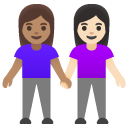
Women Holding Hands: Medium Skin Tone, Light Skin Tone
U+1F469 U+1F3FD U+200D U+1F91D U+200D U+1F469 U+1F3FB · :women_holding_hands_medium_skin_tone_light_skin_tone:
Trend 68
Meaning layers
- interpretation
- Used to signal female friendship ('bestie energy'), lesbian/sapphic relationships, women supporting women, or general female solidarity across racial lines. Often deployed as a vibe-check for inclusive spaces.
- tiktok usage
- Appears in 'girl dinner' culture content, WLW (women-loving-women) coming-out videos, bestie appreciation posts, and interracial friendship montages.
- irony level
- 2 / 10
Platform meanings
- meaning
- Represents WLW relationships, sapphic content, bestie culture, and interracial female friendship in TikTok captions and comments.
- trend usage
- Featured in WLW coming-out videos, Pride month content, 'my bestie and I' trend videos, and POC + white girl friendship appreciation duets.
- hashtags
- #WLW#SapphicTikTok#GirlsWhoLikeGirls#BestFriends#Pride
- virality score
- 72 / 100
Cultural meanings
🇺🇸
Western / Gen-Z
Widely embraced as a symbol of both WLW romance and deep female friendship; Gen Z uses it freely across all platonic and romantic contexts without stigma.
🇵🇰
Pakistan & India
Primarily interpreted as close female friendship rather than romance due to cultural norms; used between female friends to express closeness, though LGBTQ+ communities use it in its full romantic meaning in private spaces.
🌍
Middle East
Generally interpreted as female friendship or sisterhood; romantic connotations are largely avoided publicly due to social and legal contexts, though diaspora communities use it more openly.
🌐
Global Neutral
Universally readable as two women in a positive, close relationship — whether platonic or romantic — and broadly accepted as a symbol of female togetherness.
🇧🇩
Bangladesh
Seen primarily as a symbol of close female friendship or sisterhood; LGBTQ+ meanings are understood by younger, urban populations but not broadly discussed openly.
🇱🇰
Sri Lanka
Used to express strong female friendships; younger, digitally active Sri Lankans may understand its WLW connotations, but it is mostly shared in platonic contexts.
🇨🇳
China
Interpreted as close female friendship ('闺蜜' energy); younger Chinese users on platforms like Weibo may use it in sapphic contexts, but public LGBTQ+ expression remains cautious.
🇯🇵
Japan
Associated with both deep female friendship and 'yuri' (WLW) relationship culture in anime fandom; used by fans of yuri manga and anime freely.
🇰🇷
South Korea
Used to express 'girl crush' dynamics, close female friendships, and increasingly WLW relationships among younger Koreans influenced by global LGBTQ+ culture.
🇹🇼
Taiwan
Openly used in both romantic and platonic contexts; Taiwan's legal same-sex marriage status makes WLW representation celebrated and normalized.
🇭🇰
Hong Kong
Used by younger, progressive Hong Kongers to celebrate female friendship and WLW relationships; LGBTQ+ visibility has grown despite political tensions.
🇵🇭
Philippines
Interpreted as close female friendship in mainstream culture; Filipino LGBTQ+ communities use it proudly in romantic WLW contexts online.
🇮🇩
Indonesia
Primarily seen as female friendship; romantic connotations are less openly discussed due to cultural and religious context, though LGBTQ+ Indonesians use it privately.
🇹🇭
Thailand
Thailand's relatively open culture around gender and sexuality means this emoji is used freely for both friendship and WLW relationships, especially among younger users.
🇻🇳
Vietnam
Typically interpreted as close female friendship; younger, urban Vietnamese users are aware of WLW connotations but usage remains mostly platonic publicly.
🇲🇾
Malaysia
Mostly read as female friendship due to cultural and legal context; LGBTQ+ Malaysians use it privately or in diaspora communities to express romantic meaning.
🇸🇦
Saudi Arabia
Strictly interpreted as female friendship or sisterhood; any romantic connotation is avoided publicly, though globally connected Saudi youth may understand the LGBTQ+ subtext.
🇦🇪
UAE
Used to represent female friendship and solidarity; LGBTQ+ meanings are understood by cosmopolitan youth but not expressed publicly given legal constraints.
🇪🇬
Egypt
Seen as a symbol of close sisterhood or female friendship; LGBTQ+ connotations are known to digitally connected youth but rarely expressed openly.
🇹🇷
Turkey
Used between female friends to express closeness; younger, progressive Turks may use it in WLW contexts, especially in online LGBTQ+ spaces.
🇮🇷
Iran
Primarily understood as female friendship; LGBTQ+ communities inside Iran use coded language online, with this emoji occasionally appearing in diaspora digital spaces.
🇳🇬
Nigeria
Most commonly read as close female friendship; LGBTQ+ connotations are understood by younger, globally connected Nigerians but rarely expressed publicly due to social norms.
🇿🇦
South Africa
South Africa's progressive constitution and visible LGBTQ+ community means this emoji is used openly for both friendship and WLW romantic relationships.
🇬🇧
UK & Ireland
Widely used for both female friendship and WLW relationships; British and Irish Gen Z embrace it as a casual, affirming symbol of female connection.
🇫🇷
France
Used for both friendship and romance between women; French culture's openness to relationships means both interpretations are accepted without much comment.
🇩🇪
Germany
Used comfortably for WLW relationships and female friendship; German LGBTQ+ communities use it openly, and it is broadly understood across age groups.
🇪🇸
Spain & Italy
In Spain, embraced fully for WLW and friendship contexts due to progressive attitudes; in Italy, slightly more platonic in mainstream use but WLW communities use it openly.
🇧🇷
Brazil
Brazil's large, visible LGBTQ+ community uses this emoji openly for WLW romance and friendship; it is a celebratory symbol, especially during São Paulo Pride.
🇲🇽
Mexico
Used for close female friendship and increasingly for WLW relationships as LGBTQ+ visibility grows; younger generations in urban areas use it in full romantic context.
🌎
Latin America
Across Latin America, used primarily as a symbol of strong female friendship with growing WLW romantic usage among LGBTQ+-visible urban youth communities.
🇦🇺
Australia & NZ
Freely used for both platonic female friendship and WLW romantic relationships; both Australia and New Zealand have strong LGBTQ+ acceptance and this emoji fits naturally in everyday digital language.
How its meaning shifted
- 2010
This specific emoji did not exist in 2010; the concept of gender-specific holding hands emojis with skin tone modifiers had not yet been developed in Unicode.
- 2015
Early holding hands emojis existed but lacked gender specificity and skin tone diversity; WLW representation in emoji was extremely limited and largely invisible.
- 2020
Introduced as part of Unicode's diversity push; immediately adopted by WLW communities and used in Pride Month content, though still niche outside LGBTQ+ spaces.
- 2026
Mainstream across Gen Z for both platonic and romantic female bonds; skin tone combinations are specifically chosen to reflect real interracial relationships, making it a nuanced and deliberate choice.
See it on every platform
Adjacent emojis
- Often confused with
- people holding handswoman and man holding handshugging face
- Can replace
- red heartrainbow flagtwo hearts
Share & embed
Frequently asked
01What does the 👩🏽🤝👩🏻 Women Holding Hands: Medium Skin Tone, Light Skin Tone emoji mean?
Two women holding hands, with the left woman having medium skin tone and the right woman having light skin tone, representing female friendship, solidarity, companionship, or romantic partnership between women.
02What does 👩🏽🤝👩🏻 mean on TikTok?
Represents WLW relationships, sapphic content, bestie culture, and interracial female friendship in TikTok captions and comments.
03What does 👩🏽🤝👩🏻 mean on WhatsApp?
Sent between close female friends to say 'us forever,' 'bestie love,' or to express romantic feelings in WLW relationships.
04What does 👩🏽🤝👩🏻 mean in Gen-Z slang?
Used to signal female friendship ('bestie energy'), lesbian/sapphic relationships, women supporting women, or general female solidarity across racial lines. Often deployed as a vibe-check for inclusive spaces.
05Is the 👩🏽🤝👩🏻 emoji safe to use?
Represents female friendship, WLW romantic relationships, female solidarity, and interracial bonds between women in a warm, positive way.
06What does 👩🏽🤝👩🏻 mean in texting?
Triggers feelings of inclusion and affirmation, especially meaningful for LGBTQ+ individuals and people in interracial relationships who rarely see their bonds represented in mainstream media.
07What is the shortcode for 👩🏽🤝👩🏻?
The shortcode for Women Holding Hands: Medium Skin Tone, Light Skin Tone is :women_holding_hands_medium_skin_tone_light_skin_tone:
08What does 👩🏽🤝👩🏻 mean in dating?
Used by women flirting with women to signal sapphic interest or to gently hint at romantic feelings without being too explicit.
Safety & usage
- Safe meaning
- Represents female friendship, WLW romantic relationships, female solidarity, and interracial bonds between women in a warm, positive way.
- Caution
- Extremely rare; could theoretically be used sarcastically in toxic feminist discourse or to mock female relationships, but this is highly uncommon.
No significant safety concerns. In some culturally conservative contexts, the WLW romantic interpretation may be considered sensitive, but the emoji itself carries no inherently harmful meaning.
How it looks across platforms


Appearance varies by platform and device. Google Noto, Twemoji, and OpenMoji are open-source.