🧑🎨
The Emoji
Artist
U+1F9D1 U+200D U+1F3A8 · :artist:
Trend 62
Meaning layers
- interpretation
- Used to signal creative identity, aesthetic pursuits, or the 'I'm quirky and artsy' personality. Often used ironically to describe someone who doodles in class or makes moodboards.
- tiktok usage
- Appears in creative content, art process videos, and 'POV: you're an art student' trends. Also used sarcastically when someone calls themselves an artist for making a meme.
- irony level
- 5 / 10
Platform meanings
- meaning
- Creative identity marker used in art-process videos, aesthetic content, and ironic 'tortured artist' persona memes.
- trend usage
- Common in FYP art content, 'day in the life of an art student' videos, and side-by-side before/after artwork reveals.
- hashtags
- #artist#arttok#creativetok#artprocess#artlife
- virality score
- 68 / 100
Cultural meanings
🇺🇸
Western / Gen-Z
Heavily used as a personality badge — the 'I'm an artist' identity signal, often ironic or semi-ironic among Gen Z who use it to celebrate chaotic creativity.
🇵🇰
Pakistan & India
Used sincerely to express admiration for creative talent, commonly seen in social media captions for art shares or creative achievements. Also used in arts and crafts communities.
🌍
Middle East
Generally interpreted sincerely as representing a talented creative person. Used respectfully in contexts celebrating calligraphy, design, or traditional arts.
🌐
Global Neutral
Universally understood as representing an artist or creative person engaged in visual arts — minimal cultural distortion globally.
🇧🇩
Bangladesh
Used to celebrate traditional and modern art forms, especially in student communities and social media posts about creative work.
🇱🇰
Sri Lanka
Used in creative communities, art student circles, and social posts celebrating local artists and handicraft makers.
🇨🇳
China
Common in WeChat and Weibo posts about visual artists, illustration, and design. Associated with both professional designers and hobbyist painters.
🇯🇵
Japan
Strongly associated with illustration culture, manga artists, and creative professionals. Used respectfully in art communities and SNS posts.
🇰🇷
South Korea
Popular among art students, webtoon artists, and K-indie creative communities. Used in art process posts and creative identity branding.
🇹🇼
Taiwan
Used in creative industry content, illustration communities, and indie art scenes. Appreciated in both serious and casual creative contexts.
🇭🇰
Hong Kong
Found in design and visual arts communities, appreciated in both local art scenes and international creative discussions.
🇵🇭
Philippines
Used to celebrate local visual artists and OFW creatives. Frequently seen in art school social media content and fan art communities.
🇮🇩
Indonesia
Common in art community posts, digital illustration content, and creative entrepreneur communities on Instagram and TikTok.
🇹🇭
Thailand
Used in art and design communities, especially in digital art and illustration circles. Also seen in tourism-adjacent craft content.
🇻🇳
Vietnam
Appears in art student communities, graphic design posts, and content celebrating Vietnamese traditional and contemporary artists.
🇲🇾
Malaysia
Used in creative and design communities. Appears in posts about local art events, design work, and student portfolios.
🇸🇦
Saudi Arabia
Used in creative content, especially around calligraphy, design, and the growing Saudi contemporary art scene.
🇦🇪
UAE
Common in Dubai and Abu Dhabi creative scenes — design, architecture, and contemporary arts. Associated with cultural pride in regional creativity.
🇪🇬
Egypt
Used in fine arts and design communities, often referencing Egypt's rich artistic heritage. Common in art school and cultural content.
🇹🇷
Turkey
Used in art and design communities, often paired with posts about Ottoman-inspired art, modern illustration, and architecture.
🇮🇷
Iran
Used in underground and open creative communities. Associated with fine arts, calligraphy, and miniature painting traditions.
🇳🇬
Nigeria
Celebratory use in Afrobeats visual art, fashion design, and Nigeria's growing creative economy. Used proudly by Afrocentric artists.
🇿🇦
South Africa
Found in local arts communities, design schools, and posts celebrating diverse South African visual artists and cultural creatives.
🇬🇧
UK & Ireland
Used both sincerely and ironically — art school culture in the UK gives it layers of sarcasm and genuine pride simultaneously.
🇫🇷
France
Associated with French fine arts prestige and Parisian creative culture. Used earnestly in art discourse and design communities.
🇩🇪
Germany
Used in design, Bauhaus-inspired aesthetics, and contemporary art communities. Mostly professional and sincere in usage.
🇪🇸
Spain & Italy
Strongly associated with rich artistic heritage. Used with pride in creative contexts, especially in design, fashion, and fine arts communities.
🇧🇷
Brazil
Used in vibrant creative communities, street art discussions, carnival design, and emerging digital art scenes. Often enthusiastic in tone.
🇲🇽
Mexico
Associated with Mexico's celebrated artistic tradition — muralism, folk art, and contemporary design. Used with cultural pride and creative enthusiasm.
🌎
Latin America
Broadly used across Latin American creative communities to signal artistic identity, often tied to vibrant local art movements and street art culture.
🇦🇺
Australia & NZ
Used casually and sometimes ironically in creative communities. Common in art school culture and among freelance designers and illustrators.
How its meaning shifted
- 2010
This emoji did not exist yet — the general palette emoji 🎨 was the closest representation of artistry available.
- 2015
Still unavailable as a standalone person-profession emoji. Creative identity online was expressed through 🎨 and 🖌️.
- 2020
Introduced as part of the gender-neutral profession emoji wave. Adopted by art communities, creative professionals, and art students as a fresh identity marker.
- 2026
Fully embedded in creative culture — used sincerely by artists, ironically by Gen Z, and as a marker of AI art debates. Widely used across all platforms in both professional and meme contexts.
See it on every platform
Compare with
Adjacent emojis
- Often confused with
- mageperson gesturing okfairy
- Can replace
- artist palettepaintbrushrainbow
Share & embed
Frequently asked
01What does the 🧑🎨 Artist emoji mean?
A person holding a palette and paintbrush, representing an artist, painter, or creative professional. The emoji depicts someone engaged in visual arts.
02What does 🧑🎨 mean on TikTok?
Creative identity marker used in art-process videos, aesthetic content, and ironic 'tortured artist' persona memes.
03What does 🧑🎨 mean on WhatsApp?
Tells someone you appreciate their creative work or are currently doing something artsy.
04What does 🧑🎨 mean in Gen-Z slang?
Used to signal creative identity, aesthetic pursuits, or the 'I'm quirky and artsy' personality. Often used ironically to describe someone who doodles in class or makes moodboards.
05Is the 🧑🎨 emoji safe to use?
Represents creativity, artistic skill, and the visual arts profession. Completely safe in all mainstream contexts.
06What does 🧑🎨 mean in texting?
Using this emoji signals a deep tie to creative identity and self-expression. Psychologically, it reflects the need for recognition of one's creative self and often signals openness, sensitivity, and a non-conformist personality.
07What is the shortcode for 🧑🎨?
The shortcode for Artist is :artist:
08What does 🧑🎨 mean in dating?
Sending this to someone implies admiration for their creativity or playfully suggesting a 'paint and wine' date. 'You're an artist 🧑🎨' can be a soft compliment.
Safety & usage
- Safe meaning
- Represents creativity, artistic skill, and the visual arts profession. Completely safe in all mainstream contexts.
- Caution
- No inherently toxic usage. Could be used sarcastically to belittle someone's work, but this is mild at worst.
No significant warnings. Occasionally used in condescending or mock-praise contexts but rarely harmful.
How it looks across platforms
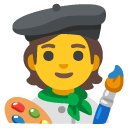


Appearance varies by platform and device. Google Noto, Twemoji, and OpenMoji are open-source.