🧑🏿🎨
The Emoji
Artist: Dark Skin Tone
U+1F9D1 U+1F3FF U+200D U+1F3A8 · :artist_dark_skin_tone:
Trend 58
Meaning layers
- interpretation
- Used to represent artistic identity, creative vibes, or calling someone or yourself a creative genius. Often used to flex artistic skills or aesthetic sensibility without irony.
- tiktok usage
- Appears in art process videos, aesthetic transition content, and creator bios. Used by POC creators to represent their craft and identity simultaneously.
- irony level
- 2 / 10
Platform meanings
- meaning
- Represents creative identity, artistic process content, and POC creator representation in the visual arts space.
- trend usage
- Featured in art timelapse videos, 'day in the life of an artist' content, aesthetic makeover videos, and Black/Brown creator spotlights.
- hashtags
- #BlackArtist#ArtTok#CreativeLife#ArtistOfColor#PaintWithMe
- virality score
- 62 / 100
Cultural meanings
🇺🇸
Western / Gen-Z
Strongly associated with creative identity and is widely used by Black and Brown Gen Z creators to claim artistic space and representation online. Celebrated as a symbol of diverse excellence in the arts.
🇵🇰
Pakistan & India
Used by creative professionals, art students, and designers to represent their profession; the skin tone aspect is increasingly recognized as a positive representation marker in urban creative communities.
🌍
Middle East
Used in art and design communities to represent creative professionals; the dark skin tone can carry additional meaning of representing South Asian or African workers in the region's diverse creative industries.
🌐
Global Neutral
Universally understood as representing an artist or creative person; the dark skin tone is increasingly normalized globally as part of inclusive emoji communication.
🇧🇩
Bangladesh
Primarily used by art and design students and professionals to indicate creative identity; representation layer resonates with users who feel underrepresented in global creative spaces.
🇱🇰
Sri Lanka
Used by artists, designers, and creative professionals; appreciated in communities that value seeing South Asian skin tones represented in professional emoji depictions.
🇨🇳
China
Used to represent artists and creative professionals; the skin tone aspect is generally less culturally significant in China's emoji usage patterns, with focus remaining on the profession depicted.
🇯🇵
Japan
Used by artists and illustrators, though Japanese users may prefer platform-specific emoji; the dark skin tone modifier is noted for inclusivity but the base artist meaning is the primary interpretation.
🇰🇷
South Korea
Popular in K-pop fan art communities and creative industry circles; used to represent artistic identity with growing awareness of the skin tone representation significance.
🇹🇼
Taiwan
Used by digital artists, illustrators, and creative professionals; appreciated in Taiwan's progressive creative communities for its inclusive representation.
🇭🇰
Hong Kong
Common in creative and design professional circles; the skin tone representation layer is recognized in Hong Kong's internationally minded creative community.
🇵🇭
Philippines
Widely used by Filipino artists and creatives; resonates strongly as Filipinos have a range of skin tones and appreciate diverse representation in creative emoji.
🇮🇩
Indonesia
Used by art students and creative professionals; increasingly recognized as a positive representation of diverse skin tones in creative professions across Indonesia's diverse population.
🇹🇭
Thailand
Used to represent artists and creative professionals; the skin tone aspect is particularly appreciated in communities pushing back against colorism in Thai culture.
🇻🇳
Vietnam
Primarily used for its professional meaning as an artist emoji; used by Vietnam's growing creative industry community to signal artistic identity online.
🇲🇾
Malaysia
Used by Malaysian artists and creatives of all backgrounds; in Malaysia's multiracial context, the dark skin tone is recognized as representing the diversity of the creative community.
🇸🇦
Saudi Arabia
Used to represent artists in a country with a growing creative sector; the emoji appears in art education and creative startup contexts, with the skin tone recognized as representing diverse talent.
🇦🇪
UAE
Common in Dubai and Abu Dhabi's vibrant, diverse creative communities; represents the many artists from African and South Asian backgrounds who contribute to the UAE's art scene.
🇪🇬
Egypt
Used by Egyptian artists and designers; resonates with Egypt's creative community that includes a range of skin tones reflecting the country's diverse population.
🇹🇷
Turkey
Used in Turkey's growing creative industry and art communities; appreciated for both its professional meaning and its representation of diverse skin tones in creative roles.
🇮🇷
Iran
Used by Iranian artists and designers primarily for its professional meaning; represents the creative class in Iran's vibrant underground and formal art scenes.
🇳🇬
Nigeria
Carries strong cultural resonance in Nigeria — used proudly by Nigerian artists to represent their creative identity with a skin tone that reflects their own appearance.
🇿🇦
South Africa
Deeply meaningful in South Africa's context of racial history — used by Black South African artists as a powerful symbol of creative identity and representation.
🇬🇧
UK & Ireland
Used by Black British and Irish artists of African and Caribbean heritage to represent their creative identity; appears frequently in discussions about diversity in UK arts institutions.
🇫🇷
France
Used by artists from France's diverse communities, particularly those of African and Caribbean heritage; appreciated in conversations about diversity in French artistic and cultural spaces.
🇩🇪
Germany
Used by artists with diverse backgrounds in Germany; particularly resonant in conversations about Afro-German creative representation and diversity in German cultural institutions.
🇪🇸
Spain & Italy
Used by artists and creatives, with growing recognition of its representation significance; particularly meaningful to Afro-Spanish and Afro-Italian communities claiming creative space.
🇧🇷
Brazil
Highly resonant in Brazil given the country's large Afro-Brazilian population; widely used by Black Brazilian artists celebrating their creative identity and pushing for greater representation in Brazilian art.
🇲🇽
Mexico
Used by Afro-Mexican and Indigenous Mexican artists to represent their creative identity; carries significance in conversations about the often-overlooked diversity of Mexican artistic heritage.
🌎
Latin America
Across Latin America, used by Afro-Latino artists and creatives to claim representation in creative spaces; significant in regional conversations about colorism and visibility in the arts.
🇦🇺
Australia & NZ
Used by Aboriginal, Māori, Pacific Islander, and other dark-skinned artists in Australia and New Zealand to represent their creative identity; appears frequently in Indigenous art communities online.
How its meaning shifted
- 2010
This emoji did not exist in 2010; skin tone modifiers and profession-specific person emoji were not yet part of Unicode's emoji standard.
- 2015
Introduced as part of Unicode 8.0 and Emoji 1.0 in 2015; initial usage focused primarily on professional representation and diversity, with early adoption by advocates for inclusive emoji.
- 2020
Gained significant momentum during the Black Lives Matter movement and global conversations about representation; became a common tool for Black and Brown creators to signal identity and pride.
- 2026
Mainstream usage among diverse creator communities worldwide; normalized as a standard way for dark-skinned artists to represent themselves professionally and as a general symbol of artistic excellence across cultures.
See it on every platform
Compare with
Adjacent emojis
Share & embed
Frequently asked
01What does the 🧑🏿🎨 Artist: Dark Skin Tone emoji mean?
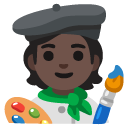
A person with dark skin tone engaged in artistic work, typically depicted holding a palette and paintbrush, representing artists, creatives, painters, and those working in visual arts.
02What does 🧑🏿🎨 mean on TikTok?
Represents creative identity, artistic process content, and POC creator representation in the visual arts space.
03What does 🧑🏿🎨 mean on WhatsApp?
Tells the recipient you're doing something creative, working on art, or identifying as an artist in casual conversation.
04What does 🧑🏿🎨 mean in Gen-Z slang?
Used to represent artistic identity, creative vibes, or calling someone or yourself a creative genius. Often used to flex artistic skills or aesthetic sensibility without irony.
05Is the 🧑🏿🎨 emoji safe to use?
Represents artists, creative professionals, and artistic identity with dark skin tone representation; overwhelmingly used positively in creative and professional contexts.
06What does 🧑🏿🎨 mean in texting?
Carries dual emotional weight — the universal joy of creative expression combined with the culturally significant act of representation and visibility for people of darker skin tones in professional roles.
07What is the shortcode for 🧑🏿🎨?
The shortcode for Artist: Dark Skin Tone is :artist_dark_skin_tone:
08What does 🧑🏿🎨 mean in dating?
Sent to express admiration for someone's creative talent or artistic personality; implies you find their creativity attractive and sexy.
Safety & usage
- Safe meaning
- Represents artists, creative professionals, and artistic identity with dark skin tone representation; overwhelmingly used positively in creative and professional contexts.
- Caution
- Rarely used in harmful contexts; could theoretically be used mockingly in racist commentary, but this is uncommon given the emoji's broadly positive reception.
As with all skin tone emoji, using a dark skin tone modifier when it does not represent your own skin tone can be considered inappropriate or offensive in many communities, particularly online spaces where digital blackface is a recognized issue.
How it looks across platforms


Appearance varies by platform and device. Google Noto, Twemoji, and OpenMoji are open-source.