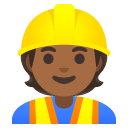
👷🏾
The Emoji
Construction Worker: Medium-dark Skin Tone
U+1F477 U+1F3FE · :construction_worker_mediumdark_skin_tone:
Trend 45
Meaning layers
- interpretation
- Used to represent hard work, blue-collar pride, hustle culture, or trades work. Also used ironically to describe someone doing 'construction' on their life, a relationship, or a plan. Sometimes used humorously when someone is 'building' something — a career, a physique, or an argument.
- tiktok usage
- Appears in blue-collar pride content, trades apprenticeship videos, and ironically in self-improvement content about 'building yourself up.' Also used in 'sigma grindset' adjacent humor.
- irony level
- 4 / 10
Platform meanings
- meaning
- Represents hard-working blue-collar identity, trades pride, or someone actively building something in their life. Often paired with hustle or grindset content.
- trend usage
- Featured in #TradeLife, #BlueCollarTikTok, and self-improvement transformation videos. Also used in Gen Z debates about trades vs. college.
- hashtags
- #TradeLife#BlueCollarPride#UnderConstruction#BuildingMyself#SkilledTrades
- virality score
- 52 / 100
Cultural meanings
🇺🇸
Western / Gen-Z
Primarily used with ironic pride by young Gen Z tradespeople reclaiming blue-collar identity against college-or-bust narratives. Also used metaphorically for 'building yourself up' in self-improvement content.
🇵🇰
Pakistan & India
Represents daily wage laborers and construction workers, a massive and visible workforce. Used earnestly to represent hard work and the backbone of rapid urban development across both countries.
🌍
Middle East
Deeply symbolic given the massive expatriate construction workforce in Gulf states. Can evoke both respect for labor and complex discussions around migrant worker rights and treatment.
🌐
Global Neutral
Universally recognized as representing construction work and manual labor. Understood across cultures as a symbol of physical work, building, and skilled trades.
🇧🇩
Bangladesh
Highly relevant given Bangladesh's large construction sector and significant number of workers employed in Gulf construction projects. Used earnestly to represent laborers and their sacrifices.
🇱🇰
Sri Lanka
Represents the significant construction labor force, including many Sri Lankans working abroad in the Gulf. Associated with hard work, family sacrifice, and economic contribution.
🇨🇳
China
Associated with China's massive construction industry and urban development boom. Represents the 农民工 (migrant worker) class who built modern Chinese cities, often carrying complex social connotations.
🇯🇵
Japan
Used to represent skilled craftsmen and construction professionals, a respected trade in Japanese culture. The hard hat (ヘルメット) is a recognizable symbol of meticulous Japanese work culture.
🇰🇷
South Korea
Represents the construction and industrial sectors that powered South Korea's 'Miracle on the Han River.' Used with respect for the labor behind the country's rapid modernization.
🇹🇼
Taiwan
Associated with construction and infrastructure development. Used straightforwardly to represent manual labor and the skilled trades workforce driving Taiwan's development.
🇭🇰
Hong Kong
Often evokes the city's dense urban construction landscape and the Filipino and South Asian workers who make up a large portion of the construction labor force.
🇵🇭
Philippines
Carries strong meaning as many Filipino OFWs (Overseas Filipino Workers) work in construction abroad, especially in the Gulf. Represents sacrifice, family support, and economic migration.
🇮🇩
Indonesia
Represents the large domestic construction workforce and the many Indonesian migrant workers in construction abroad. Used to honor labor and hard work.
🇹🇭
Thailand
Associated with Thailand's construction boom in Bangkok and tourist areas. Represents migrant workers from neighboring Myanmar and Cambodia as well as Thai construction professionals.
🇻🇳
Vietnam
Symbolizes the rapidly growing construction sector powering Vietnam's economic development. Used to represent laborers and the skilled trades driving urbanization.
🇲🇾
Malaysia
Closely tied to Malaysia's construction industry which employs large numbers of migrant workers from Indonesia and Bangladesh. Represents both local tradespeople and the migrant labor force.
🇸🇦
Saudi Arabia
Carries significant weight given the massive construction projects (NEOM, Vision 2030 megaprojects) and the millions of migrant workers who build them. Can evoke conversations about kafala and labor conditions.
🇦🇪
UAE
Strongly associated with the migrant workforce behind Dubai and Abu Dhabi's iconic skylines. Used in both celebratory contexts (amazing architecture) and critical discourse about labor rights.
🇪🇬
Egypt
Represents Egypt's large construction workforce and the pride in ancient building heritage. Also used in contexts of modern infrastructure development and labor identity.
🇹🇷
Turkey
Associated with Turkey's booming construction sector and the government's major infrastructure projects. Used to represent tradespeople and the working class with straightforward respect.
🇮🇷
Iran
Represents laborers and construction workers in a country with significant infrastructure development needs. Used earnestly to symbolize hard work and the working class.
🇳🇬
Nigeria
Symbolizes the construction boom in Lagos and other major Nigerian cities. Used to represent tradespeople, contractors, and the growing skilled labor force in Africa's largest economy.
🇿🇦
South Africa
Associated with the construction and mining sectors. Used to represent workers in these industries, sometimes within conversations about labor rights, inequality, and BEE (Black Economic Empowerment).
🇬🇧
UK & Ireland
Used to represent tradespeople and builders, a respected and well-compensated sector. Often associated with Eastern European migrant workers who fill labor shortages, and colloquially tied to 'builders tea' humor.
🇫🇷
France
Represents the ouvrier (blue-collar worker) class. Can carry political weight in French labor discourse, especially during strikes and union actions. Used earnestly to represent the working class.
🇩🇪
Germany
Associated with Germany's respected Handwerk (skilled trades) tradition. Apprenticeship culture makes trades work highly respected, and this emoji is used with genuine professional pride.
🇪🇸
Spain & Italy
Represents construction workers in countries with significant construction industries. In Spain, evokes memories of the construction boom before the 2008 crash. In Italy, tied to artisanal building traditions.
🇧🇷
Brazil
Used to represent the large informal construction workforce (peões) building Brazil's cities. Associated with hard work, economic aspiration, and the informal economy.
🇲🇽
Mexico
Represents the albañil (bricklayer/construction worker), a deeply respected figure in Mexican working-class culture. Also evokes the large number of Mexican construction workers in the US.
🌎
Latin America
Broadly represents the large informal construction labor force across Latin America. Associated with economic aspiration, hard work, and the backbone of urban development.
🇦🇺
Australia & NZ
Represents the highly respected and well-paid trades sector. 'Tradies' are a celebrated part of Australian and New Zealand working culture, often earning more than white-collar workers.
How its meaning shifted
- 2010
The base construction worker emoji existed but skin tone variants did not yet. Usage was purely literal — representing construction workers or job sites with no significant ironic or cultural layer.
- 2015
Skin tone variants including medium-dark were introduced in Unicode 8.0. Initial excitement around representation led to increased use by people who could now see themselves reflected in the emoji. Still primarily literal in usage.
- 2020
Broader adoption in blue-collar pride content, trades vs. college debate contexts, and labor rights discussions amplified by COVID-19 highlighting essential workers. Began appearing in 'building myself' motivational content.
- 2026
Established symbol of blue-collar identity and trades pride. Used both literally and metaphorically in hustle culture content, self-improvement narratives, and labor rights discourse. The medium-dark skin tone is used intentionally by those it represents and as an inclusive representation choice.
See it on every platform
Compare with
Adjacent emojis
Share & embed
Frequently asked
01What does the 👷🏾 Construction Worker: Medium-dark Skin Tone emoji mean?
A construction worker wearing a hard hat, depicted with a medium-dark skin tone (Fitzpatrick scale type V). Used to represent construction workers, laborers, builders, or anyone working in skilled trades.
02What does 👷🏾 mean on TikTok?
Represents hard-working blue-collar identity, trades pride, or someone actively building something in their life. Often paired with hustle or grindset content.
03What does 👷🏾 mean on WhatsApp?
Sent to indicate someone is busy working, doing manual labor, or in a construction/renovation context. Also used informally to say 'I'm working on it.'
04What does 👷🏾 mean in Gen-Z slang?
Used to represent hard work, blue-collar pride, hustle culture, or trades work. Also used ironically to describe someone doing 'construction' on their life, a relationship, or a plan. Sometimes used humorously when someone is 'building' something — a career, a physique, or an argument.
05Is the 👷🏾 emoji safe to use?
Represents construction workers, tradespeople, and manual laborers. Promotes diversity and representation in workforce emojis. Used for blue-collar pride, hustle content, and literal construction references.
06What does 👷🏾 mean in texting?
Triggers associations with manual labor, reliability, and working-class identity. Can evoke pride in skilled trades work or feelings of solidarity with blue-collar communities. The medium-dark skin tone adds a layer of cultural representation and identity affirmation.
07What is the shortcode for 👷🏾?
The shortcode for Construction Worker: Medium-dark Skin Tone is :construction_worker_mediumdark_skin_tone:
08What does 👷🏾 mean in dating?
Occasionally used to compliment someone who is 'building something great' or to hint at physical strength and hard-working qualities as attractive traits. Sometimes used flirtatiously toward tradespeople.
Safety & usage
- Safe meaning
- Represents construction workers, tradespeople, and manual laborers. Promotes diversity and representation in workforce emojis. Used for blue-collar pride, hustle content, and literal construction references.
- Caution
- Rarely used in a toxic context. In some instances may be used derogatorily to demean someone's career or education level, or in xenophobic contexts to stereotype certain ethnic groups as doing only manual labor.
The medium-dark skin tone can make this emoji a target for racist stereotyping in toxic online environments, where it may be used to reinforce harmful narratives about race and occupation. Generally safe but context-dependent.
How it looks across platforms


Appearance varies by platform and device. Google Noto, Twemoji, and OpenMoji are open-source.