👨🏿❤️👨🏽
The Emoji
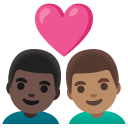
Couple With Heart: Man, Man, Dark Skin Tone, Medium Skin Tone
U+1F468 U+1F3FF U+200D U+2764 U+FE0F U+200D U+1F468 U+1F3FD · :couple_with_heart_man_man_dark_skin_tone_medium_skin_tone:
Trend 65
Meaning layers
- interpretation
- Used to celebrate same-sex male relationships, interracial love, and queer visibility. Gen Z uses it as a casual, affirming symbol of love between men, often paired with pride content or relationship posts.
- tiktok usage
- Appears in couple reveal videos, pride month content, 'boyfriend appreciation' posts, and interracial relationship storytelling. Commonly placed in captions to signal queer relationship content.
- irony level
- 1 / 10
Platform meanings
- meaning
- Signals queer male couple content, interracial relationship visibility, and Pride-related storytelling. Used in video captions and overlays for couple reveal or appreciation content.
- trend usage
- Heavily used during Pride Month, in 'meet my boyfriend' videos, 'day in our life' couple content, and under viral LGBTQ+ advocacy videos. Part of trending sounds tied to love and queer culture.
- hashtags
- #GayCouple#InterracialLove#PrideMonth#LoveIsLove#QueerTikTok
- virality score
- 72 / 100
Cultural meanings
🇺🇸
Western / Gen-Z
Widely used and celebrated as a positive symbol of queer visibility and interracial love. Gen Z in Western countries use it freely in casual and affectionate contexts with little stigma.
🇵🇰
Pakistan & India
Rarely used publicly due to social and legal stigma around same-sex relationships; may appear in private chats within LGBTQ+ communities or activist spaces in urban centers like Mumbai or Lahore.
🌍
Middle East
Extremely rare in public usage due to legal prohibitions and social taboos around homosexuality across much of the region; used covertly by LGBTQ+ individuals in private, safe digital spaces.
🌐
Global Neutral
Recognized globally as representing a same-sex male couple with interracial representation; interpretation varies widely based on local cultural and legal attitudes toward LGBTQ+ relationships.
🇧🇩
Bangladesh
Effectively absent from mainstream public usage given strong social and religious conservatism; may exist in very private LGBTQ+ digital communities but carries significant social risk if used publicly.
🇱🇰
Sri Lanka
Same-sex relationships remain criminalized; this emoji is largely confined to private LGBTQ+ conversations and activist digital spaces, with public use being rare and potentially risky.
🇨🇳
China
LGBTQ+ content faces increasing censorship on Chinese platforms; this emoji may be filtered or blocked on apps like WeChat or Weibo, and its use is mostly confined to private conversations.
🇯🇵
Japan
Japan has a notable gay culture and media presence; this emoji is used in LGBTQ+ communities, especially in major cities, though public couple expression remains somewhat reserved compared to Western norms.
🇰🇷
South Korea
Used within South Korea's growing but often underground LGBTQ+ community; public visibility is increasing through activism but mainstream use remains limited due to societal conservatism.
🇹🇼
Taiwan
Taiwan, as Asia's most LGBTQ+-affirming country and the first to legalize same-sex marriage in Asia, has relatively open use of this emoji in social media and everyday queer discourse.
🇭🇰
Hong Kong
Used within LGBTQ+ communities and among progressive urban youth; same-sex relationships are decriminalized but not legally recognized, creating a mixed cultural landscape for its use.
🇵🇭
Philippines
Despite a generally socially tolerant attitude toward gay men in Filipino culture, legal recognition is absent; the emoji is used openly in LGBTQ+ social circles but carries mixed meanings in conservative religious contexts.
🇮🇩
Indonesia
Same-sex relationships face increasing legal and social pressure, particularly in Aceh province; this emoji is largely private among LGBTQ+ communities and rarely appears in mainstream digital discourse.
🇹🇭
Thailand
Thailand's visible gay culture and tourism-friendly image mean this emoji circulates more freely than in neighboring countries, though legal same-sex partnership recognition has been a long-standing gap.
🇻🇳
Vietnam
Vietnam decriminalized homosexuality but lacks legal recognition; LGBTQ+ visibility is growing especially among youth, and this emoji appears in progressive youth digital spaces and Pride-related content.
🇲🇾
Malaysia
Same-sex relationships are criminalized under both civil and Sharia law; use of this emoji is confined to very private LGBTQ+ spaces and carries significant social and legal risk in public contexts.
🇸🇦
Saudi Arabia
Homosexuality is criminalized and subject to severe penalties; this emoji is effectively absent from public digital discourse and confined only to the most private and secure LGBTQ+ communications.
🇦🇪
UAE
Similar to Saudi Arabia, same-sex relationships are criminalized; this emoji would be rarely encountered in public digital spaces and its use carries real legal and social risk.
🇪🇬
Egypt
While homosexuality is not explicitly criminalized, LGBTQ+ individuals face frequent prosecution under morality laws; public use of this emoji is highly sensitive and mostly absent from mainstream platforms.
🇹🇷
Turkey
Istanbul once hosted one of the largest Pride parades in the Muslim world, but increasing government restrictions have pushed LGBTQ+ expression underground; the emoji appears in activist and private queer spaces.
🇮🇷
Iran
Homosexuality is criminalized with severe penalties including death; this emoji is essentially nonexistent in any public digital context and would only appear in the most covert private communications.
🇳🇬
Nigeria
Same-sex relationships are criminalized with harsh penalties; the emoji is practically absent from public digital discourse and carries extreme social and legal risk in the Nigerian context.
🇿🇦
South Africa
South Africa has the most progressive LGBTQ+ legal framework in Africa, including constitutional protections; this emoji is used openly in urban LGBTQ+ communities and among progressive youth.
🇬🇧
UK & Ireland
Widely and positively used across both countries with strong legal protections and social acceptance; appears freely in everyday digital communication, Pride content, and mainstream media.
🇫🇷
France
Used openly in French digital culture with high social acceptance; appears in couple contexts, Pride Month content, and general affectionate communication without significant stigma.
🇩🇪
Germany
Germany's strong LGBTQ+ legal protections and open culture mean this emoji is used freely and positively, particularly in urban centers like Berlin which has a globally recognized queer culture.
🇪🇸
Spain & Italy
Spain has strong LGBTQ+ protections and acceptance, with this emoji used freely; Italy has more regional variation, with urban and progressive communities using it openly but rural or religious contexts being more reserved.
🇧🇷
Brazil
Brazil has one of the world's largest Pride celebrations and significant LGBTQ+ visibility; this emoji is used widely in Brazilian LGBTQ+ digital culture, though political tensions around queer rights create a complex backdrop.
🇲🇽
Mexico
Mexico City and other urban centers have progressive LGBTQ+ scenes where this emoji is used openly; more conservative rural and religious regions may interpret it negatively, creating regional variation.
🌎
Latin America
Usage varies significantly across Latin America — more open in progressive urban centers of Argentina, Chile, and Colombia, more restricted in countries with strong conservative religious influence.
🇦🇺
Australia & NZ
Both countries have strong LGBTQ+ legal protections and social acceptance following historic marriage equality campaigns; this emoji is used openly and positively in everyday digital communication.
How its meaning shifted
- 2010
This specific emoji did not exist in 2010; same-sex couple representation in emoji was entirely absent, and users relied on creative text combinations like '<3' or generic couple emojis that defaulted to heterosexual representation.
- 2015
Basic same-sex couple emoji sequences began emerging following Unicode updates; however, skin tone modifiers and interracial combinations were not yet available, limiting representation to single-tone default versions.
- 2020
By 2020, this specific skin-tone combination was available and gaining traction, particularly boosted by global Pride Month digital campaigns, increased LGBTQ+ visibility on social media, and growing interracial relationship representation discourse.
- 2026
Now a normalized and widely recognized symbol used freely in LGBTQ+ digital spaces globally, increasingly appearing in mainstream content, corporate Pride messaging, and everyday romantic communication between gay and bisexual men.
See it on every platform
Compare with
Adjacent emojis
- Often confused with
- people hugginghandshakecouple with heart
- Can replace
- men holding handsrainbow flagred heart
Share & embed
Frequently asked
01What does the 👨🏿❤️👨🏽 Couple With Heart: Man, Man, Dark Skin Tone, Medium Skin Tone emoji mean?
A couple with a heart between two men, with the left man having a dark skin tone and the right man having a medium skin tone, representing a same-sex male romantic relationship with interracial representation.
02What does 👨🏿❤️👨🏽 mean on TikTok?
Signals queer male couple content, interracial relationship visibility, and Pride-related storytelling. Used in video captions and overlays for couple reveal or appreciation content.
03What does 👨🏿❤️👨🏽 mean on WhatsApp?
Sent between partners as a sweet expression of romantic love, or by friends affirming a gay couple's relationship. Used in group chats to celebrate a friend's relationship news.
04What does 👨🏿❤️👨🏽 mean in Gen-Z slang?
Used to celebrate same-sex male relationships, interracial love, and queer visibility. Gen Z uses it as a casual, affirming symbol of love between men, often paired with pride content or relationship posts.
05Is the 👨🏿❤️👨🏽 emoji safe to use?
A positive, loving representation of a same-sex male romantic couple with interracial skin tone diversity. Used to express love, celebrate queer identity, signal allyship, and promote LGBTQ+ visibility.
06What does 👨🏿❤️👨🏽 mean in texting?
This emoji carries deep emotional weight for many users as it provides visible representation — seeing one's identity reflected in digital iconography affirms existence, normalizes same-sex interracial love, and signals a safe or affirming space.
07What is the shortcode for 👨🏿❤️👨🏽?
The shortcode for Couple With Heart: Man, Man, Dark Skin Tone, Medium Skin Tone is :couple_with_heart_man_man_dark_skin_tone_medium_skin_tone:
08What does 👨🏿❤️👨🏽 mean in dating?
Used between men in romantic or flirtatious contexts to express feelings or signal mutual interest. Placed at the end of affectionate messages or used to define the relationship status in a cute, visual way.
Safety & usage
- Safe meaning
- A positive, loving representation of a same-sex male romantic couple with interracial skin tone diversity. Used to express love, celebrate queer identity, signal allyship, and promote LGBTQ+ visibility.
- Caution
- Could theoretically be deployed mockingly by bad-faith actors in homophobic harassment contexts, though this is uncommon as the emoji's specificity makes weaponization less likely than with more ambiguous emojis.
Users in countries where homosexuality is criminalized should exercise caution when using this emoji publicly, as it could expose them to legal or social harm. On platforms with LGBTQ+ content moderation issues, posts featuring this emoji may be incorrectly shadowbanned by overzealous algorithms.
How it looks across platforms
Appearance varies by platform and device. Google Noto, Twemoji, and OpenMoji are open-source.