👩🏿❤️👩🏿
The Emoji
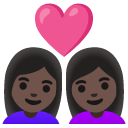
Couple With Heart: Woman, Woman, Dark Skin Tone
U+1F469 U+1F3FF U+200D U+2764 U+FE0F U+200D U+1F469 U+1F3FF · :couple_with_heart_woman_woman_dark_skin_tone:
Trend 58
Meaning layers
- interpretation
- Used to celebrate WLW (women loving women) relationships, dark-skinned queer love, and Black lesbian/bisexual partnerships. Often paired with pride content and affirmations of Black queer joy.
- tiktok usage
- Appears in WLW relationship content, 'couple goals' videos, Black queer creator spaces, and pride celebration TikToks. Frequently used in video captions by dark-skinned queer women.
- irony level
- 1 / 10
Platform meanings
- meaning
- Symbol of dark-skinned WLW romance and Black queer love; used to celebrate representation and relationship milestones.
- trend usage
- Featured in WLW couple POVs, pride month challenges, Black queer joy content, 'couple check' trends, and relationship anniversary videos.
- hashtags
- #WLW#BlackLoveIsBlackPower#QueerBlackJoy#DarkSkinWomen#WLWCouple
- virality score
- 62 / 100
Cultural meanings
🇺🇸
Western / Gen-Z
Widely embraced as a proud symbol of dark-skinned WLW love; used freely in social media, dating apps, and online identities by Gen Z queer communities in the US, Canada, and Western Europe.
🇵🇰
Pakistan & India
Extremely rare in public use due to Section 377 legacy laws and strong social stigma; may be used very discreetly in underground LGBTQ+ digital spaces or by diaspora communities abroad.
🌍
Middle East
Almost entirely absent from public usage due to legal prohibitions on homosexuality in most countries; used covertly only in heavily anonymized online LGBTQ+ spaces.
🌐
Global Neutral
Recognized universally as a same-sex couple emoji; interpretation varies widely from celebratory to controversial depending on local cultural and legal context.
🇧🇩
Bangladesh
Essentially unused publicly due to criminalization of same-sex relationships and intense social stigma; only seen in diaspora or anonymous international LGBTQ+ forums.
🇱🇰
Sri Lanka
Rarely used publicly; same-sex relations remain criminalized, and this emoji would be considered provocative in mainstream Sri Lankan digital culture.
🇨🇳
China
Used cautiously within LGBTQ+ communities on platforms like Weibo before censorship; increasingly restricted as Chinese censorship of queer content has grown; used in coded ways in private chats.
🇯🇵
Japan
Used in Japan's relatively tolerant but non-legally-recognized LGBTQ+ spaces; appears in yuri (WLW manga/anime) fan communities and Tokyo Rainbow Pride content.
🇰🇷
South Korea
Used in progressive Korean queer communities and fan spaces; still carries some social risk but is growing in visibility among younger Koreans and K-pop fandoms with WLW members.
🇹🇼
Taiwan
Freely and proudly used in Taiwan, which legalized same-sex marriage in 2019; a common sight in Taipei Pride content and among younger Taiwanese couples.
🇭🇰
Hong Kong
Used in Hong Kong's historically active LGBTQ+ community, though increasingly cautious post-2020 political changes; still present in queer social spaces online.
🇵🇭
Philippines
Used within the relatively visible Filipino LGBTQ+ community; same-sex marriage not yet legal but social acceptance varies widely; common in WLW Filipino digital spaces.
🇮🇩
Indonesia
Used very rarely and discreetly due to growing anti-LGBTQ+ sentiment and legal pressure in Aceh and broader moral policing; restricted to private or diaspora spaces.
🇹🇭
Thailand
Used relatively openly in Thailand's visible and accepted LGBTQ+ community, though same-sex marriage has only recently passed; common in WLW Thai social media content.
🇻🇳
Vietnam
Increasingly used as Vietnam has become more tolerant; the country removed homosexuality from its list of social evils and WLW content appears cautiously in Vietnamese digital culture.
🇲🇾
Malaysia
Almost entirely avoided in public due to criminalization under Sharia law and civil code; only used in anonymized LGBTQ+ digital spaces or by diaspora abroad.
🇸🇦
Saudi Arabia
Not used publicly due to strict legal prohibition of homosexuality; would be considered highly offensive and potentially legally dangerous if used openly.
🇦🇪
UAE
Avoided in public digital spaces due to criminalization; tourists and expats from LGBTQ+ communities may use it privately but it is not part of mainstream UAE digital culture.
🇪🇬
Egypt
Rarely used and socially dangerous; Egypt has an active but underground LGBTQ+ community that uses coded language, but this emoji would be too overt for most Egyptian digital contexts.
🇹🇷
Turkey
Used cautiously in Turkey's suppressed LGBTQ+ community; Istanbul Pride has been banned since 2015 but there is still underground digital use of this emoji in queer Turkish spaces.
🇮🇷
Iran
Essentially not used publicly due to severe criminalization; extremely rare even in anonymous digital spaces given the level of government surveillance and legal risk.
🇳🇬
Nigeria
Rarely used publicly due to Same-Sex Marriage (Prohibition) Act; any use would be considered highly controversial; Nigerian diaspora in LGBTQ+-accepting countries may use it more freely.
🇿🇦
South Africa
Freely used in South Africa, which has constitutional protections for LGBTQ+ rights and was the first African country to legalize same-sex marriage; common in Cape Town and Johannesburg queer spaces.
🇬🇧
UK & Ireland
Widely and proudly used across the UK and Ireland where same-sex marriage is legal; common in Pride content, WLW dating apps, and queer social media communities.
🇫🇷
France
Used openly in France's progressive LGBTQ+ culture; common in Paris Pride content, queer dating apps, and among young French WLW couples on social media.
🇩🇪
Germany
Regularly used in Germany's strong LGBTQ+ community, particularly in Berlin's vibrant queer scene; appears in Pride content, WLW social media, and LGBTQ+ advocacy posts.
🇪🇸
Spain & Italy
Freely used in Spain where same-sex marriage has been legal since 2005; used more cautiously in Italy where civil unions exist but same-sex marriage has been more contested.
🇧🇷
Brazil
Used widely in Brazil's large and vibrant LGBTQ+ community, particularly in São Paulo Pride which is one of the world's largest; common among dark-skinned Brazilian WLW couples especially amid Brazil's significant Afro-Brazilian queer community.
🇲🇽
Mexico
Increasingly used in Mexico as same-sex marriage has become legal across states; common in Mexico City's active queer community and among younger Mexican WLW.
🌎
Latin America
Usage varies significantly by country; more common in Argentina and Uruguay which have strong LGBTQ+ rights, less common in more conservative Central American countries.
🇦🇺
Australia & NZ
Freely and enthusiastically used in Australia and New Zealand's progressive LGBTQ+ communities; common in Mardi Gras content, WLW couple posts, and pride celebrations.
How its meaning shifted
- 2010
Did not exist; same-sex couple emojis and skin tone modifiers had not yet been introduced to Unicode, and representation of dark-skinned queer couples was entirely absent from emoji.
- 2015
Basic same-sex couple emojis began appearing but lacked skin tone diversity; WLW couples had limited representation and dark skin tone variants were just being introduced to Unicode.
- 2020
Became significantly more visible as skin tone combinations for couple emojis were introduced; used actively in Black Lives Matter + Pride intersectional content and growing Black queer visibility movements.
- 2026
Established as a meaningful symbol of Black WLW identity; used routinely by dark-skinned queer women globally, featured in mainstream media representation discussions, and recognized as a culturally significant identity emoji.
See it on every platform
Adjacent emojis
- Often confused with
- two women holding handspeople hugginghandshake
- Can replace
- rainbow flagred heartcouple with heart
Share & embed
Frequently asked
01What does the 👩🏿❤️👩🏿 Couple With Heart: Woman, Woman, Dark Skin Tone emoji mean?
A couple with a heart between them, depicting two women both with dark skin tone, representing a same-sex female romantic partnership.
02What does 👩🏿❤️👩🏿 mean on TikTok?
Symbol of dark-skinned WLW romance and Black queer love; used to celebrate representation and relationship milestones.
03What does 👩🏿❤️👩🏿 mean on WhatsApp?
Sent between WLW partners as a term of endearment or romantic affirmation; used to say 'us' or 'this is what we are.'
04What does 👩🏿❤️👩🏿 mean in Gen-Z slang?
Used to celebrate WLW (women loving women) relationships, dark-skinned queer love, and Black lesbian/bisexual partnerships. Often paired with pride content and affirmations of Black queer joy.
05Is the 👩🏿❤️👩🏿 emoji safe to use?
A loving representation of a same-sex couple between two dark-skinned women; used to express romantic love, pride in identity, and celebrate queer relationships.
06What does 👩🏿❤️👩🏿 mean in texting?
This emoji carries significant emotional weight as it represents the intersection of racial identity and queer identity, offering visibility and validation to dark-skinned WLW individuals who have historically been underrepresented.
07What is the shortcode for 👩🏿❤️👩🏿?
The shortcode for Couple With Heart: Woman, Woman, Dark Skin Tone is :couple_with_heart_woman_woman_dark_skin_tone:
08What does 👩🏿❤️👩🏿 mean in dating?
Used by dark-skinned women to signal attraction to other women, express romantic interest, or indicate relationship status when flirting with WLW partners.
Safety & usage
- Safe meaning
- A loving representation of a same-sex couple between two dark-skinned women; used to express romantic love, pride in identity, and celebrate queer relationships.
- Caution
- Can be used mockingly by bad actors in homophobic or racist contexts, though this is not its intended use; may be weaponized in hate speech on unmoderated platforms.
Using this emoji in certain countries or communities could inadvertently out someone or expose them to legal or social risk; users in regions where homosexuality is criminalized should exercise extreme caution. It is not inherently harmful but context matters greatly.
How it looks across platforms
Appearance varies by platform and device. Google Noto, Twemoji, and OpenMoji are open-source.