👩🏿❤️👩🏻
The Emoji
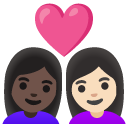
Couple With Heart: Woman, Woman, Dark Skin Tone, Light Skin Tone
U+1F469 U+1F3FF U+200D U+2764 U+FE0F U+200D U+1F469 U+1F3FB · :couple_with_heart_woman_woman_dark_skin_tone_light_skin_tone:
Trend 65
Meaning layers
- interpretation
- Used to celebrate WLW (women-loving-women) relationships, sapphic love, and interracial queer couples. Often deployed as a pride statement or to signal allyship and representation.
- tiktok usage
- Appears in WLW content, sapphic couple reveals, pride month videos, and 'relationship goals' content celebrating queer interracial couples.
- irony level
- 1 / 10
Platform meanings
- meaning
- Represents WLW love, sapphic relationships, and queer interracial couples; a celebratory and identity-affirming symbol.
- trend usage
- Used in pride month content, couple reveal videos, 'day in the life of a queer couple' vlogs, and representation celebration stitches.
- hashtags
- #WLW#SapphicTikTok#QueerCouple#PrideTikTok#InterracialCouple
- virality score
- 72 / 100
Cultural meanings
🇺🇸
Western / Gen-Z
Widely embraced as a celebratory symbol of WLW love and intersectional identity combining queerness and racial diversity; extremely positive connotation.
🇵🇰
Pakistan & India
Rarely used publicly due to social and legal stigmas around same-sex relationships; may appear in private LGBTQ+ digital spaces or among urban progressive youth.
🌍
Middle East
Largely avoided in public communication due to legal and cultural prohibitions on same-sex relationships; used discreetly in underground LGBTQ+ communities.
🌐
Global Neutral
Broadly understood as representing a same-sex female couple; recognized internationally as an LGBTQ+ symbol even where cultural context varies.
🇧🇩
Bangladesh
Rarely used publicly due to conservative social norms; may appear in private messaging among younger urban LGBTQ+-aware individuals.
🇱🇰
Sri Lanka
Uncommon in mainstream use; occasionally appears in private digital spaces among younger progressive communities aware of LGBTQ+ culture.
🇨🇳
China
Rarely used openly due to censorship and social stigma around LGBTQ+ content; may appear in niche queer online communities using coded language.
🇯🇵
Japan
Used within yuri (WLW) fan communities and LGBTQ+ circles; more accepted in digital subcultures than in mainstream public communication.
🇰🇷
South Korea
Emerging use in LGBTQ+ online spaces and among younger progressive generations, though still uncommon in mainstream Korean digital culture.
🇹🇼
Taiwan
Used positively and openly — Taiwan's LGBTQ+ rights progress makes this emoji widely accepted as a celebration of same-sex love.
🇭🇰
Hong Kong
Used within LGBTQ+ communities and among younger progressive residents; recognized positively in the context of ongoing advocacy for queer rights.
🇵🇭
Philippines
Mixed reception — used openly among urban progressive youth and LGBTQ+ communities, but uncommon in conservative or religious contexts.
🇮🇩
Indonesia
Very rarely used publicly due to strong conservative and religious opposition to LGBTQ+ visibility; confined to private or underground digital spaces.
🇹🇭
Thailand
Used openly in Thailand's relatively visible LGBTQ+ culture, especially among younger generations and within queer entertainment communities.
🇻🇳
Vietnam
Infrequent in mainstream use but appears in younger, urban LGBTQ+ digital communities where visibility has been slowly growing.
🇲🇾
Malaysia
Rarely used in public due to legal and religious restrictions on LGBTQ+ expression; seen only in private or diaspora digital spaces.
🇸🇦
Saudi Arabia
Essentially unused in public digital communication due to strict legal prohibitions; any usage would be highly private and discreet.
🇦🇪
UAE
Avoided in public digital spaces due to legal restrictions on LGBTQ+ expression; may appear among expat LGBTQ+ communities in private messaging.
🇪🇬
Egypt
Rarely used due to significant social and legal stigma; confined to very private LGBTQ+ digital spaces where safety is a concern.
🇹🇷
Turkey
Increasingly sensitive given rising anti-LGBTQ+ political rhetoric; used mainly within underground or private queer Turkish digital communities.
🇮🇷
Iran
Essentially absent from public digital communication due to severe legal consequences for LGBTQ+ expression; used only in the most private contexts.
🇳🇬
Nigeria
Rarely used publicly due to legal prohibitions on same-sex relationships and strong cultural opposition; confined to private LGBTQ+ digital communities.
🇿🇦
South Africa
Used positively in South Africa's constitutionally progressive LGBTQ+ landscape, particularly in urban areas and activist communities.
🇬🇧
UK & Ireland
Widely and positively used to celebrate WLW couples and queer diversity; common in social media posts, dating apps, and LGBTQ+ advocacy content.
🇫🇷
France
Used openly and positively in French digital culture, particularly among younger generations and in urban LGBTQ+ communities celebrating queer love.
🇩🇪
Germany
Embraced positively in Germany's relatively progressive LGBTQ+ culture; used in social media, pride contexts, and as a diversity affirmation symbol.
🇪🇸
Spain & Italy
Widely accepted in Spain's progressive LGBTQ+ culture; in Italy, increasingly used among younger queer communities despite more conservative broader context.
🇧🇷
Brazil
Used enthusiastically in Brazil's large and vibrant LGBTQ+ community, particularly around pride events and in WLW social media spaces.
🇲🇽
Mexico
Growing positive use among urban LGBTQ+ youth and allies; remains uncommon in more conservative or rural digital contexts.
🌎
Latin America
Usage varies significantly across Latin America — celebrated in progressive urban communities but largely absent in more conservative regional contexts.
🇦🇺
Australia & NZ
Widely and positively embraced in Australia and New Zealand's inclusive LGBTQ+ cultures; common in couple content, pride posts, and ally communication.
How its meaning shifted
- 2010
This specific emoji did not exist in 2010; same-sex couple representation in emoji was nonexistent, and skin tone modifiers had not been introduced yet.
- 2015
Skin tone modifiers were introduced to Unicode in 2015 and early same-sex couple emojis began appearing; multi-skin-tone combinations for couples were not yet available.
- 2020
Multi-skin-tone same-sex couple emojis began rolling out in Unicode 13.1; early adoption by LGBTQ+ communities celebrating the increased intersectional representation.
- 2026
Normalized as a standard symbol of WLW love and interracial queer relationships; used across all major platforms with broad cultural recognition in progressive digital spaces.
See it on every platform
Adjacent emojis
- Often confused with
- people holding handscouple with hearthandshake
- Can replace
- two heartsrainbow flagwomen holding hands
Share & embed
Frequently asked
01What does the 👩🏿❤️👩🏻 Couple With Heart: Woman, Woman, Dark Skin Tone, Light Skin Tone emoji mean?
A couple with heart emoji featuring two women, one with dark skin tone and one with light skin tone, representing a romantic relationship between two women with diverse skin tones.
02What does 👩🏿❤️👩🏻 mean on TikTok?
Represents WLW love, sapphic relationships, and queer interracial couples; a celebratory and identity-affirming symbol.
03What does 👩🏿❤️👩🏻 mean on WhatsApp?
Sent between WLW partners as an affectionate symbol of their relationship, or by friends celebrating a queer couple they know.
04What does 👩🏿❤️👩🏻 mean in Gen-Z slang?
Used to celebrate WLW (women-loving-women) relationships, sapphic love, and interracial queer couples. Often deployed as a pride statement or to signal allyship and representation.
05Is the 👩🏿❤️👩🏻 emoji safe to use?
A positive, affirming symbol of same-sex female love and interracial relationship diversity; used to celebrate LGBTQ+ identity and inclusion.
06What does 👩🏿❤️👩🏻 mean in texting?
This emoji carries dual affirming weight — both queerness and racial diversity — making it especially emotionally significant for those who identify with both dimensions, evoking visibility, validation, and joy.
07What is the shortcode for 👩🏿❤️👩🏻?
The shortcode for Couple With Heart: Woman, Woman, Dark Skin Tone, Light Skin Tone is :couple_with_heart_woman_woman_dark_skin_tone_light_skin_tone:
08What does 👩🏿❤️👩🏻 mean in dating?
Used by WLW individuals to signal romantic interest or availability on dating profiles and DMs, or to celebrate an established partner publicly.
Safety & usage
- Safe meaning
- A positive, affirming symbol of same-sex female love and interracial relationship diversity; used to celebrate LGBTQ+ identity and inclusion.
- Caution
- Rarely weaponized; occasionally co-opted by bad actors to mockingly tag anti-LGBTQ+ content, or used in performative corporate pride-washing.
Generally very safe; users in countries with anti-LGBTQ+ laws should exercise caution when using this emoji in public or semi-public digital spaces due to potential legal or social consequences.
How it looks across platforms
Appearance varies by platform and device. Google Noto, Twemoji, and OpenMoji are open-source.