🌑
The Emoji
New Moon
U+1F311 · :new_moon:
Trend 74
Meaning layers
- interpretation
- Used to signal darkness, mystery, villainy, or an edgy vibe. Often signals someone is 'in their dark era' or being cryptically dramatic online.
- tiktok usage
- Placed at the end of captions to add ominous energy, or used in dark aesthetic content and villain-coded posts.
- irony level
- 6 / 10
Platform meanings
- meaning
- Symbol of dark aesthetics, villain eras, and moody content. Frequently used in dark cottagecore, witchcore, and gothic TikTok communities.
- trend usage
- Appears in 'dark era' trend captions, NPC villain edits, and lunar/witch aesthetic videos.
- hashtags
- #darkaesthetic#newmoon#villainera#mooncore#darkera
- virality score
- 72 / 100
Cultural meanings
🇺🇸
Western / Gen-Z
Deeply tied to 'villain era,' dark aesthetics, and void posting — signals mystery, edginess, or a deliberate embrace of darkness.
🇵🇰
Pakistan & India
Used in Urdu/Hindi social media to evoke the night or loneliness; also used in spiritual contexts tied to Islamic lunar calendar new moon sighting.
🌍
Middle East
Carries significant religious meaning as it represents the beginning of the Islamic lunar month — used reverently around Ramadan and Eid announcements.
🌐
Global Neutral
Universally understood as a moon phase symbol, used in astronomical and nature contexts without strong cultural overlay.
🇧🇩
Bangladesh
Used similarly to Pakistan/India — lunar significance in Islamic contexts and occasional poetic use for night or solitude in Bengali social media.
🇱🇰
Sri Lanka
Used in astronomy and nature content; also appears in Buddhist lunar calendar contexts, as full and new moons are significant in Theravada practice.
🇨🇳
China
Associated with lunar calendar and moon worship traditions; used during lunar new year countdowns and astronomy-related content on WeChat and Weibo.
🇯🇵
Japan
Used in poetic and aesthetic contexts tied to 月 (tsuki/moon) appreciation culture; appears in manga-inspired dark aesthetic posts and midnight vibes.
🇰🇷
South Korea
Popular in dark K-pop fan edits, villain-coded idol content, and aesthetic mood posts on platforms like KakaoTalk and Instagram.
🇹🇼
Taiwan
Used in lunar festival contexts and dark aesthetic content; resonates with younger users in alternative music and art communities.
🇭🇰
Hong Kong
Used casually for night or dark moods; also appears in protest-related contexts historically as a symbol of blackout or silence.
🇵🇭
Philippines
Used in late-night relatable content, OPM (Original Pilipino Music) dark aesthetic posts, and astrology-curious Gen Z Filipino communities.
🇮🇩
Indonesia
Common in Islamic new moon (hilal) sighting contexts and Ramadan content; also used by younger users in dark aesthetic and K-pop fan communities.
🇹🇭
Thailand
Used in astrology, Buddhist lunar calendar content, and dark K-pop-influenced aesthetic posts among Thai youth.
🇻🇳
Vietnam
Appears in lunar calendar discussions and night-themed content; younger Vietnamese users adopt it in dark or mysterious aesthetic contexts.
🇲🇾
Malaysia
Used for Islamic lunar month beginnings and Ramadan announcements; also adopted by younger users in dark aesthetic and gaming communities.
🇸🇦
Saudi Arabia
Primarily used in Islamic contexts for new moon sighting announcements, Ramadan start, and Eid declarations — carries significant religious weight.
🇦🇪
UAE
Similar to Saudi Arabia with religious lunar significance; also used by the cosmopolitan youth demographic in dark aesthetic and luxury night-life content.
🇪🇬
Egypt
Strongly associated with the Islamic new moon and Ramadan — used widely on social media for crescent moon sighting announcements and religious content.
🇹🇷
Turkey
Used in religious lunar calendar contexts and also in dark romantic or poetic Turkish social media content, echoing Ottoman literary moon symbolism.
🇮🇷
Iran
Associated with Persian lunar calendar traditions and Nowruz cultural content; also used by younger Iranians in dark aesthetic and protest-adjacent silent posts.
🇳🇬
Nigeria
Used in nighttime content, dark humor, and by Muslim communities for Islamic lunar calendar observance; increasingly adopted in Afrobeats dark aesthetic visuals.
🇿🇦
South Africa
Used in nighttime content, dark humor memes, and by Muslim South African communities for Ramadan crescent moon sighting announcements.
🇬🇧
UK & Ireland
Used in dark humor, goth and alternative subculture content, and in witchcraft/pagan communities marking new moon ritual dates.
🇫🇷
France
Used in minimalist aesthetic contexts and by younger users in dark romance or philosophical void-posting traditions; less religiously coded.
🇩🇪
Germany
Used in astronomy enthusiast communities, dark techno/industrial music aesthetics, and philosophical or nihilistic social media discourse.
🇪🇸
Spain & Italy
Used in nighttime romantic content, dark aesthetic posts, and by younger users in gothic or alternative subcultures; also appears in lunar festival contexts.
🇧🇷
Brazil
Used in Candomblé and Umbanda spiritual contexts where lunar phases carry religious significance; also popular in dark aesthetic and LGBTQ+ alt communities.
🇲🇽
Mexico
Associated with lunar symbolism in indigenous cultural contexts; used in dark aesthetic Latinx content and by younger users in villain-era or moody posts.
🌎
Latin America
Broadly used in spiritual/indigenous lunar contexts, dark aesthetic content, and as a symbol of nighttime romanticism or mystery across Latin American platforms.
🇦🇺
Australia & NZ
Used in dark humor, goth and alternative communities, and by Aboriginal and Māori users in some lunar/celestial cultural contexts; also popular in astrology content.
How its meaning shifted
- 2010
Used almost exclusively in astronomical and scientific contexts to represent the new moon phase in calendars and weather apps.
- 2015
Began appearing in aesthetic Tumblr posts, witchcraft communities, and lunar cycle tracking content on early Instagram.
- 2020
Exploded in dark aesthetic, dark academia, and witchcore TikTok communities; widely adopted for villain-era and void-posting meme formats.
- 2026
Firmly established as the primary 'dark energy' emoji, used across platforms for villain arcs, void aesthetics, and cryptic online communication alongside religious lunar contexts.
See it on every platform
Emoji combinations
Adjacent emojis
- Opposite
- sunfull moonbright button
- Often confused with
- black circlewaxing crescent moonnew moon face
- Can replace
- black circleblack heartwaning crescent moon
Share & embed
Frequently asked
01What does the 🌑 New Moon emoji mean?
The New Moon emoji depicts the moon phase when the moon is not visible from Earth, appearing as a completely dark circle.
02What does 🌑 mean on TikTok?
Symbol of dark aesthetics, villain eras, and moody content. Frequently used in dark cottagecore, witchcore, and gothic TikTok communities.
03What does 🌑 mean on WhatsApp?
Signals a late-night message, dark mood, or mysterious vibe in casual chats.
04What does 🌑 mean in Gen-Z slang?
Used to signal darkness, mystery, villainy, or an edgy vibe. Often signals someone is 'in their dark era' or being cryptically dramatic online.
05Is the 🌑 emoji safe to use?
Represents the new moon lunar phase, darkness, mystery, nighttime, new beginnings, and dark aesthetics.
06What does 🌑 mean in texting?
The new moon psychologically represents beginnings hidden in darkness, the unknown, and the subconscious. It resonates with people processing quiet solitude or emotional depth.
07What is the shortcode for 🌑?
The shortcode for New Moon is :new_moon:
08What does 🌑 mean in dating?
Used to hint at a dark, mysterious, or brooding personality — the classic 'I'm complicated' flirt signal.
Safety & usage
- Safe meaning
- Represents the new moon lunar phase, darkness, mystery, nighttime, new beginnings, and dark aesthetics.
- Caution
- Occasionally used in context of 'blackout' content, ghosting signals, or paired with nihilistic self-deprecating humor in mental health-sensitive contexts.
Generally safe. In rare cases, heavy use paired with distress language may signal emotional withdrawal or depressive ideation — context-dependent moderation recommended.
How it looks across platforms
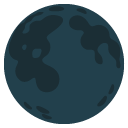


Appearance varies by platform and device. Google Noto, Twemoji, and OpenMoji are open-source.