🧏🏽♂️
The Emoji
Deaf Man: Medium Skin Tone
U+1F9CF U+1F3FD U+200D U+2642 U+FE0F · :deaf_man_medium_skin_tone:
Trend 44
Meaning layers
- interpretation
- Used to signal 'I'm not listening to this', 'I can't hear the drama', or to express selective hearing in a humorous way. Also used genuinely to represent deaf identity and ASL culture.
- tiktok usage
- Appears in videos about deaf culture, ASL tutorials, or as a reaction to something worth ignoring. Sometimes used sarcastically as 'not my problem' energy.
- irony level
- 5 / 10
Platform meanings
- meaning
- Represents deaf culture, ASL content, or the act of tuning something out. Frequently seen in For You Page content about disability awareness.
- trend usage
- Used in ASL challenge videos, deaf creator spotlights, and sarcastically in 'ignoring toxic people' trends.
- hashtags
- #DeafTikTok#ASL#DeafCulture#HardOfHearing#DeafAwareness
- virality score
- 52 / 100
Cultural meanings
🇺🇸
Western / Gen-Z
Heavily used both genuinely to celebrate deaf culture and ironically to express 'not listening to negativity'. It holds dual cultural weight as both identity symbol and meme tool.
🇵🇰
Pakistan & India
Primarily interpreted literally as someone who is deaf or mute; less ironic usage. Used in awareness campaigns for disability rights and sign language promotion.
🌍
Middle East
Generally understood as a symbol for hearing impairment; appears in disability awareness content and religious charity discussions about supporting those with disabilities.
🌐
Global Neutral
Universally recognized as representing a deaf or hard-of-hearing person, making it a safe inclusive symbol across cultures without strong ironic connotations.
🇧🇩
Bangladesh
Used mainly in disability advocacy content and social awareness campaigns; ironic usage is minimal and the emoji carries respectful, literal meaning.
🇱🇰
Sri Lanka
Interpreted as a disability symbol; used in educational content about deaf communities and inclusive communication efforts.
🇨🇳
China
Used in disability awareness content; the medium skin tone may be adjusted to light or yellow by users. Ironic usage of 'not listening' exists among younger netizens on Weibo.
🇯🇵
Japan
Interpreted respectfully as a symbol for the deaf community; used in inclusive content and social responsibility campaigns. Ironic usage is rare given cultural sensitivity.
🇰🇷
South Korea
Used in disability representation content and K-drama communities when discussing deaf characters. Young users occasionally use it as a 'tuning out haters' symbol.
🇹🇼
Taiwan
Similar to mainland China usage — primarily disability representation, with emerging ironic use among younger social media users.
🇭🇰
Hong Kong
Used in disability advocacy and occasionally in Cantonese social media humor to signal selective listening to unwanted opinions.
🇵🇭
Philippines
Used genuinely to represent deaf community members and in content about sign language; ironic 'not listening' use also present among younger Filipinos.
🇮🇩
Indonesia
Primarily used in disability awareness and Islamic charity contexts; younger users also adopt it as a lighthearted 'blocking out negativity' symbol.
🇹🇭
Thailand
Associated with deaf community representation; used in social campaigns and occasionally in humor content about ignoring bad advice.
🇻🇳
Vietnam
Mostly literal usage in disability and healthcare contexts; Vietnamese sign language communities use it as a community identifier online.
🇲🇾
Malaysia
Used in multicultural disability awareness content; younger Malaysians also use it humorously in group chats to signal disengagement.
🇸🇦
Saudi Arabia
Interpreted as a disability symbol; appears in content about Islamic responsibility toward people with disabilities and charitable initiatives.
🇦🇪
UAE
Used in inclusion and diversity campaigns within the Gulf's international community; also used humorously by expat youth communities.
🇪🇬
Egypt
Generally understood as a hearing-impairment symbol; used in Egyptian disability rights discussions and awareness social media posts.
🇹🇷
Turkey
Used in disability advocacy and awareness content; younger Turkish social media users adopt it humorously to signal ignoring drama.
🇮🇷
Iran
Primarily understood as a disability symbol; used in content about deaf education and support for hard-of-hearing individuals.
🇳🇬
Nigeria
Used in disability representation and awareness content; also adopted humorously in Nigerian social media to signal 'not your business' attitudes.
🇿🇦
South Africa
Used in disability inclusion campaigns and deaf culture representation; ironic usage also present in youth social media culture.
🇬🇧
UK & Ireland
Dual usage — genuine representation in disability inclusion content and ironic 'not listening to nonsense' meme usage especially on Twitter/X.
🇫🇷
France
Used in content about deaf culture and LSF (French Sign Language); younger French users occasionally use it as a dismissive gesture online.
🇩🇪
Germany
Associated with disability representation and DGS (German Sign Language) communities; used in workplace inclusion and accessibility discussions.
🇪🇸
Spain & Italy
Used in disability awareness campaigns and sign language advocacy; also appears in youth meme culture as a symbol of selective attention.
🇧🇷
Brazil
Popular in LIBRAS (Brazilian Sign Language) communities and deaf advocacy content; also used humorously by younger Brazilians to signal ignoring haters.
🇲🇽
Mexico
Used in disability awareness and LSM (Mexican Sign Language) content; Gen Z users also use it in memes about tuning out toxic people.
🌎
Latin America
Across Latin America, used for disability representation and sign language education content, with increasing ironic youth usage.
🇦🇺
Australia & NZ
Used both in Auslan and NZSL community content and as a lighthearted meme emoji for 'not hearing bad vibes'; reflects inclusive social media culture.
How its meaning shifted
- 2010
Emoji did not exist yet; deaf representation in digital communication was largely absent from standard emoji sets.
- 2015
Early disability and diversity emoji proposals were being developed; placeholder gestures were used loosely in disability discussions.
- 2020
Introduced as part of Unicode's diversity and inclusion push; adopted by deaf communities globally for identity representation and used by allies in awareness content.
- 2026
Widely recognized dual-use emoji — both a proud identity symbol for the deaf community and a mainstream meme for expressing selective listening or ignoring negativity.
See it on every platform
Compare with
Adjacent emojis
Share & embed
Frequently asked
01What does the 🧏🏽♂️ Deaf Man: Medium Skin Tone emoji mean?
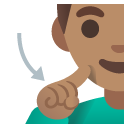
A male-presenting person with medium skin tone using sign language hand gesture near the ear/face, representing deafness or hearing impairment.
02What does 🧏🏽♂️ mean on TikTok?
Represents deaf culture, ASL content, or the act of tuning something out. Frequently seen in For You Page content about disability awareness.
03What does 🧏🏽♂️ mean on WhatsApp?
Sent to indicate 'I'm not listening' or 'talk to the hand' energy in group chats or one-on-one conversations.
04What does 🧏🏽♂️ mean in Gen-Z slang?
Used to signal 'I'm not listening to this', 'I can't hear the drama', or to express selective hearing in a humorous way. Also used genuinely to represent deaf identity and ASL culture.
05Is the 🧏🏽♂️ emoji safe to use?
Represents deaf identity, hearing impairment awareness, and sign language culture. Universally appropriate in inclusive and accessibility contexts.
06What does 🧏🏽♂️ mean in texting?
Carries dual emotional weight — genuine pride and representation for the deaf community, while also functioning as a dismissive or boundary-setting gesture in casual usage. Represents both vulnerability and strength.
07What is the shortcode for 🧏🏽♂️?
The shortcode for Deaf Man: Medium Skin Tone is :deaf_man_medium_skin_tone:
08What does 🧏🏽♂️ mean in dating?
Rarely used in flirting; could signal 'I'm done listening to your excuses' in a playful way or as part of a self-deprecating joke about communication.
Safety & usage
- Safe meaning
- Represents deaf identity, hearing impairment awareness, and sign language culture. Universally appropriate in inclusive and accessibility contexts.
- Caution
- Can be used dismissively to mock someone's concerns or communication, implying their words are not worth hearing — though this is less common.
Using this emoji sarcastically toward deaf or hard-of-hearing individuals could be considered insensitive or ableist. Context matters significantly.
How it looks across platforms
Appearance varies by platform and device. Google Noto, Twemoji, and OpenMoji are open-source.