🧝🏽
The Emoji
Elf: Medium Skin Tone
U+1F9DD U+1F3FD · :elf_medium_skin_tone:
Trend 52
Meaning layers
- interpretation
- Used to express a whimsical, magical, or otherworldly personality. Often deployed ironically to describe someone who seems ethereal, unbothered, or living in their own fantasy world. Also used for LOTR/fantasy fandom expression.
- tiktok usage
- Appears in fantasy aesthetic content, cottagecore videos, and ironically when someone does something graceful or weirdly skilled — 'you move like a 🧝🏽'.
- irony level
- 5 / 10
Platform meanings
- meaning
- Represents fantasy aesthetics, magical personalities, and cottagecore or dark fantasy content
- trend usage
- Paired with forest sounds, ASMR nature content, fantasy book recommendations, or used when describing someone with inexplicably good skills
- hashtags
- #fantasytok#elvish#cottagecore#fantasybooktok#maincharacter
- virality score
- 58 / 100
Cultural meanings
🇺🇸
Western / Gen-Z
Embraced as a fantasy identity marker and used ironically to describe someone effortlessly cool, graceful, or magical. Deeply tied to cottagecore, fairycore, and fantasy fandom culture.
🇵🇰
Pakistan & India
Less commonly used in everyday chat; when used, it references fantasy video games, Bollywood fantasy sequences, or is borrowed from Western internet culture by younger generations.
🌍
Middle East
Primarily used by younger, internet-savvy populations in reference to games like LOTR or RPGs. Elves are a Western concept so cultural resonance is mostly digital/gaming-related.
🌐
Global Neutral
Universally understood as a fantasy creature reference, associated with pointed ears and magical abilities. Broadly used in gaming and fantasy fandoms worldwide without strong cultural baggage.
🇧🇩
Bangladesh
Limited everyday use; primarily appears among gaming communities and those exposed to Western fantasy media. Occasionally used humorously to describe someone unusually graceful or skilled.
🇱🇰
Sri Lanka
Rarely used in mainstream chat; fantasy media fans and gamers use it in online spaces. May be associated with mythological beings from local folklore by some users making creative connections.
🇨🇳
China
Used in gaming communities, particularly for fantasy RPG titles popular in China like Genshin Impact. Elves (精灵) are popular in Chinese fantasy culture so the emoji resonates with younger gamers.
🇯🇵
Japan
Connected to the long tradition of elf characters in Japanese RPGs and anime. Used by manga/anime fans and gamers to reference elf-type characters, often seen as graceful and elegant.
🇰🇷
South Korea
Popular in gaming culture and K-fantasy media fandoms. Associated with games like Lost Ark and Korean fantasy webtoons where elf characters are a beloved trope.
🇹🇼
Taiwan
Used in gaming and fantasy media communities. Taiwanese internet culture embraces fantasy aesthetics so the emoji is used comfortably in fandom and creative spaces.
🇭🇰
Hong Kong
Used among younger, Western-media-exposed users and gaming communities. Appears in discussions about fantasy games and shows with some ironic usage borrowed from English-language internet.
🇵🇭
Philippines
Popular among Filipino gamers and fantasy fans; the Philippines has a rich tradition of mythological beings so elves resonate as magical creatures. Used creatively in meme culture.
🇮🇩
Indonesia
Used in gaming and anime communities. Indonesian fantasy fans connect elves to both Western and Japanese fantasy traditions, making this emoji comfortable in fandom spaces.
🇹🇭
Thailand
Used by gamers and fantasy media fans. Thai mythology has its own magical beings so elves are understood as a Western equivalent; the emoji is used in creative and gaming circles.
🇻🇳
Vietnam
Primarily used in gaming communities and among fans of fantasy anime and manga. Limited use in mainstream messaging but growing among younger, internet-native users.
🇲🇾
Malaysia
Used in gaming and fandom communities. Malaysian youth culture's engagement with Western and Japanese fantasy media makes this emoji recognizable and usable in those contexts.
🇸🇦
Saudi Arabia
Primarily used by younger, gaming-oriented Saudis in reference to fantasy games and media. Limited cultural parallel to native mythology but understood through global fantasy media exposure.
🇦🇪
UAE
Used by the cosmopolitan, gaming-savvy youth population. In the UAE's diverse digital culture, fantasy emojis like this are used freely by those engaged with Western and global media.
🇪🇬
Egypt
Used occasionally by younger Egyptians in gaming and fantasy fandoms. Sometimes humorously connected to ancient Egyptian mythology's magical creatures as a playful cultural bridge.
🇹🇷
Turkey
Used in gaming communities and among fans of fantasy series. Turkey has a strong gaming culture where elf characters in RPGs make this emoji immediately recognizable and relatable.
🇮🇷
Iran
Used by younger, internet-savvy Iranians in gaming and fantasy fandom spaces. Elf characters resonate through global RPG and anime culture accessed via VPN-enabled platforms.
🇳🇬
Nigeria
Used by younger Nigerians in gaming and fantasy media communities. Growing Afrofuturism and fantasy genre interest makes fantasy creature emojis increasingly relevant in Nigerian digital culture.
🇿🇦
South Africa
Used in gaming and fandom communities. South Africa's diverse youth culture engages strongly with Western fantasy media, making this emoji recognizable particularly in gaming circles.
🇬🇧
UK & Ireland
Strongly associated with Tolkien's legacy and rich British/Irish fantasy literature traditions. Used enthusiastically in fandom spaces and ironically in everyday internet humor by Gen Z.
🇫🇷
France
Used in gaming and fantasy media communities. France has a strong tabletop and video game culture where elf characters are beloved, making this emoji highly recognizable among younger users.
🇩🇪
Germany
Popular in gaming communities and among fantasy literature fans. Germany's strong board game and RPG culture means elves are a well-understood fantasy concept embraced in digital communication.
🇪🇸
Spain & Italy
Used in gaming and fantasy fandom communities. Both countries have growing gaming cultures where fantasy characters like elves are widely recognized through video games and fantasy media.
🇧🇷
Brazil
Used by Brazilian gamers and fantasy fans with enthusiasm. Brazil's massive gaming community and engagement with fantasy media makes this emoji popular in those digital spaces.
🇲🇽
Mexico
Used in gaming and fantasy media communities. Mexican youth culture's strong engagement with RPGs and fantasy games makes elf-related emojis recognizable and fun to use.
🌎
Latin America
Broadly used across Latin American gaming and fantasy fandoms. The region's growing gaming culture ensures elf emojis are understood and used playfully in relevant communities.
🇦🇺
Australia & NZ
Used in gaming, cosplay, and fantasy fan communities. Strong Tolkien connection given LOTR filming in New Zealand gives the elf emoji particular cultural resonance in Australasia.
How its meaning shifted
- 2010
Emoji did not exist yet; elf concepts in digital spaces were represented through text emoticons or custom forum graphics in fantasy communities.
- 2015
Still pre-release; fantasy creature emojis were not yet part of standard Unicode sets. Fantasy communities used ☆, ✨, and 🌿 as proxies.
- 2020
Introduced as part of Emoji 12.0 (2019) and gaining traction. Used primarily in fantasy fandoms, gaming communities, and emerging cottagecore aesthetic spaces on TikTok and Instagram.
- 2026
Firmly embedded in fantasy aesthetic culture, Gen Z ironic usage, and gaming identity expression. Used broadly across platforms in both sincere fandom contexts and ironic 'I'm too ethereal for this' humor.
See it on every platform
Adjacent emojis
- Often confused with
- person fairysanta clausmerperson
- Can replace
- sparklesfairyleaf fluttering in wind
Share & embed
Frequently asked
01What does the 🧝🏽 Elf: Medium Skin Tone emoji mean?
A fantasy elf character with medium skin tone, depicted with pointed ears and typically wearing nature-inspired or magical attire. Represents the mythological elf creature from folklore and fantasy fiction.
02What does 🧝🏽 mean on TikTok?
Represents fantasy aesthetics, magical personalities, and cottagecore or dark fantasy content
03What does 🧝🏽 mean on WhatsApp?
Playfully calling someone magical or ethereal in casual chat
04What does 🧝🏽 mean in Gen-Z slang?
Used to express a whimsical, magical, or otherworldly personality. Often deployed ironically to describe someone who seems ethereal, unbothered, or living in their own fantasy world. Also used for LOTR/fantasy fandom expression.
05Is the 🧝🏽 emoji safe to use?
A harmless fantasy creature emoji used to express magical aesthetics, gaming identity, and whimsical personality.
06What does 🧝🏽 mean in texting?
Psychologically linked to escapism and a desire for magic in everyday life. Users who frequently use this emoji may lean into fantasy as a coping mechanism or identity expression, seeking wonder outside mundane reality.
07What is the shortcode for 🧝🏽?
The shortcode for Elf: Medium Skin Tone is :elf_medium_skin_tone:
08What does 🧝🏽 mean in dating?
Used flirtatiously to call someone enchanting or otherworldly beautiful — 'you literally look like a 🧝🏽 wtf'. Can signal a playful, fantasy-loving personality.
Safety & usage
- Safe meaning
- A harmless fantasy creature emoji used to express magical aesthetics, gaming identity, and whimsical personality.
- Caution
- Occasionally used in toxic gaming contexts to mock players condescendingly — implying someone is living in a fantasy or is delusional about their abilities.
No significant safety concerns. Minimal risk of harmful use. Occasionally used in dismissive or condescending ways to imply someone is out of touch with reality.
How it looks across platforms
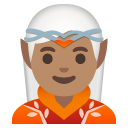


Appearance varies by platform and device. Google Noto, Twemoji, and OpenMoji are open-source.