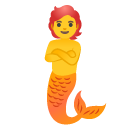
🧜
The Emoji
Merperson
U+1F9DC · :merperson:
Trend 62
Meaning layers
- interpretation
- Used to express feeling magical, otherworldly, or like you don't belong in the mundane world. Often signals a whimsical, fantasy-loving personality or a desire to escape reality. Also used by those who identify with fluid, non-binary, or queer identities.
- tiktok usage
- Appears in ocean aesthetic videos, fantasy transformation content, sea witch/cottagecore trends, and queer self-expression posts. Also used sarcastically to call out someone who is slippery, elusive, or impossible to pin down.
- irony level
- 4 / 10
Platform meanings
- meaning
- Represents the mermaidcore or ocean aesthetic trend, fantasy transformation, and queer/non-binary identity expression. Also used in escapism content.
- trend usage
- Heavily used in #mermaidcore, sea witch TikTok, ocean GRWM videos, and fantasy cosplay transformations. Pairs with slow-mo ocean footage and ethereal audio.
- hashtags
- #mermaidcore#seatiktok#fantasyaesthetic#merperson#oceangirl
- virality score
- 68 / 100
Cultural meanings
🇺🇸
Western / Gen-Z
Strongly associated with mermaidcore fashion, queer/non-binary identity expression, and escapist fantasy aesthetics — one of Gen Z's go-to emojis for signaling a dreamy, oceanic personality.
🇵🇰
Pakistan & India
Primarily understood as a reference to the mythological sea creature (similar to 'Jalpari' in South Asian folklore). Used in fantasy contexts, mermaid-themed media discussions, and occasionally in aesthetic social media posts by younger users.
🌍
Middle East
Recognized as a mythological figure with some overlap with Arabic sea folklore. Used mostly in fantasy and pop culture contexts; less common in everyday messaging.
🌐
Global Neutral
Universally understood as a mermaid/merman figure — a mythological aquatic humanoid. Used for ocean themes, fantasy content, and fairy tale references across all cultures.
🇧🇩
Bangladesh
Associated with fairy tale and fantasy imagery. Occasionally used in social media by younger users influenced by Western mermaidcore trends or Disney's The Little Mermaid.
🇱🇰
Sri Lanka
Used in ocean and beach-related contexts given Sri Lanka's coastal culture. Also appears in fantasy and folklore discussions, with some resonance to local sea mythology.
🇨🇳
China
Connected to Chinese sea mythology (美人鱼, 'mermaid'). Used in fantasy media discussions, cosplay communities, and aesthetic social media. Popularity spiked with Chinese mermaid-themed dramas.
🇯🇵
Japan
Linked to Japanese folklore figures like the Ningyo (人魚). Popular in anime and manga communities, cosplay, and kawaii aesthetic content. Widely understood and positively received.
🇰🇷
South Korea
Associated with K-drama fantasy themes and idol aesthetic culture. Used in ocean aesthetic content, fantasy fan communities, and occasionally in K-beauty posts with an ethereal, 'water skin' concept.
🇹🇼
Taiwan
Used in fantasy media fan communities and ocean aesthetic posts. Has some cultural resonance with Taiwanese coastal identity and folklore.
🇭🇰
Hong Kong
Used in pop culture, cosplay, and ocean-themed content. Resonates with Hong Kong's coastal identity and appears in fantasy media discussions.
🇵🇭
Philippines
Deeply resonant given the Philippines' maritime culture and local folklore figures like the Sirena. Used widely in fantasy, ocean, and folklore discussions with genuine cultural affinity.
🇮🇩
Indonesia
Connected to Indonesian sea mythology (Putri Duyung). Used in fantasy, ocean, and folklore contexts with cultural familiarity. Also appears in aesthetic social media.
🇹🇭
Thailand
Associated with Thai sea folklore and Buddhist artistic traditions featuring aquatic beings. Used in fantasy content, cosplay, and ocean-themed social media.
🇻🇳
Vietnam
Used in fantasy and ocean contexts. Has some overlap with Vietnamese folklore of aquatic spirits. More common among younger, Western-influenced social media users.
🇲🇾
Malaysia
Recognized through local folklore and Western pop culture. Used in ocean, fantasy, and cosplay communities. Has a dual resonance with Malay sea mythology.
🇸🇦
Saudi Arabia
Primarily used in pop culture and fantasy media contexts. Mythological nature means it's generally culturally neutral — used mainly by younger, socially liberal audiences.
🇦🇪
UAE
Used in cosmopolitan social media contexts, fashion, and fantasy aesthetics. Popular among diverse expat and younger Emirati audiences influenced by global trends.
🇪🇬
Egypt
Has some resonance with ancient Egyptian and Mediterranean sea mythology. Used mostly in fantasy, pop culture, and ocean aesthetic contexts among younger Egyptians.
🇹🇷
Turkey
Connected to Mediterranean and Black Sea coastal culture. Used in ocean, fantasy, and folklore discussions. Younger Turkish users use it in aesthetic and pop culture contexts.
🇮🇷
Iran
Used mainly in fantasy and pop culture contexts. Sea creature mythology has some Persian folklore parallels. More common among younger, internet-connected Iranian users.
🇳🇬
Nigeria
Used in fantasy media and pop culture contexts. Growing adoption among younger Nigerians influenced by global social media trends, particularly mermaidcore aesthetics.
🇿🇦
South Africa
Used in ocean aesthetic content (fitting for a coastal nation) and fantasy/pop culture discussions. Also appears in LGBTQ+ communities as an identity-adjacent emoji.
🇬🇧
UK & Ireland
Associated with British and Celtic sea mythology (selkies, mermaids). Used in fantasy, coastal aesthetic, and queer identity contexts. Common in Harry Potter/fantasy fan communities.
🇫🇷
France
Used in fantasy aesthetic, fashion, and pop culture contexts. French coastal culture gives it some additional resonance. Popular in aesthetic Instagram and TikTok content.
🇩🇪
Germany
Associated with German folklore (Loreley, Rhine maidens). Used in fantasy fan communities, ocean aesthetics, and general pop culture. Straightforward mythological connotation.
🇪🇸
Spain & Italy
Connected to Mediterranean sea mythology and coastal identity. Used in beach, ocean, and fantasy contexts. Popular in summer aesthetic content and fantasy media discussions.
🇧🇷
Brazil
Deeply resonant — Brazil has rich mermaid mythology (Iara, Yemanjá). Used widely in fantasy, Afro-Brazilian religious contexts, and ocean-themed social media with genuine cultural depth.
🇲🇽
Mexico
Has some overlap with coastal and indigenous Mexican sea folklore. Used in fantasy, ocean, and pop culture contexts. Also appears in Afro-Latin cultural discussions around sirena figures.
🌎
Latin America
Broadly resonant across Latin America through rich mermaid and sirena folklore traditions. Used in fantasy, coastal aesthetic, and cultural pride contexts across the region.
🇦🇺
Australia & NZ
Used in beach and ocean aesthetic content (fitting for coastal nations), fantasy media discussions, and LGBTQ+ identity expression. Maori culture (NZ) has aquatic mythology that adds resonance.
How its meaning shifted
- 2010
The merperson emoji did not yet exist in 2010. Mermaid concepts were conveyed via text descriptions or generic ocean emojis like 🌊 or 🐠.
- 2015
Still pre-release; users anticipated mermaid representation. The rise of mermaid fashion trends and mermaid hair aesthetics created demand for the emoji that would come in 2017.
- 2020
Fully established as a core emoji for mermaidcore aesthetics, ocean lovers, and fantasy fans. Gained traction in LGBTQ+ communities as a symbol of fluid, non-binary identity. Little Mermaid live-action buzz added momentum.
- 2026
Embedded in mermaidcore and coastal grandmother aesthetic movements. Strongly associated with queer Gen Z expression, ocean conservation advocacy, and fantasy escapism. One of the go-to emojis for anyone signaling a whimsical, oceanic identity online.
See it on every platform
Emoji combinations
Adjacent emojis
- Opposite
- robotdesert islandfire
- Often confused with
- fairyelfperson swimming
- Can replace
- water wavespiral shellfish
Share & embed
Frequently asked
01What does the 🧜 Merperson emoji mean?
A mythological half-human, half-fish creature depicted with a human upper body and a fish tail, representing the gender-neutral merperson (encompassing both mermaid and merman).
02What does 🧜 mean on TikTok?
Represents the mermaidcore or ocean aesthetic trend, fantasy transformation, and queer/non-binary identity expression. Also used in escapism content.
03What does 🧜 mean on WhatsApp?
Sent to friends who are dreamy, elusive, or hard to reach — 'you're impossible to find, literal merperson 🧜.' Also used to share beach trip excitement.
04What does 🧜 mean in Gen-Z slang?
Used to express feeling magical, otherworldly, or like you don't belong in the mundane world. Often signals a whimsical, fantasy-loving personality or a desire to escape reality. Also used by those who identify with fluid, non-binary, or queer identities.
05Is the 🧜 emoji safe to use?
A mythological aquatic humanoid figure used for ocean aesthetics, fantasy content, cultural folklore references, and identity expression.
06What does 🧜 mean in texting?
Psychologically linked to escapism and the desire to transcend ordinary life. The merperson archetype taps into liminal identity — existing between two worlds — making it resonate with people who feel 'in between' socially, culturally, or in terms of identity.
07What is the shortcode for 🧜?
The shortcode for Merperson is :merperson:
08What does 🧜 mean in dating?
Used flirtatiously to call someone enchanting or irresistibly attractive, as in 'you must be a merperson because I'm hooked 🧜.' Also used to signal a free-spirited, hard-to-catch personality.
Safety & usage
- Safe meaning
- A mythological aquatic humanoid figure used for ocean aesthetics, fantasy content, cultural folklore references, and identity expression.
- Caution
- Rarely used toxically. In some niche contexts, could be used dismissively toward people perceived as 'living in a fantasy world' or to mock someone as 'slippery' and untrustworthy.
Generally very safe. In coded language contexts, be aware it can signal non-binary or gender-fluid identity — not harmful, but users should be aware of this cultural nuance. No significant toxic or harmful usage patterns documented.
How it looks across platforms


Appearance varies by platform and device. Google Noto, Twemoji, and OpenMoji are open-source.