🧚🏾
The Emoji
Fairy: Medium-dark Skin Tone
U+1F9DA U+1F3FE · :fairy_mediumdark_skin_tone:
Trend 65
Meaning layers
- interpretation
- Used to signal whimsical, unbothered, or carefree energy — often paired with self-affirmation or magical thinking. Also used ironically to describe someone who floats through life without engaging with reality.
- tiktok usage
- Appears in 'main character' aesthetic videos, soft life content, and Black girl magic posts; also used when someone is doing something effortlessly cute or mystical.
- irony level
- 4 / 10
Platform meanings
- meaning
- Represents magical, effortless vibes; used in soft life, Black girl magic, and fantasy aesthetic content.
- trend usage
- Frequently used in POV videos, 'living my best life' montages, and natural beauty showcases by Black and Brown creators.
- hashtags
- #BlackGirlMagic#SoftLife#FairyVibes#MainCharacter#MelaninFairy
- virality score
- 68 / 100
Cultural meanings
🇺🇸
Western / Gen-Z
Strongly associated with Black girl magic, melanin pride, and unbothered aesthetic culture; a staple in self-empowerment content among young Black and Brown women.
🇵🇰
Pakistan & India
Interpreted as a fantasy or fairy-tale creature emoji; the medium-dark skin tone may resonate with users celebrating their own complexion in a beauty context.
🌍
Middle East
Seen as a magical fantasy emoji; the darker skin tone modifier may be appreciated in Gulf countries for skin-tone representation, though fairy lore is not culturally native.
🌐
Global Neutral
Universally understood as a magical fairy with diverse skin representation; used for whimsy, beauty, and fantasy across all neutral digital contexts.
🇧🇩
Bangladesh
Primarily used as a cute or magical fantasy emoji; local fairy folklore (pari) makes this somewhat relatable, and darker skin tones are increasingly celebrated.
🇱🇰
Sri Lanka
Used in beauty and lifestyle content; fairy (yakshini) mythology gives it subtle cultural resonance, and the darker skin tone is positively received.
🇨🇳
China
Used as a cute fantasy character emoji; less connected to Western fairy folklore but appreciated in kawaii and fantasy aesthetics popular among youth.
🇯🇵
Japan
Fits into the broader fairy and fantasy anime aesthetic popular in Japan; the skin tone modifier is appreciated in discussions of diverse representation in media.
🇰🇷
South Korea
Used in K-fantasy and webtoon fan communities; the medium-dark skin tone is increasingly celebrated amid global K-culture's growing diversity conversations.
🇹🇼
Taiwan
Popular in fantasy fan communities and aesthetic content; used by creators who embrace global fantasy aesthetics including darker-skinned fairy representation.
🇭🇰
Hong Kong
Used in digital fantasy content and pop culture commentary; appreciated in spaces discussing diverse character representation in media.
🇵🇭
Philippines
Connects to local engkanto (fairy) folklore; the darker skin tone resonates with morena pride culture and celebration of natural Filipino complexions.
🇮🇩
Indonesia
Relates loosely to local fairy and spirit mythology; used in beauty content where the medium-dark skin tone aligns with Indonesian skin tone diversity celebrations.
🇹🇭
Thailand
Used in fantasy and K-pop adjacent content; darker skin tone representation is increasingly valued as colorism discussions grow in Thai social media.
🇻🇳
Vietnam
Primarily used as a fantasy or cute emoji; growing appreciation for skin tone diversity in beauty content makes the modifier positively received.
🇲🇾
Malaysia
Used in beauty, lifestyle, and fantasy content; the medium-dark skin tone is embraced in multicultural Malaysian contexts celebrating Malay and Indian complexions.
🇸🇦
Saudi Arabia
Treated as a fantasy creature emoji; fairy concepts are not native to Islamic folklore but are recognized through Western media exposure.
🇦🇪
UAE
Used in multicultural digital spaces across Dubai and Abu Dhabi; appreciated in lifestyle and beauty content by South Asian and African diaspora communities.
🇪🇬
Egypt
Used in fantasy and beauty content; local fairy-adjacent mythology (jinn) gives it loose cultural resonance, and the darker skin tone is well-received.
🇹🇷
Turkey
Used in fantasy fan communities and aesthetic content; peri (fairy) figures in Turkish and Persian mythology create cultural familiarity.
🇮🇷
Iran
Connects to peri mythology in Persian folklore, making this emoji culturally resonant; used in poetic and aesthetic digital content.
🇳🇬
Nigeria
Strongly resonates in Nigerian social media as a symbol of Black girl magic, melanin beauty, and unbothered energy; widely used by Nigerian women online.
🇿🇦
South Africa
Used in Black excellence and melanin celebration content; connects to broader Pan-African digital culture celebrating darker skin tones.
🇬🇧
UK & Ireland
Used in Black British communities as a symbol of magic and melanin pride; also used in general Gen Z whimsy and fantasy aesthetics across the UK.
🇫🇷
France
Used in Afro-French and multicultural communities to celebrate diversity and magical aesthetics; also appears in general fairy-tale and fantasy content.
🇩🇪
Germany
Used primarily in fantasy and aesthetics content; appreciated in diverse communities as a representation emoji in a country with growing multicultural digital culture.
🇪🇸
Spain & Italy
Used in fantasy and beauty content; appreciated in Afro-Latin and multicultural communities celebrating melanin beauty and magical self-expression.
🇧🇷
Brazil
Widely used in Afro-Brazilian communities celebrating melanin beauty and Black girl magic; connects to Afrocentrist and Black Brazilian empowerment movements.
🇲🇽
Mexico
Used in fantasy aesthetic and self-love content; embraced by Afro-Mexican and Indigenous communities celebrating natural skin tones and magical identity.
🌎
Latin America
Used across Latin America in melanin celebration, self-love, and afro-descendant pride content; resonates with Afro-Latino identity and magical realism aesthetics.
🇦🇺
Australia & NZ
Used in Indigenous and Pacific Islander communities for skin-tone representation and magical identity; also popular in general Gen Z fantasy and soft-life aesthetics.
How its meaning shifted
- 2010
Did not exist; the base fairy emoji had not yet been introduced to Unicode, and skin tone modifiers were not yet a Unicode feature.
- 2015
The base fairy emoji was introduced around this time; skin tone variants were newly available and adoption was still minimal and novelty-focused.
- 2020
Gained significant traction during the rise of Black girl magic social media culture, TikTok fairy aesthetics, and increased demand for diverse emoji representation.
- 2026
Firmly established as a symbol of melanin magic, empowered self-expression, and whimsical identity among Black and Brown communities globally; also widely used in fantasy and soft-life aesthetics.
See it on every platform
Compare with
Adjacent emojis
- Opposite
- goblinskullrobot face
- Often confused with
- angelelfwoman dancing medium dark skin tone
Share & embed
Frequently asked
01What does the 🧚🏾 Fairy: Medium-dark Skin Tone emoji mean?
A fairy with medium-dark skin tone, depicted as a magical winged humanoid figure, typically associated with enchantment, fantasy, and folklore.
02What does 🧚🏾 mean on TikTok?
Represents magical, effortless vibes; used in soft life, Black girl magic, and fantasy aesthetic content.
03What does 🧚🏾 mean on WhatsApp?
A playful or cute expression of feeling magical, special, or in a dreamy mood; also used to tease friends who are being unrealistic.
04What does 🧚🏾 mean in Gen-Z slang?
Used to signal whimsical, unbothered, or carefree energy — often paired with self-affirmation or magical thinking. Also used ironically to describe someone who floats through life without engaging with reality.
05Is the 🧚🏾 emoji safe to use?
A celebratory, identity-affirming, and whimsical emoji used to express magic, beauty, and unbothered confidence.
06What does 🧚🏾 mean in texting?
Evokes a sense of lightness and magic, often tied to escapism or a desire to feel special and untouchable; the medium-dark skin tone adds a layer of representation and identity affirmation.
07What is the shortcode for 🧚🏾?
The shortcode for Fairy: Medium-dark Skin Tone is :fairy_mediumdark_skin_tone:
08What does 🧚🏾 mean in dating?
Used to signal playful, flirty, or enchanting energy — 'I'm the magic in your life 🧚🏾' type usage; can imply the sender sees themselves as irresistible or otherworldly.
Safety & usage
- Safe meaning
- A celebratory, identity-affirming, and whimsical emoji used to express magic, beauty, and unbothered confidence.
- Caution
- In rare cases, used mockingly to imply someone is delusional, living in a fantasy, or out of touch with reality.
Generally very safe; no known widespread toxic or harmful usage patterns. The skin tone modifier is a positive representation feature.
How it looks across platforms
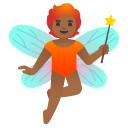


Appearance varies by platform and device. Google Noto, Twemoji, and OpenMoji are open-source.