💃🏾
The Emoji
Woman Dancing: Medium-dark Skin Tone
U+1F483 U+1F3FE · :woman_dancing_mediumdark_skin_tone:
Trend 78
Meaning layers
- interpretation
- Used to express unbothered confidence, living your best life, or celebrating a win. Often signals 'I'm that girl' energy or hype-woman support for someone slaying.
- tiktok usage
- Dropped in comments when someone posts a confident or snatched video, especially by and for Black women. Also used in 'main character' moments and dance trend celebrations.
- irony level
- 2 / 10
Platform meanings
- meaning
- Celebration of confident, slay-worthy moments. Used to hype creators, especially Black and brown women, who are thriving.
- trend usage
- Drops in comment sections during dance trends, 'that girl' aesthetic videos, and glow-up reveals. Core emoji in Afrobeats and dancehall dance trend content.
- hashtags
- #blackgirlmagic#thatgirl#slay#dancechallenge#unbothered
- virality score
- 82 / 100
Cultural meanings
🇺🇸
Western / Gen-Z
Iconic symbol of Black girl magic and melanated confidence; used to celebrate slay moments and affirm identity, especially in digital spaces dominated by Black cultural influence.
🇵🇰
Pakistan & India
Used to express celebration and festivity, often in the context of Bollywood or desi dance culture, though the skin tone specificity adds a layer of cultural representation pride for darker-skinned South Asians.
🌍
Middle East
Generally interpreted as a dance or celebration emoji; the skin tone resonates with Arab and North African communities with darker complexions who rarely see themselves represented in standard emojis.
🌐
Global Neutral
Widely understood as a symbol of celebration, dance, and joyful femininity across cultures, with the skin tone adding a dimension of diverse representation.
🇧🇩
Bangladesh
Used in festive contexts and to celebrate cultural dance forms; the medium-dark skin tone is broadly relatable and seen as a positive representation of South Asian skin tones.
🇱🇰
Sri Lanka
Associated with celebration and traditional or modern dance; the skin tone is seen as reflecting Sri Lankan diversity, making it more personally relatable than lighter-toned alternatives.
🇨🇳
China
Primarily interpreted as a party or dance emoji; skin tone modifiers are less culturally emphasized in Chinese digital communication, so it reads largely as a generic celebration symbol.
🇯🇵
Japan
Understood as a Western-style dance or party emoji; used in entertainment and nightlife contexts, though Japanese emoji culture tends to prefer more stylized local expressions.
🇰🇷
South Korea
Used in K-pop fan communities and nightlife contexts to express excitement and dance culture enthusiasm; the skin tone has gained more visibility through K-pop's engagement with global diversity.
🇹🇼
Taiwan
Used for celebration and nightlife vibes; the specific skin tone is noted positively in conversations about representation but is largely neutral in everyday casual use.
🇭🇰
Hong Kong
Appears in party and nightlife messaging; increasingly used by younger generations who are aware of global diversity conversations and appreciate the skin tone inclusivity.
🇵🇭
Philippines
Popular in celebration and fiesta contexts; the medium-dark skin tone resonates strongly with many Filipinos who identify with darker complexions and appreciate seeing it represented.
🇮🇩
Indonesia
Used to express joy and dance, particularly relevant to younger Indonesians in urban areas; the skin tone is relatable given the diversity of Indonesian skin tones.
🇹🇭
Thailand
Generally used as a dance and fun emoji; skin tone diversity in emojis is gaining awareness among Thai Gen Z users influenced by global social media culture.
🇻🇳
Vietnam
Used in festive and celebratory messaging; younger Vietnamese users on TikTok and Instagram are increasingly aware of the skin tone's representational significance.
🇲🇾
Malaysia
Widely relatable due to Malaysia's multicultural population; the medium-dark skin tone resonates especially with Malay and Indian Malaysian communities.
🇸🇦
Saudi Arabia
Used in celebration and entertainment contexts; the skin tone representation is appreciated by darker-skinned Saudi and expat communities, though dance-related emojis are used cautiously in conservative spaces.
🇦🇪
UAE
Popular among the UAE's diverse expat population, especially South Asian and African communities who see their skin tones reflected; used in nightlife and celebration contexts in cosmopolitan Dubai culture.
🇪🇬
Egypt
The emoji resonates culturally with Egyptian women celebrating belly dance heritage and general festivity; the skin tone aligns with many Egyptians' self-image more than lighter alternatives.
🇹🇷
Turkey
Used in celebration and dance contexts; younger Turkish users on social media are increasingly conscious of skin tone representation and use this emoji affirmingly.
🇮🇷
Iran
Used carefully in celebration contexts given social restrictions on public dance; among diaspora and younger urban Iranians, it signals joy and freedom in digital spaces.
🇳🇬
Nigeria
Extremely popular and personally resonant; used ubiquitously in Nigerian digital spaces to celebrate Afrobeats, confidence, Black femininity, and cultural pride.
🇿🇦
South Africa
Widely used and deeply meaningful, especially in Black South African communities; associated with Afropop, gqom music, and unapologetic Black joy.
🇬🇧
UK & Ireland
Used broadly in celebration, with added resonance in Black British communities to signal cultural pride and nightlife energy tied to Afrobeats and UK grime scenes.
🇫🇷
France
Used in festive contexts; the skin tone is particularly meaningful to Afro-French communities who value diverse representation in digital communication.
🇩🇪
Germany
Used primarily for dance and celebration; the skin tone modifier gains significance in conversations about diversity and inclusion in Germany's growing multicultural youth culture.
🇪🇸
Spain & Italy
Associated with flamenco and salsa dance culture broadly, while the skin tone is meaningful to Afro-Latino and sub-Saharan African diaspora communities across Southern Europe.
🇧🇷
Brazil
Highly resonant and frequently used; the skin tone reflects Brazil's African heritage and is embraced in samba, funk, and pagode cultural contexts celebrating Afro-Brazilian identity.
🇲🇽
Mexico
Used in celebration and festivity contexts; the skin tone is meaningful to Afro-Mexican communities and darker-skinned Mexicans who often feel underrepresented in mainstream media.
🌎
Latin America
Broadly used across Latin America for celebration and dance; the medium-dark skin tone resonates with Afro-Latino communities throughout the region who celebrate it as representation.
🇦🇺
Australia & NZ
Used in party and dance contexts; the skin tone is particularly meaningful to Aboriginal Australian, Torres Strait Islander, Pacific Islander, and African diaspora communities who see themselves reflected.
How its meaning shifted
- 2010
The base dancing woman emoji didn't exist yet; dance was represented by other gestures. Skin tone modifiers were not yet part of Unicode.
- 2015
Introduced as part of Unicode 8.0's skin tone modifier rollout; initially used as a novelty and representation milestone, celebrated particularly by Black and brown users who finally saw themselves in emoji.
- 2020
Usage surged significantly during the Black Lives Matter movement and the broader cultural reckoning around representation; became a symbol of Black joy and resilience alongside the raised fist emoji.
- 2026
Embedded deeply in Black digital culture lexicon; routinely used in Afrobeats, Amapiano, and dancehall content ecosystems on TikTok and Instagram, functioning as a cultural identity marker as much as a celebration symbol.
See it on every platform
Compare with
Adjacent emojis
- Often confused with
- woman cartwheelingperson gesturing nowoman in red dress
- Can replace
- woman dancingfirecrown
Share & embed
Frequently asked
01What does the 💃🏾 Woman Dancing: Medium-dark Skin Tone emoji mean?
A woman with medium-dark skin tone dancing, depicted in a red dress with one arm raised, representing celebration, joy, dance, and freedom of movement.
02What does 💃🏾 mean on TikTok?
Celebration of confident, slay-worthy moments. Used to hype creators, especially Black and brown women, who are thriving.
03What does 💃🏾 mean on WhatsApp?
Sent to celebrate good news, express excitement about going out, or cheer a friend up. Common in group chats planning girls' nights.
04What does 💃🏾 mean in Gen-Z slang?
Used to express unbothered confidence, living your best life, or celebrating a win. Often signals 'I'm that girl' energy or hype-woman support for someone slaying.
05Is the 💃🏾 emoji safe to use?
Celebration, confidence, dance, Black/brown joy, cultural pride, nightlife enthusiasm, and supportive hype for others.
06What does 💃🏾 mean in texting?
The skin tone specificity adds a layer of identity affirmation and representation pride, making this emoji emotionally resonant beyond generic celebration — it signals belonging and Black/brown joy.
07What is the shortcode for 💃🏾?
The shortcode for Woman Dancing: Medium-dark Skin Tone is :woman_dancing_mediumdark_skin_tone:
08What does 💃🏾 mean in dating?
Sent to signal playful flirting, invitation to go out dancing, or that someone looks amazing. Often used to say 'come party with me' or 'you're making me want to dance.'
Safety & usage
- Safe meaning
- Celebration, confidence, dance, Black/brown joy, cultural pride, nightlife enthusiasm, and supportive hype for others.
- Caution
- Extremely rare, but could be used sarcastically to mock someone perceived as 'performing' confidence while struggling, or in very rare cases to exoticize or stereotype Black and brown women.
Generally a very safe and positive emoji. The skin tone specificity means misuse by people outside the community as a stereotype prop should be noted, though this is uncommon. Not typically associated with harassment patterns.
How it looks across platforms
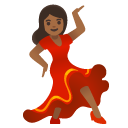


Appearance varies by platform and device. Google Noto, Twemoji, and OpenMoji are open-source.