🈂️
The Emoji
Japanese “service Charge” Button
U+1F202 U+FE0F · :japanese_service_charge_button:
Trend 11
Meaning layers
- interpretation
- Mostly used ironically or as an aesthetic 'mystery emoji' — Gen Z treats it as a cryptic symbol that looks official and bureaucratic. Sometimes used to mean 'you're being charged for existing' or as commentary on hidden fees in capitalism.
- tiktok usage
- Appears in 'aesthetic Japanese' content, bureaucratic humor videos, or chaotic emoji combinations where the goal is maximum confusion. Occasionally placed in captions to seem mysterious or to signal ironic 'official notice' energy.
- irony level
- 7 / 10
Platform meanings
- meaning
- Used in captions or on-screen text for ironic 'official fee notice' humor, Japanese aesthetic content, or as part of a chaotic emoji string to confuse or intrigue viewers.
- trend usage
- Appears in 'cursed emoji combination' trends, 'you owe me' humor videos, and soft aesthetic Japanese-themed content.
- hashtags
- #cursed emoji#japaneseaesthetic#emojidump#chaotic#hiddenmeanings
- virality score
- 14 / 100
Cultural meanings
🇺🇸
Western / Gen-Z
Treated as a mystery emoji from the 'chaotic emoji' arsenal — used for irony, confusion, or aesthetic clout with no knowledge of its actual meaning. Signals 'I know obscure emojis' energy.
🇵🇰
Pakistan & India
Almost completely unrecognized; might be confused for a Chinese or Korean character. Occasionally used by Japanese pop culture fans as part of anime-adjacent aesthetic content.
🌍
Middle East
Largely unknown outside Japanese culture enthusiasts; those who recognize it associate it with Japan's formal business culture. May be used ironically in Arabic-language social media about hidden fees or overcharging.
🌐
Global Neutral
Recognized primarily in contexts related to Japan or East Asian typography. Globally treated as a foreign-script curiosity with minimal emotional or communicative weight.
🇧🇩
Bangladesh
Virtually unrecognized in mainstream usage; might appear in content by Japanese anime fans or students learning Japanese. No culturally specific interpretation exists.
🇱🇰
Sri Lanka
Rarely encountered; those who recognize it are typically anime fans or Japanese language students. Used aesthetically rather than contextually.
🇨🇳
China
Recognized as a Japanese-origin character (katakana 'sa') and understood by those familiar with Japanese. May carry slight cultural distance as a distinctly Japanese symbol rather than shared Chinese kanji.
🇯🇵
Japan
Fully understood in its literal context — seen on restaurant bills, hotel receipts, and service menus. Japanese users recognize 'サ' as the abbreviation for 'サービス料' and treat it as a standard billing symbol.
🇰🇷
South Korea
Partially recognized due to familiarity with Japanese katakana among educated Koreans; understood by Japanese language learners. Generally treated as a Japanese business symbol without deeper cultural resonance.
🇹🇼
Taiwan
Recognized by those with Japanese language exposure; Taiwan's close cultural and historical ties to Japan mean service charge contexts are well understood. Used appropriately in travel and dining discussions.
🇭🇰
Hong Kong
Known among Japanese culture enthusiasts and frequent Japan travelers; Hong Kong's active Japan tourism scene means many residents recognize its service charge meaning in restaurant and hotel contexts.
🇵🇭
Philippines
Largely unknown except among Japanese language students and K/J-pop adjacent fan communities. Used aesthetically in anime-related content without understanding its literal meaning.
🇮🇩
Indonesia
Minimal recognition outside Japanese pop culture fans; occasionally used in Japanese language learning communities on Indonesian social media as a vocabulary or symbol reference.
🇹🇭
Thailand
Known among Thailand's large Japanese expatriate community and frequent Japan tourists. Thai users in hospitality industries may recognize its billing significance; general public treats it as decorative.
🇻🇳
Vietnam
Used primarily by Vietnamese Japanese language students and anime enthusiasts. Vietnam's growing Japan tourism and business exchange means some hospitality workers recognize its literal meaning.
🇲🇾
Malaysia
Recognized by Japanese culture fans and the significant Japanese business community in Malaysia. Occasionally used in travel content about Japan; generally treated as exotic script by the general public.
🇸🇦
Saudi Arabia
Almost entirely unrecognized; Japan tourism is growing among Saudis but the emoji remains obscure. Might be used by Japanese expat workers in Saudi Arabia for authentic billing-related communication.
🇦🇪
UAE
Better recognized than in most Middle Eastern countries due to the UAE's cosmopolitan population and significant Japanese business and tourism presence. May appear in Japan-restaurant contexts in Dubai or Abu Dhabi.
🇪🇬
Egypt
Virtually unknown; may be confused for an unrendered character or error symbol by most Egyptian users. Japanese culture fans might use it in anime community spaces.
🇹🇷
Turkey
Rare usage; Turkey's growing interest in Japanese culture through anime and tourism means a niche audience recognizes it. Used aesthetically in Japan-related content by Turkish social media users.
🇮🇷
Iran
Extremely rare outside Japanese anime fan communities in Iran, which are notably active. Used as an aesthetic or cultural symbol by fans rather than for its literal billing meaning.
🇳🇬
Nigeria
Unrecognized by most; Nigeria's vibrant social media culture occasionally embraces foreign-script emojis for aesthetic purposes, but this one remains too obscure for mainstream adoption.
🇿🇦
South Africa
Minimal usage; South African users with Japanese cultural interests might deploy it aesthetically. No culturally specific interpretation exists in the South African context.
🇬🇧
UK & Ireland
Known primarily among Japan travelers and Japanese language students. The UK's strong Japan tourism culture means some users recognize the service charge meaning; most treat it as an obscure curiosity.
🇫🇷
France
France's deep appreciation for Japanese culture (manga, cuisine, tourism) means a sizable community recognizes it. French users might deploy it humorously in discussions about restaurant bills or tipping culture.
🇩🇪
Germany
Recognized by Germany's large Japanese language-learning community and frequent Japan business travelers. German precision culture may actually appreciate its specific, official-looking design.
🇪🇸
Spain & Italy
Rare usage; recognized by Japanese culture enthusiasts in both countries. The Mediterranean cultures' strong food and service industry awareness might make the service charge meaning relatable in ironic bill-paying humor.
🇧🇷
Brazil
Brazil has a large Japanese diaspora (the largest outside Japan), so recognition of this emoji is higher than average. Japanese-Brazilian communities may use it in authentic cultural or culinary contexts.
🇲🇽
Mexico
Minimal recognition outside Japanese culture fans; Mexico's growing anime fan base might use it aesthetically. The concept of a formalized 'service charge' symbol translates humorously to Mexican dining culture discussions.
🌎
Latin America
Generally unrecognized across Latin America except by anime and Japanese culture fan communities, which are large and active. Used as aesthetic flair in Japanese-themed social media content.
🇦🇺
Australia & NZ
Recognized by Australia and New Zealand's significant Japan tourism community and Japanese expatriates. Might appear in travel blogs, restaurant reviews of Japanese eateries, or ironic billing humor on social media.
How its meaning shifted
- 2010
Introduced with Unicode 6.0 in 2010 primarily for functional use in Japanese digital communication — appearing in apps, websites, and mobile interfaces related to billing, menus, and hospitality services in Japan. Almost completely unknown outside Japan.
- 2015
Began appearing in Western 'obscure emoji' listicles and trivia articles. Anime and Japanese culture communities on Tumblr and early Twitter started using it aesthetically. Still functionally used in Japan-facing apps.
- 2020
Emerged as part of the 'chaotic emoji' and 'cursed emoji combo' trend on TikTok and Twitter. Used ironically in 'you owe me' humor and bureaucratic joke formats. Japanese aesthetic content on Instagram incorporated it into kanji-heavy visual styles.
- 2026
Remains a niche, irony-coded emoji primarily valued for its obscurity and aesthetic foreignness. Stable low-frequency usage in Japanese cultural contexts; periodic viral moments in 'most obscure emoji' or 'emoji trivia' content cycles on TikTok and X.
See it on every platform
Adjacent emojis
- Often confused with
- japanese secret buttonjapanese congratulations buttoninput latin uppercase
- Can replace
- receiptcredit cardmoney bag
Share & embed
Frequently asked
01What does the 🈂️ Japanese “service Charge” Button emoji mean?
The 🈂️ emoji represents the Japanese kanji character 'サ' (sa), which is an abbreviation for 'サービス料' (sābisu-ryō), meaning 'service charge'. It appears as a white 'サ' character on a blue square background.
02What does 🈂️ mean on TikTok?
Used in captions or on-screen text for ironic 'official fee notice' humor, Japanese aesthetic content, or as part of a chaotic emoji string to confuse or intrigue viewers.
03What does 🈂️ mean on WhatsApp?
Almost never used in casual chat; if sent, it typically signals the sender is being ironic or has no particular intent — often met with confusion.
04What does 🈂️ mean in Gen-Z slang?
Mostly used ironically or as an aesthetic 'mystery emoji' — Gen Z treats it as a cryptic symbol that looks official and bureaucratic. Sometimes used to mean 'you're being charged for existing' or as commentary on hidden fees in capitalism.
05Is the 🈂️ emoji safe to use?
A neutral, functional Japanese billing symbol with no harmful connotations. Safe for all ages and contexts in which its meaning is understood.
06What does 🈂️ mean in texting?
This emoji triggers a mild sense of 'official notification anxiety' in users unfamiliar with its meaning — the institutional blue color and foreign script subconsciously signal an alert or fee. For those aware of its meaning, it produces mild amusement at its obscurity.
07What is the shortcode for 🈂️?
The shortcode for Japanese “service Charge” Button is :japanese_service_charge_button:
08What does 🈂️ mean in dating?
Rarely used in dating contexts; if used, it signals ironic humor — e.g., 'there's a service charge for my attention 🈂️' as a playful self-deprecating joke.
Safety & usage
- Safe meaning
- A neutral, functional Japanese billing symbol with no harmful connotations. Safe for all ages and contexts in which its meaning is understood.
- Caution
- Theoretically could be misused in harassment as a mock 'invoice' sent to shame or intimidate someone, though this usage is extremely rare and requires significant contextual setup.
No significant safety concerns. The main risk is miscommunication due to its extreme obscurity outside Japanese cultural contexts — senders and receivers rarely share the same understanding of its meaning.
How it looks across platforms
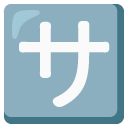


Appearance varies by platform and device. Google Noto, Twemoji, and OpenMoji are open-source.