👨🏻❤️💋👨🏿
The Emoji
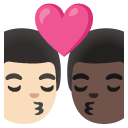
Kiss: Man, Man, Light Skin Tone, Dark Skin Tone
U+1F468 U+1F3FB U+200D U+2764 U+FE0F U+200D U+1F48B U+200D U+1F468 U+1F3FF · :kiss_man_man_light_skin_tone_dark_skin_tone:
Trend 58
Meaning layers
- interpretation
- Used to express queer love, celebrate LGBTQ+ pride, normalize same-sex and interracial couples, or show affection between two men regardless of orientation in progressive online spaces.
- tiktok usage
- Appears in pride content, queer couple reveals, interracial relationship celebrations, and wholesome LGBTQ+ storytelling videos.
- irony level
- 1 / 10
Platform meanings
- meaning
- Represents queer male love and interracial relationships; used in pride videos, couple content, and LGBTQ+ visibility campaigns.
- trend usage
- Appears in pride month challenges, queer couple duets, coming-out videos, and interracial couple appreciation TikToks.
- hashtags
- #QueerLove#GayCouple#PrideMonth#InterracialCouple#LGBTQRepresentation
- virality score
- 62 / 100
Cultural meanings
🇺🇸
Western / Gen-Z
Widely embraced as a symbol of normalized queer love and interracial relationships; used freely and positively by both LGBTQ+ individuals and straight allies in digital spaces.
🇵🇰
Pakistan & India
Highly controversial due to cultural and legal attitudes toward same-sex relationships; rarely used openly and may attract serious negative reactions or social consequences if posted publicly.
🌍
Middle East
Generally considered taboo or offensive in most Middle Eastern contexts due to strong religious and cultural prohibitions against homosexuality; use is extremely limited and risky.
🌐
Global Neutral
Recognized internationally as a symbol of same-sex male romantic love, though reception varies enormously depending on local legal and cultural attitudes toward LGBTQ+ identities.
🇧🇩
Bangladesh
Rarely used due to deeply conservative social norms and legal restrictions on same-sex relationships; may provoke strong negative reactions if used publicly.
🇱🇰
Sri Lanka
Used cautiously in private by LGBTQ+ individuals; public use is uncommon due to conservative cultural and legal attitudes toward homosexuality.
🇨🇳
China
Increasingly censored on Chinese social media platforms; used discreetly by the queer community but carries risk of content removal or social backlash.
🇯🇵
Japan
Used among progressive youth and in LGBTQ+ communities in cities like Tokyo; generally tolerated though public displays of same-sex affection remain culturally understated.
🇰🇷
South Korea
Gaining visibility among younger generations influenced by global culture, though mainstream society remains conservative; used mainly in LGBTQ+ spaces and by allied K-pop fans.
🇹🇼
Taiwan
Used positively and openly, especially following Taiwan's legalization of same-sex marriage; celebrated as a symbol of love and equality.
🇭🇰
Hong Kong
Used by LGBTQ+ communities and progressives, though political and cultural tensions add complexity; generally positive in queer spaces.
🇵🇭
Philippines
Used in LGBTQ+ communities with moderate openness; Filipinos are relatively expressive about identity online, though formal acceptance varies across generations.
🇮🇩
Indonesia
Rarely used openly due to conservative religious and social norms; LGBTQ+ individuals use it discreetly in private or niche online spaces.
🇹🇭
Thailand
Used with relative openness in Thailand's visible LGBTQ+ community, though societal acceptance of formal same-sex relationships remains complex.
🇻🇳
Vietnam
Used cautiously; younger urban Vietnamese may use it positively, but broader societal norms remain conservative toward same-sex relationships.
🇲🇾
Malaysia
Very rarely used publicly due to strict religious and legal prohibitions on homosexuality; restricted to private or underground LGBTQ+ digital spaces.
🇸🇦
Saudi Arabia
Effectively never used in public digital spaces due to severe legal and religious restrictions; could expose users to serious legal consequences.
🇦🇪
UAE
Extremely rare in public use; same-sex relationships are illegal, making this emoji a high-risk symbol in UAE digital contexts.
🇪🇬
Egypt
Strongly taboo; homosexuality faces severe social and legal pressure, and public use of this emoji could attract negative or dangerous attention.
🇹🇷
Turkey
Mixed reception; used by urban progressive and LGBTQ+ communities, particularly in Istanbul, but faces increasing social and political hostility.
🇮🇷
Iran
Essentially never used publicly due to severe legal prohibition of homosexuality; may be used with extreme discretion in private encrypted spaces.
🇳🇬
Nigeria
Rarely used openly due to strong legal prohibitions and deep social conservatism; used privately by underground LGBTQ+ communities.
🇿🇦
South Africa
Used positively and openly, as South Africa has constitutional protections for LGBTQ+ rights; celebrated in queer communities and by allies.
🇬🇧
UK & Ireland
Widely used positively; both countries have strong LGBTQ+ rights frameworks and vibrant queer communities that embrace this emoji freely.
🇫🇷
France
Used openly and positively; France's progressive stance on LGBTQ+ rights and culture means this emoji is well received across most social groups.
🇩🇪
Germany
Used comfortably in LGBTQ+ and allied spaces; Germany's strong civil rights culture supports open expression of queer identity digitally.
🇪🇸
Spain & Italy
Spain uses it freely with strong LGBTQ+ legal protections; Italy has more mixed reception though urban youth and LGBTQ+ spaces are broadly accepting.
🇧🇷
Brazil
Used widely and celebratorily in LGBTQ+ communities; Brazil has one of the world's largest Pride events and strong queer visibility, though political tensions exist.
🇲🇽
Mexico
Used openly in progressive and LGBTQ+ communities, especially in urban centers; increasing visibility though rural and conservative areas may react negatively.
🌎
Latin America
Reception varies widely across Latin America; countries like Argentina and Chile use it positively, while more conservative nations have more restricted LGBTQ+ expression.
🇦🇺
Australia & NZ
Used freely and positively; both countries have strong LGBTQ+ legal protections and culturally inclusive digital communities.
How its meaning shifted
- 2010
This specific emoji sequence did not exist; same-sex couple emojis were not yet part of Unicode, and LGBTQ+ representation in emoji was entirely absent.
- 2015
Basic same-sex couple emojis began emerging in Unicode; skin tone modifiers were introduced but multi-person skin tone combinations were limited and inconsistently supported.
- 2020
Increasingly used during Pride Month celebrations, LGBTQ+ rights movements, and the broader societal reckoning with diversity; visibility grew significantly on major platforms.
- 2026
Normalized as a standard expression of queer male love and interracial affection; widely supported across platforms and used daily by LGBTQ+ individuals, couples, and allies worldwide.
See it on every platform
Adjacent emojis
- Often confused with
- kiss markkiss man womanpeople holding hands
Share & embed
Frequently asked
01What does the 👨🏻❤️💋👨🏿 Kiss: Man, Man, Light Skin Tone, Dark Skin Tone emoji mean?
A kiss emoji depicting two men sharing a kiss, with the left man having a light skin tone and the right man having a dark skin tone. The emoji sequence includes a red heart and a kiss mark.
02What does 👨🏻❤️💋👨🏿 mean on TikTok?
Represents queer male love and interracial relationships; used in pride videos, couple content, and LGBTQ+ visibility campaigns.
03What does 👨🏻❤️💋👨🏿 mean on WhatsApp?
Expresses deep romantic affection between two men; used in private conversations between gay couples or sent by allies showing support.
04What does 👨🏻❤️💋👨🏿 mean in Gen-Z slang?
Used to express queer love, celebrate LGBTQ+ pride, normalize same-sex and interracial couples, or show affection between two men regardless of orientation in progressive online spaces.
05Is the 👨🏻❤️💋👨🏿 emoji safe to use?
A positive, celebratory symbol of same-sex male love and interracial romance; used to express affection, pride, and LGBTQ+ visibility.
06What does 👨🏻❤️💋👨🏿 mean in texting?
Carries deep emotional weight for LGBTQ+ individuals who historically lacked representation in digital communication; seeing this emoji can evoke feelings of validation, belonging, and joy for queer communities.
07What is the shortcode for 👨🏻❤️💋👨🏿?
The shortcode for Kiss: Man, Man, Light Skin Tone, Dark Skin Tone is :kiss_man_man_light_skin_tone_dark_skin_tone:
08What does 👨🏻❤️💋👨🏿 mean in dating?
Sent by gay or queer men to express romantic interest, signal attraction, or confirm mutual feelings in early-stage or established relationships.
Safety & usage
- Safe meaning
- A positive, celebratory symbol of same-sex male love and interracial romance; used to express affection, pride, and LGBTQ+ visibility.
- Caution
- Can be weaponized by bad actors to harass or provoke homophobic reactions, or sent unsolicited to LGBTQ+ individuals in hostile contexts as mockery.
Users in countries where homosexuality is criminalized should exercise extreme caution with this emoji as its use could expose them to legal or social harm. On platforms with heavy moderation, it is fully protected expression in most Western jurisdictions.
How it looks across platforms
Appearance varies by platform and device. Google Noto, Twemoji, and OpenMoji are open-source.