👨🏻❤️💋👨🏽
The Emoji
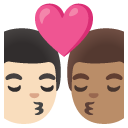
Kiss: Man, Man, Light Skin Tone, Medium Skin Tone
U+1F468 U+1F3FB U+200D U+2764 U+FE0F U+200D U+1F48B U+200D U+1F468 U+1F3FD · :kiss_man_man_light_skin_tone_medium_skin_tone:
Trend 65
Meaning layers
- interpretation
- Used to express same-sex male romance, queer love, and pride in LGBTQ+ relationships; also used platonically between close male friends in ironic or affectionate contexts.
- tiktok usage
- Appears in pride content, queer romance storytelling, 'couple goals' videos, and sometimes ironically in bromance content between straight male creators.
- irony level
- 4 / 10
Platform meanings
- meaning
- Symbol of queer male romance, used in Pride content, couple reveals, and LGBTQ+ storytelling videos.
- trend usage
- Common in 'gay couple POV' trends, Pride Month challenges, coming-out videos, and shipped fictional male character edits.
- hashtags
- #GayCouple#PrideMonth#QueerLove#MLM#GayTikTok
- virality score
- 72 / 100
Cultural meanings
🇺🇸
Western / Gen-Z
Widely celebrated as a symbol of queer visibility and love; used freely and proudly in LGBTQ+ and ally communities with high social acceptance.
🇵🇰
Pakistan & India
Rarely used publicly due to social stigma around same-sex relationships; primarily used within underground LGBTQ+ communities or by diaspora in Western contexts.
🌍
Middle East
Largely avoided in public digital communication due to legal and social prohibitions on homosexuality in most Middle Eastern countries; used clandestinely in LGBTQ+ safe spaces.
🌐
Global Neutral
Recognized internationally as a same-sex male kiss emoji; reception varies dramatically based on local LGBTQ+ acceptance levels.
🇧🇩
Bangladesh
Extremely rarely used openly given strict social and legal prohibitions; exists only in private LGBTQ+ digital spaces.
🇱🇰
Sri Lanka
Seldom used publicly; same-sex relationships remain socially stigmatized, so this emoji is confined to private LGBTQ+ conversations.
🇨🇳
China
Used cautiously due to increasing censorship of LGBTQ+ content; appears in private chats and underground queer communities but faces platform suppression.
🇯🇵
Japan
Used within Japan's established queer community and among yaoi/BL (Boys' Love) culture fans; relatively accepted in certain subcultures though mainstream visibility is modest.
🇰🇷
South Korea
Used in queer Korean communities and among fans of BL dramas; gaining visibility but still considered sensitive in mainstream Korean digital culture.
🇹🇼
Taiwan
Used openly and positively; Taiwan's legalization of same-sex marriage has created a more accepting environment for LGBTQ+ emoji use.
🇭🇰
Hong Kong
Used within LGBTQ+ communities with moderate openness; political climate has added complexity to public queer expression.
🇵🇭
Philippines
Used in the Philippines' vibrant LGBTQ+ community; generally accepted culturally though religious conservatism creates some social nuance.
🇮🇩
Indonesia
Rarely used openly due to strong religious and social conservative norms; exists primarily in private or underground LGBTQ+ spaces.
🇹🇭
Thailand
Used relatively openly given Thailand's visible LGBTQ+ culture and tourism scene, though formal legal recognition of same-sex relationships remains limited.
🇻🇳
Vietnam
Used cautiously; Vietnam has a growing LGBTQ+ community and Pride events, but public same-sex affection remains sensitive.
🇲🇾
Malaysia
Rarely used publicly due to legal and religious prohibitions; confined to private LGBTQ+ digital communication.
🇸🇦
Saudi Arabia
Essentially not used in public digital communication given strict legal prohibitions; any use is clandestine and carries significant personal risk.
🇦🇪
UAE
Avoided publicly due to legal prohibitions on homosexuality; used only in very private, encrypted communications by LGBTQ+ individuals.
🇪🇬
Egypt
Rarely used openly given social and legal hostility toward LGBTQ+ expression; exists only in hidden queer communities.
🇹🇷
Turkey
Used within Turkey's LGBTQ+ community, which has faced increasing government restrictions; Pride events have been banned in Istanbul, adding weight to its use as a symbol of resistance.
🇮🇷
Iran
Essentially unused in public digital spaces due to severe legal prohibitions; carries extreme personal risk if used openly.
🇳🇬
Nigeria
Rarely used openly due to strong legal and social prohibitions on same-sex relationships; exists only in highly private LGBTQ+ spaces.
🇿🇦
South Africa
Used relatively openly; South Africa's constitution protects LGBTQ+ rights and has an active queer community, though social acceptance varies by region.
🇬🇧
UK & Ireland
Used freely and positively in a society with broad legal and social acceptance of LGBTQ+ relationships; common in Pride content and daily queer expression.
🇫🇷
France
Used openly in a generally LGBTQ+-accepting culture; appears in Pride content, queer media, and everyday romantic digital communication between male partners.
🇩🇪
Germany
Used freely in Germany's progressive LGBTQ+-accepting society; common in queer communities, Pride events, and relationship content.
🇪🇸
Spain & Italy
Used openly in Spain with its strong LGBTQ+ acceptance; more nuanced in Italy where legal recognition exists but social conservatism persists in some regions.
🇧🇷
Brazil
Used proudly in Brazil's world-famous LGBTQ+ community and São Paulo Pride culture; though political tensions around queer rights add layers of meaning.
🇲🇽
Mexico
Used in Mexico's urban LGBTQ+ communities and Pride events; regional variation exists with greater acceptance in cities versus rural areas.
🌎
Latin America
Usage varies widely across Latin America; more open in Argentina and Chile with stronger LGBTQ+ legal protections, more cautious in socially conservative countries.
🇦🇺
Australia & NZ
Used openly and positively; both countries have strong legal protections and social acceptance for LGBTQ+ relationships, making this emoji unremarkable in queer-positive contexts.
How its meaning shifted
- 2010
This specific emoji did not exist in 2010; same-sex couple representation in emoji was nonexistent, and users had to approximate queer relationships with generic heart and face emojis.
- 2015
Basic same-sex couple emojis were introduced around 2015 following Unicode 8.0 advocacy, but skin tone variations and full kiss sequences were limited; this specific combination was not yet available.
- 2020
By 2020 this emoji existed within the expanded ZWJ sequence system; used primarily by LGBTQ+ communities on Pride-related content and increasingly in mainstream allyship posts.
- 2026
Widely recognized and used across LGBTQ+ communities and allies globally; normalized in many Western digital spaces while remaining sensitive in regions with anti-LGBTQ+ laws; increasingly present in brand and media Pride content.
See it on every platform
Adjacent emojis
- Often confused with
- handshakepeople huggingkiss mark
Share & embed
Frequently asked
01What does the 👨🏻❤️💋👨🏽 Kiss: Man, Man, Light Skin Tone, Medium Skin Tone emoji mean?
A kiss emoji depicting two men with light skin tone and medium skin tone, joined by a red heart and kiss mark, representing a romantic kiss between two male-presenting individuals of different skin tones.
02What does 👨🏻❤️💋👨🏽 mean on TikTok?
Symbol of queer male romance, used in Pride content, couple reveals, and LGBTQ+ storytelling videos.
03What does 👨🏻❤️💋👨🏽 mean on WhatsApp?
Expresses romantic affection between male partners in private chats; a direct declaration of love or a flirty gesture.
04What does 👨🏻❤️💋👨🏽 mean in Gen-Z slang?
Used to express same-sex male romance, queer love, and pride in LGBTQ+ relationships; also used platonically between close male friends in ironic or affectionate contexts.
05Is the 👨🏻❤️💋👨🏽 emoji safe to use?
A symbol of same-sex male romantic love, affection, and LGBTQ+ visibility used to celebrate relationships and queer identity.
06What does 👨🏻❤️💋👨🏽 mean in texting?
Represents deep emotional bonding and public declaration of same-sex romantic love; for LGBTQ+ individuals it carries significant psychological weight as a symbol of visibility and validation.
07What is the shortcode for 👨🏻❤️💋👨🏽?
The shortcode for Kiss: Man, Man, Light Skin Tone, Medium Skin Tone is :kiss_man_man_light_skin_tone_medium_skin_tone:
08What does 👨🏻❤️💋👨🏽 mean in dating?
Sent between gay or queer men to signal romantic interest, establish couple identity, or express affection in a direct and playful way.
Safety & usage
- Safe meaning
- A symbol of same-sex male romantic love, affection, and LGBTQ+ visibility used to celebrate relationships and queer identity.
- Caution
- Can be weaponized in harassment of LGBTQ+ individuals by homophobic actors, or used to mock gay men in hostile online spaces.
In regions where homosexuality is criminalized or heavily stigmatized, sending or displaying this emoji publicly can expose individuals to social harm, discrimination, or legal risk. Platforms in some countries may suppress or flag LGBTQ+ emoji content.
How it looks across platforms
Appearance varies by platform and device. Google Noto, Twemoji, and OpenMoji are open-source.