👨🏼❤️💋👨🏻
The Emoji
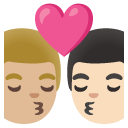
Kiss: Man, Man, Medium-light Skin Tone, Light Skin Tone
U+1F468 U+1F3FC U+200D U+2764 U+FE0F U+200D U+1F48B U+200D U+1F468 U+1F3FB · :kiss_man_man_mediumlight_skin_tone_light_skin_tone:
Trend 68
Meaning layers
- interpretation
- Used to celebrate gay male relationships, express affection between male partners, or show LGBTQ+ pride and allyship. Also used platonically by close male friends in progressive communities.
- tiktok usage
- Appears in couple reveal videos, Pride Month content, gay relationship storytelling, and 'goals' couple content showcasing LGBTQ+ love.
- irony level
- 1 / 10
Platform meanings
- meaning
- Represents gay male love, couple goals, LGBTQ+ pride, and affectionate male partnerships.
- trend usage
- Used in couple transition videos, Pride Month challenges, LGBTQ+ storytelling duets, and 'soft life' couple aesthetic content.
- hashtags
- #GayCouple#LGBTQlove#PrideMonth#CoupleGoals#GayTikTok
- virality score
- 72 / 100
Cultural meanings
🇺🇸
Western / Gen-Z
Widely used and celebrated as a symbol of LGBTQ+ love and Pride; frequently used in social media by both gay couples and straight allies.
🇵🇰
Pakistan & India
Rarely used publicly due to social conservatism and historical legal restrictions on same-sex relationships; primarily used in underground LGBTQ+ communities and progressive urban circles.
🌍
Middle East
Almost entirely absent from public use due to legal and cultural prohibitions on same-sex relationships; used cautiously within private LGBTQ+ support networks.
🌐
Global Neutral
Universally recognized as representing a kiss between two men; reception varies widely from celebratory to controversial depending on regional attitudes.
🇧🇩
Bangladesh
Extremely rare in public usage given legal and religious restrictions on same-sex relationships; confined to very small private LGBTQ+ circles.
🇱🇰
Sri Lanka
Used only within small LGBTQ+ advocacy communities; generally avoided publicly due to social conservatism and legal ambiguity around same-sex relationships.
🇨🇳
China
Used in limited LGBTQ+ spaces online before heavy censorship; increasingly restricted on major Chinese platforms, with usage mainly in private chats.
🇯🇵
Japan
Used openly in gay-friendly communities, especially in areas like Shinjuku Ni-chome; relatively accepted in online spaces though mainstream visibility remains moderate.
🇰🇷
South Korea
Used within LGBTQ+ communities and ally spaces; visibility is growing but still faces significant social resistance in mainstream Korean culture.
🇹🇼
Taiwan
Widely accepted and celebrated, especially since Taiwan's legalization of same-sex marriage in 2019; used proudly in LGBTQ+ communities and by progressive users.
🇭🇰
Hong Kong
Used within the active LGBTQ+ community in Hong Kong, particularly during Pride events; faces increasing tension amid shifting political climate.
🇵🇭
Philippines
Used in the large and vibrant Filipino LGBTQ+ community; generally accepted in urban progressive spaces though religious conservatism limits mainstream usage.
🇮🇩
Indonesia
Very rarely used publicly due to strong religious and cultural conservatism; limited to private LGBTQ+ support groups and anonymous accounts.
🇹🇭
Thailand
Used openly in Thailand's large and visible LGBTQ+ community; the country's relatively tolerant attitude toward gender and sexuality makes this emoji moderately common.
🇻🇳
Vietnam
Used in small but growing LGBTQ+ communities; public usage remains limited due to cultural conservatism, though legal situation is more ambiguous than neighboring countries.
🇲🇾
Malaysia
Extremely rare in public usage due to strict legal and religious prohibitions on same-sex relationships; confined to very private LGBTQ+ networks.
🇸🇦
Saudi Arabia
Not used publicly; same-sex relationships are illegal and severely punishable, making any public use extremely rare and risky.
🇦🇪
UAE
Avoided in public digital spaces due to legal prohibitions on same-sex relationships; only used privately within small expatriate LGBTQ+ communities.
🇪🇬
Egypt
Rarely used due to social and legal hostility toward LGBTQ+ individuals; any usage is confined to very private and anonymous spaces.
🇹🇷
Turkey
Used within Turkish LGBTQ+ communities, particularly in Istanbul; public usage faces increasing social and political backlash amid growing conservatism.
🇮🇷
Iran
Essentially absent from public digital spaces given severe legal penalties for same-sex relationships; used only in highly private anonymous online contexts.
🇳🇬
Nigeria
Almost never used publicly due to strict anti-gay laws and strong social conservatism; limited to very private LGBTQ+ underground networks.
🇿🇦
South Africa
Used openly and proudly; South Africa's constitutional protection of LGBTQ+ rights makes this emoji relatively common in progressive communities and Pride spaces.
🇬🇧
UK & Ireland
Widely celebrated and commonly used by LGBTQ+ communities and allies; particularly prominent during Pride Month in London, Dublin, and other cities.
🇫🇷
France
Used openly in French LGBTQ+ communities and progressive spaces; France's strong tradition of personal liberty makes this emoji broadly accepted.
🇩🇪
Germany
Commonly used in Germany's large and visible LGBTQ+ community, particularly in Berlin; seen as a positive symbol of love and inclusion.
🇪🇸
Spain & Italy
Widely accepted in Spain given its progressive LGBTQ+ laws; more regionally varied in Italy, with strong usage in northern cities and LGBTQ+ communities.
🇧🇷
Brazil
Used proudly in Brazil's massive and vibrant LGBTQ+ community, one of the world's largest; São Paulo's Pride parade culture amplifies its visibility.
🇲🇽
Mexico
Used in growing LGBTQ+ communities in major cities like Mexico City and Guadalajara; social acceptance is increasing though regional variation is significant.
🌎
Latin America
Usage varies significantly across Latin America; more common in Argentina, Chile, and Uruguay which have progressive LGBTQ+ laws, less so in more conservative regions.
🇦🇺
Australia & NZ
Widely used and celebrated following marriage equality legislation; both countries have strong Pride cultures and LGBTQ+ communities that use this emoji freely.
How its meaning shifted
- 2010
Did not exist; LGBTQ+ couple emojis were not yet part of Unicode and same-sex relationship representation in emoji was essentially nonexistent.
- 2015
Became available following Unicode updates expanding family and couple emoji diversity; primarily used by LGBTQ+ activists and early adopters celebrating new representation.
- 2020
Mainstream usage grew significantly alongside broader LGBTQ+ visibility; became a staple of Pride Month content and increasingly used by gay couples on all platforms.
- 2026
Widely normalized and commonly used across LGBTQ+ communities globally; integrated naturally into couple and relationship emoji usage with growing cross-cultural acceptance in progressive spaces.
See it on every platform
Adjacent emojis
- Often confused with
- kiss woman womanpeople hugginghandshake
Share & embed
Frequently asked
01What does the 👨🏼❤️💋👨🏻 Kiss: Man, Man, Medium-light Skin Tone, Light Skin Tone emoji mean?
A kiss emoji depicting two men with medium-light and light skin tones, shown with a red heart and a kiss mark (💋) between them.
02What does 👨🏼❤️💋👨🏻 mean on TikTok?
Represents gay male love, couple goals, LGBTQ+ pride, and affectionate male partnerships.
03What does 👨🏼❤️💋👨🏻 mean on WhatsApp?
Sent between male partners to express love and affection; used in LGBTQ+ group chats to celebrate relationships or Pride events.
04What does 👨🏼❤️💋👨🏻 mean in Gen-Z slang?
Used to celebrate gay male relationships, express affection between male partners, or show LGBTQ+ pride and allyship. Also used platonically by close male friends in progressive communities.
05Is the 👨🏼❤️💋👨🏻 emoji safe to use?
A loving kiss between two men representing a same-sex romantic relationship; used to celebrate LGBTQ+ love, Pride, and representation.
06What does 👨🏼❤️💋👨🏻 mean in texting?
Carries significant emotional weight as it represents visibility and representation for LGBTQ+ individuals. Using it can signal acceptance, identity affirmation, and romantic devotion simultaneously.
07What is the shortcode for 👨🏼❤️💋👨🏻?
The shortcode for Kiss: Man, Man, Medium-light Skin Tone, Light Skin Tone is :kiss_man_man_mediumlight_skin_tone_light_skin_tone:
08What does 👨🏼❤️💋👨🏻 mean in dating?
Used between gay or queer men to express romantic interest, signal availability, or indicate that someone is in a same-sex relationship.
Safety & usage
- Safe meaning
- A loving kiss between two men representing a same-sex romantic relationship; used to celebrate LGBTQ+ love, Pride, and representation.
- Caution
- Can be used mockingly or disparagingly in anti-LGBTQ+ contexts, though this is less common than outright hostile text.
While the emoji itself is positive and inclusive, its usage in certain cultural or political contexts may attract harassment or homophobic responses. Platforms should monitor for misuse in hate speech contexts.
How it looks across platforms
Appearance varies by platform and device. Google Noto, Twemoji, and OpenMoji are open-source.