👩🏿❤️💋👩🏼
The Emoji
Kiss: Woman, Woman, Dark Skin Tone, Medium-light Skin Tone
U+1F469 U+1F3FF U+200D U+2764 U+FE0F U+200D U+1F48B U+200D U+1F469 U+1F3FC · :kiss_woman_woman_dark_skin_tone_mediumlight_skin_tone:
Trend 65
Meaning layers
- interpretation
- Used to express sapphic love, WLW (women loving women) pride, or deep affection between two women. Also used platonically by close female friends in ironic or hyperbolic expressions of friendship.
- tiktok usage
- Appears in WLW couple videos, 'girlfriend reveal' content, Pride Month TikToks, and sapphic aesthetic edits. Often paired with soft indie or lesbian anthems.
- irony level
- 2 / 10
Platform meanings
- meaning
- Symbol of WLW romance, sapphic pride, and interracial couple representation
- trend usage
- Used in couple reveal videos, Pride Month compilations, interracial WLW relationship content, and sapphic aesthetic montages
- hashtags
- #WLW#SapphicTikTok#LesbianCouple#PrideMonth#InterracialCouple
- virality score
- 72 / 100
Cultural meanings
🇺🇸
Western / Gen-Z
A normalized and celebrated symbol of WLW love and interracial sapphic relationships; commonly used without hesitation in digital communication and social media bios.
🇵🇰
Pakistan & India
Rarely used openly due to social stigma around same-sex relationships; may be used privately within LGBTQ+ communities or by progressive urban youth, but carries risk of social disapproval.
🌍
Middle East
Largely avoided due to legal and social prohibitions on same-sex relationships in many countries; its use is confined to private, anonymous LGBTQ+ digital spaces.
🌐
Global Neutral
Universally recognized as a WLW kiss emoji; interpretation varies widely by cultural context but the romantic meaning is broadly understood.
🇧🇩
Bangladesh
Same-sex relationships face significant social and legal stigma; this emoji is rarely used openly and is primarily found in anonymous or private LGBTQ+ digital communities.
🇱🇰
Sri Lanka
Used cautiously by LGBTQ+ individuals in private digital spaces; broader public use is uncommon due to social conservatism around same-sex relationships.
🇨🇳
China
LGBTQ+ content faces censorship on Chinese platforms; this emoji may be filtered or flagged, though it is used privately by WLW individuals on international platforms.
🇯🇵
Japan
Used by WLW individuals and fans of yuri (female-female romantic) manga and anime genres; Japan has a growing but still cautious LGBTQ+ digital culture.
🇰🇷
South Korea
Found in K-pop fan communities shipping female idol pairs and among younger LGBTQ+ South Koreans, though broader social acceptance of same-sex relationships remains limited.
🇹🇼
Taiwan
Taiwan's legal recognition of same-sex marriage makes this emoji more openly celebrated; used freely in WLW couple content and Pride activism on Taiwanese social media.
🇭🇰
Hong Kong
Used by LGBTQ+ individuals and activists; Pride culture exists but has faced increasing political pressure, making open use a subtle act of identity affirmation.
🇵🇭
Philippines
Used in LGBTQ+ communities, particularly among younger Filipinos; the Philippines has a vibrant but socially complex LGBTQ+ culture where this emoji is welcomed in progressive spaces.
🇮🇩
Indonesia
Same-sex relationships are socially stigmatized and in some regions legally punishable; this emoji is confined to private or anonymous LGBTQ+ digital spaces.
🇹🇭
Thailand
Thailand has a visible LGBTQ+ culture; this emoji is used openly in WLW and tom-dee (butch-femme) communities and in progressive Thai social media spaces.
🇻🇳
Vietnam
LGBTQ+ visibility is growing in Vietnam's urban youth culture; this emoji is used in private WLW communities and increasingly in public Pride-related content.
🇲🇾
Malaysia
Same-sex relationships are criminalized; this emoji is primarily used in private or anonymous spaces by LGBTQ+ Malaysians, often as a discreet identity signal.
🇸🇦
Saudi Arabia
Highly sensitive due to strict laws against same-sex relationships; use is extremely rare and confined to anonymous or international platform accounts.
🇦🇪
UAE
Same-sex relationships are illegal; this emoji is avoided in public digital spaces and used only in anonymous or VPN-accessed international platforms.
🇪🇬
Egypt
Same-sex relationships face legal and social persecution; this emoji is used only in very private or anonymous digital contexts within Egypt's underground LGBTQ+ community.
🇹🇷
Turkey
Turkey's LGBTQ+ community faces increasing legal restrictions; this emoji is used by activists and younger progressive Turks as an act of solidarity and identity affirmation.
🇮🇷
Iran
Same-sex relationships are criminalized; this emoji is effectively banned from public digital use and appears only in anonymous international digital spaces accessed by Iranian LGBTQ+ individuals.
🇳🇬
Nigeria
Same-sex relationships are criminalized under federal law; this emoji carries significant risk if used openly and is confined to anonymous or diaspora digital communities.
🇿🇦
South Africa
South Africa constitutionally protects LGBTQ+ rights; this emoji is used openly in WLW communities and Pride content, especially in urban digital spaces.
🇬🇧
UK & Ireland
Widely celebrated and used openly in WLW relationships, Pride content, and inclusive social media culture; Ireland and the UK both have strong LGBTQ+ digital communities.
🇫🇷
France
Used openly as a symbol of sapphic romance and LGBTQ+ pride; France's generally secular and liberal culture makes this emoji broadly accepted in digital spaces.
🇩🇪
Germany
Widely accepted in German digital culture with strong LGBTQ+ rights; used openly in WLW couple content, Pride events, and inclusive social media.
🇪🇸
Spain & Italy
In Spain, widely accepted with strong LGBTQ+ culture; in Italy, acceptance is growing but more regionally varied, with urban youth using it openly and rural areas being more conservative.
🇧🇷
Brazil
Brazil has a large and vibrant LGBTQ+ community; this emoji is widely used in WLW content, Pride events, and sapphic Brazilian social media despite ongoing political tensions.
🇲🇽
Mexico
Used in LGBTQ+ communities, particularly in urban centers like Mexico City; growing Pride culture among youth makes this emoji increasingly visible in digital spaces.
🌎
Latin America
Acceptance varies widely across Latin America; in more progressive countries like Argentina and Colombia, it is used openly, while in more conservative regions it is used more discreetly.
🇦🇺
Australia & NZ
Both countries have strong LGBTQ+ rights and open digital cultures; this emoji is used freely in WLW relationships, Pride content, and inclusive social media without stigma.
How its meaning shifted
- 2010
This specific emoji did not exist; same-sex couple representation in emoji was entirely absent, and users relied on generic heart emojis or text symbols to express WLW affection.
- 2015
Basic same-sex couple emojis began appearing post-Unicode 8.0; skin tone modifiers were introduced but interracial combinations were not yet widely supported or culturally mainstream.
- 2020
Became more widely used following increased LGBTQ+ visibility on social media, Pride Month digital campaigns, and growing interracial WLW representation in media and pop culture.
- 2026
A normalized symbol of WLW and interracial couple identity; used daily by couples, allies, and community members across all major platforms, with growing frequency in mainstream content.
See it on every platform
Adjacent emojis
- Opposite
- kiss man manbroken heartno entry
- Often confused with
- kiss markkiss woman manpeople hugging
- Can replace
- two heartsrainbow flagrevolving hearts
Share & embed
Frequently asked
01What does the 👩🏿❤️💋👩🏼 Kiss: Woman, Woman, Dark Skin Tone, Medium-light Skin Tone emoji mean?
A kiss emoji depicting two women with dark skin tone and medium-light skin tone, formed by combining woman, heart, kiss mark, and second woman with specific skin tone modifiers.
02What does 👩🏿❤️💋👩🏼 mean on TikTok?
Symbol of WLW romance, sapphic pride, and interracial couple representation
03What does 👩🏿❤️💋👩🏼 mean on WhatsApp?
Sent between female partners as a kiss or affection symbol; also used between close female friends in some cultures
04What does 👩🏿❤️💋👩🏼 mean in Gen-Z slang?
Used to express sapphic love, WLW (women loving women) pride, or deep affection between two women. Also used platonically by close female friends in ironic or hyperbolic expressions of friendship.
05Is the 👩🏿❤️💋👩🏼 emoji safe to use?
A symbol of love and affection between two women; used to celebrate WLW relationships, LGBTQ+ Pride, and inclusive romance.
06What does 👩🏿❤️💋👩🏼 mean in texting?
Carries deep emotional weight for WLW individuals as a rare emoji that visually affirms their identity. The interracial combination adds layers of representation for mixed-race couples, validating visibility in digital spaces.
07What is the shortcode for 👩🏿❤️💋👩🏼?
The shortcode for Kiss: Woman, Woman, Dark Skin Tone, Medium-light Skin Tone is :kiss_woman_woman_dark_skin_tone_mediumlight_skin_tone:
08What does 👩🏿❤️💋👩🏼 mean in dating?
Sent between two women to signal romantic interest or to publicly affirm a romantic relationship. Used in flirty DMs to indicate desire or deep affection.
Safety & usage
- Safe meaning
- A symbol of love and affection between two women; used to celebrate WLW relationships, LGBTQ+ Pride, and inclusive romance.
- Caution
- May be used mockingly or fetishistically in harmful contexts, particularly by those who sexualize WLW relationships without genuine respect for LGBTQ+ identities.
Users in countries where same-sex relationships are criminalized should exercise caution when using this emoji in public digital spaces. In some cultural contexts, its use can invite harassment or legal risk.
How it looks across platforms
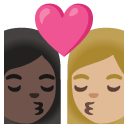
Appearance varies by platform and device. Google Noto, Twemoji, and OpenMoji are open-source.