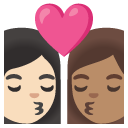
👩🏻❤️💋👩🏽
The Emoji
Kiss: Woman, Woman, Light Skin Tone, Medium Skin Tone
U+1F469 U+1F3FB U+200D U+2764 U+FE0F U+200D U+1F48B U+200D U+1F469 U+1F3FD · :kiss_woman_woman_light_skin_tone_medium_skin_tone:
Trend 68
Meaning layers
- interpretation
- Used to express WLW (women loving women) romance, sapphic relationships, or general queer affection between two people. Often used casually to hype up female friendships or celebrate queer love openly.
- tiktok usage
- Appears in WLW content, sapphic couple duets, pride montages, and 'this is us' couple reveal videos. Frequently used in comments to cheer on queer couples.
- irony level
- 2 / 10
Platform meanings
- meaning
- Symbol of WLW romance and sapphic love, used in couple videos, queer coming-out stories, and pride content.
- trend usage
- Appears in duets of queer couples, pride month compilations, 'meet my girlfriend' reveal videos, and sapphic aesthetic edits.
- hashtags
- #WLW#SapphicTikTok#QueerCouple#PrideMonth#GirlsWhoLikeGirls
- virality score
- 74 / 100
Cultural meanings
🇺🇸
Western / Gen-Z
Widely embraced as a positive symbol of WLW love and queer representation; used freely and proudly in digital communication among Gen Z in North America and Western Europe.
🇵🇰
Pakistan & India
Rarely used publicly due to social and legal stigma around same-sex relationships; may appear in private queer spaces or urban progressive communities, especially post-Section 377 repeal discourse in India.
🌍
Middle East
Largely avoided in public digital spaces due to legal prohibitions and strong social taboos against same-sex relationships across most of the region; exists only in underground LGBTQ+ communities.
🌐
Global Neutral
Universally understood as a representation of two women kissing romantically; reception varies dramatically by cultural and legal context, from celebration to avoidance.
🇧🇩
Bangladesh
Not used publicly due to strict social and legal norms against same-sex relationships; any queer digital expression remains extremely private and risky.
🇱🇰
Sri Lanka
Same-sex relationships carry significant social stigma; this emoji is largely absent from mainstream digital communication and confined to private or diaspora-connected queer spaces.
🇨🇳
China
Queer expression online is heavily censored; this emoji may be filtered or avoided on Chinese platforms, though used privately or on international platforms by Chinese LGBTQ+ users.
🇯🇵
Japan
Japan has a relatively visible yuri (women-loving-women) culture in manga and anime fandom; this emoji is used in fandom spaces and among openly queer individuals, though public relationship expression remains reserved.
🇰🇷
South Korea
Growing queer visibility online despite social conservatism; used in LGBTQ+ activist spaces, queer fandom communities, and among younger progressive Koreans on international platforms.
🇹🇼
Taiwan
Taiwan is the most LGBTQ+-progressive country in Asia, having legalized same-sex marriage; this emoji is used openly and positively in everyday digital communication among queer individuals.
🇭🇰
Hong Kong
Used in progressive and queer communities, especially among younger Hong Kongers; same-sex partnerships have gained some legal recognition, increasing visible use.
🇵🇭
Philippines
Despite a culturally relatively tolerant attitude toward gay people in some respects, same-sex marriage is not legal; the emoji is used in urban queer circles and among OFW communities abroad.
🇮🇩
Indonesia
Strict social and in some regions legal pressures against LGBTQ+ expression mean this emoji is avoided publicly; used only in very private or diaspora queer spaces.
🇹🇭
Thailand
Thailand has visible LGBTQ+ culture and tourism, and the emoji is used in queer communities and among younger Thais; however, legal same-sex recognition remains pending, adding some complexity.
🇻🇳
Vietnam
Increasingly visible queer community especially in Hanoi and Ho Chi Minh City; the emoji is used in urban progressive spaces and LGBTQ+ events, though broader social acceptance varies.
🇲🇾
Malaysia
Same-sex relationships are criminalized under both civil and Sharia law; this emoji is essentially absent from public digital use and confined to underground or diaspora queer spaces.
🇸🇦
Saudi Arabia
Strictly prohibited context — same-sex relationships are illegal and heavily stigmatized; this emoji would be considered deeply offensive or inappropriate in mainstream Saudi digital spaces.
🇦🇪
UAE
Same-sex activity is illegal; the emoji is avoided in public digital communication, though it may appear among expatriate LGBTQ+ communities privately.
🇪🇬
Egypt
Significant legal and social risks for LGBTQ+ individuals; this emoji is not used publicly and is confined to very private online spaces among Egyptian queer communities.
🇹🇷
Turkey
Increasingly hostile political climate toward LGBTQ+ rights despite a historically more visible queer community; used in queer activist spaces and among younger progressive Turks, but with growing risk.
🇮🇷
Iran
Same-sex relationships carry severe legal penalties; this emoji is essentially absent from any public digital use and represents serious risk if associated with a user in Iran.
🇳🇬
Nigeria
Same-sex relationships are criminalized and heavily stigmatized; this emoji is not used in public digital spaces and represents significant social and legal risk.
🇿🇦
South Africa
South Africa is the only African country with constitutional protection for LGBTQ+ rights and same-sex marriage; the emoji is used openly and positively in urban queer communities and Pride celebrations.
🇬🇧
UK & Ireland
Widely accepted and used positively; both the UK and Ireland have strong LGBTQ+ rights and visible queer culture, making this emoji common in mainstream and queer digital spaces alike.
🇫🇷
France
France has same-sex marriage and strong LGBTQ+ rights; the emoji is used openly across digital platforms, though French digital culture tends toward slightly more restrained emoji use overall.
🇩🇪
Germany
Germany has a strong tradition of LGBTQ+ rights and visible queer culture, especially in Berlin; the emoji is used positively and openly in queer and ally digital communication.
🇪🇸
Spain & Italy
Spain has robust LGBTQ+ protections and Pride culture; Italy's legal landscape is more complex but queer communities are visible. The emoji is used freely in Spain and more carefully but still openly in Italian queer spaces.
🇧🇷
Brazil
Brazil has a massive, vibrant LGBTQ+ community and one of the world's largest Pride parades; this emoji is used enthusiastically and frequently in queer digital culture, particularly in São Paulo and Rio communities.
🇲🇽
Mexico
Growing LGBTQ+ visibility and rights in major cities like Mexico City and Guadalajara; the emoji is embraced in urban queer communities while more rural or conservative regions remain less accepting.
🌎
Latin America
Varies widely across Latin America — more openly used in Argentina (which has progressive LGBTQ+ laws) and less so in more conservative Central American or Andean contexts.
🇦🇺
Australia & NZ
Both countries have strong LGBTQ+ rights and visible queer communities; the emoji is used openly and positively in mainstream and queer digital communication, especially around Mardi Gras events.
How its meaning shifted
- 2010
This specific emoji sequence did not exist in 2010; same-sex couples had no dedicated emoji representation, and LGBTQ+ digital expression relied on rainbow flags or creative text combinations.
- 2015
Basic same-sex couple emojis began appearing with Unicode 6.0 expansions and platform implementations; skin tone modifiers were newly introduced, though multi-tone ZWJ kiss sequences were not yet available.
- 2020
Widely available across major platforms following Unicode and vendor support expansions; became a staple of Pride Month content, WLW social media representation, and LGBTQ+ visibility campaigns.
- 2026
Normalized in mainstream digital communication among younger generations; commonly used in everyday WLW relationship expression, queer media fandom, and Pride advocacy with high cross-platform consistency.
See it on every platform
Adjacent emojis
- Opposite
- no entrybroken hearthandshake
- Often confused with
- kiss marktwo heartswoman and man holding hands
- Can replace
- red heartkiss markrainbow flag
Share & embed
Frequently asked
01What does the 👩🏻❤️💋👩🏽 Kiss: Woman, Woman, Light Skin Tone, Medium Skin Tone emoji mean?
A kiss emoji sequence depicting two women with light skin tone and medium skin tone, joined by a red heart and kiss mark, representing a romantic kiss between two women of different skin tones.
02What does 👩🏻❤️💋👩🏽 mean on TikTok?
Symbol of WLW romance and sapphic love, used in couple videos, queer coming-out stories, and pride content.
03What does 👩🏻❤️💋👩🏽 mean on WhatsApp?
Sending a romantic kiss to a female partner or close WLW relationship, expressing love and affection in private chats.
04What does 👩🏻❤️💋👩🏽 mean in Gen-Z slang?
Used to express WLW (women loving women) romance, sapphic relationships, or general queer affection between two people. Often used casually to hype up female friendships or celebrate queer love openly.
05Is the 👩🏻❤️💋👩🏽 emoji safe to use?
A positive, loving representation of a kiss between two women; used to celebrate WLW relationships, LGBTQ+ identity, and queer love in supportive and progressive contexts.
06What does 👩🏻❤️💋👩🏽 mean in texting?
Representation matters emotionally — seeing a same-sex kiss emoji with diverse skin tones validates identity and belonging. It carries deep emotional weight for LGBTQ+ individuals as a symbol of normalized queer love.
07What is the shortcode for 👩🏻❤️💋👩🏽?
The shortcode for Kiss: Woman, Woman, Light Skin Tone, Medium Skin Tone is :kiss_woman_woman_light_skin_tone_medium_skin_tone:
08What does 👩🏻❤️💋👩🏽 mean in dating?
Used between women or non-binary individuals to signal romantic interest, send virtual kisses, or affirm a relationship dynamic. A clear signal of WLW flirtation.
Safety & usage
- Safe meaning
- A positive, loving representation of a kiss between two women; used to celebrate WLW relationships, LGBTQ+ identity, and queer love in supportive and progressive contexts.
- Caution
- May be weaponized in harassment of LGBTQ+ individuals in hostile environments, used mockingly in homophobic contexts, or deployed to 'out' individuals in unsafe situations.
Usage in regions where same-sex relationships are criminalized can pose real safety risks. Content creators should be mindful of audience context. In some platforms or communities, this emoji may attract homophobic responses or targeted harassment.
How it looks across platforms
Appearance varies by platform and device. Google Noto, Twemoji, and OpenMoji are open-source.