♂️
The Emoji
Male Sign
U+2642 U+FE0F · :male_sign:
Trend 58
Meaning layers
- interpretation
- Used to self-identify as male in bios, usernames, or posts. Also used ironically in memes to mock hyper-masculine behavior or 'sigma male' culture. Sometimes placed after names or pronouns as a quick gender indicator.
- tiktok usage
- Appears in 'male POV' videos, gym-bro content, sigma/alpha male meme trends, and ironic 'being a man' commentary. Often stacked with 💪 or 🗿.
- irony level
- 5 / 10
Platform meanings
- meaning
- Gender identifier in bios and overlays; used in male POV content, gym culture, and ironic sigma/alpha male meme videos.
- trend usage
- Paired with 🗿💪 in gym transformation videos, 'male manipulation' satire, and 'being a man in 2024' commentary trends.
- hashtags
- #maleenergy#sigmagrindset#boymath#malepov#gymtok
- virality score
- 62 / 100
Cultural meanings
🇺🇸
Western / Gen-Z
Used casually in bios and memes; heavily ironic in 'men will ♂️' meme format while also functioning as straightforward gender identification. Gen Z oscillates between sincere use and satirical deployment.
🇵🇰
Pakistan & India
Commonly used in WhatsApp and Instagram bios for straightforward male gender identification. Also appears in matrimonial-context posts and cricket fan accounts to denote male supporters or players.
🌍
Middle East
Used straightforwardly as a male identifier in Arabic-language social media, particularly in fitness, sports, and religious community content. Gender expression online is more binary here, so the symbol carries clear, uncomplicated meaning.
🌐
Global Neutral
Universally recognized as the male gender symbol due to its scientific and biological standardization. Functions as a simple, cross-cultural shorthand for male identity without significant cultural baggage.
🇧🇩
Bangladesh
Used in Facebook and WhatsApp contexts for male identification in group settings and personal bios. Straightforward usage without significant ironic or meme connotation.
🇱🇰
Sri Lanka
Appears in social media bios and group chat names to identify male members or male-only spaces. Straightforward gender marker with minimal ironic usage.
🇨🇳
China
Used on platforms like WeChat and Weibo for gender identification. The symbol is recognized but Chinese users often prefer text-based gender indicators; the emoji has a somewhat clinical or formal feel in Chinese digital culture.
🇯🇵
Japan
Recognized as 男性シンボル (male symbol); used in health, biology, and gender-related content. Japanese social media culture uses it more formally than Western contexts, rarely deploying it ironically.
🇰🇷
South Korea
Common in Korean social media (KakaoTalk, Twitter/X) for gender identification. K-pop fan communities use it to distinguish male idol groups or male fans in fandom spaces.
🇹🇼
Taiwan
Used similarly to mainland China for straightforward gender identification, but with more openness to LGBTQ+ discourse contexts where it may appear alongside ⚧️ or ♀️ in gender identity conversations.
🇭🇰
Hong Kong
Bilingual (Cantonese/English) social media users employ it as a simple gender tag. Appears in fitness, sports commentary, and dating app cross-posts.
🇵🇭
Philippines
Widely used on Facebook and TikTok for male identification. Filipino internet culture uses it in 'boys vs girls' content and brotherhood-themed posts with high frequency.
🇮🇩
Indonesia
Used across WhatsApp, Instagram, and TikTok for gender identification. Indonesian users frequently pair it with national pride content or Islamic brotherhood posts in male-oriented groups.
🇹🇭
Thailand
Used in Thai social media for gender identification but with heightened sensitivity given Thailand's diverse gender landscape. The symbol coexists with ⚧️ and ♀️ in nuanced ways in Thai digital spaces.
🇻🇳
Vietnam
Straightforward usage on Zalo and Facebook for male identification. Vietnamese users use it in sports fan groups, military service content, and male-oriented hobby communities.
🇲🇾
Malaysia
Common in Malaysian social media bios and group chats as a simple male identifier. Used in sports, fitness, and Islamic brotherhood content without significant ironic deployment.
🇸🇦
Saudi Arabia
Used in gender-segregated social media contexts to mark male-only spaces or male user identities. Appears in men's sports, business, and religious content; carries a clear and respected social function.
🇦🇪
UAE
Used in cosmopolitan UAE social media contexts for gender identification across Arabic and English content. Appears in business networking, sports, and lifestyle posts targeting male audiences.
🇪🇬
Egypt
Common on Egyptian Twitter/X and Facebook for male identification. Used in football fan culture, political commentary, and male social circles without significant ironic usage.
🇹🇷
Turkey
Used on Turkish social media (Twitter/X, Instagram) for male identification. Appears frequently in sports content, military culture posts, and traditional masculinity-themed accounts.
🇮🇷
Iran
Used on Instagram and Telegram (major platforms in Iran) for male identification. Given internet restrictions, its usage is relatively straightforward without much meme evolution in local digital culture.
🇳🇬
Nigeria
Used across Nigerian social media for male identification, especially in Naija Twitter, sports (football) content, and Afrobeats music communities. The 'men will ♂️' meme format has also been adopted in Nigerian internet humor.
🇿🇦
South Africa
Used in South African social media for gender identification across multiple language communities. Appears in sports (rugby, cricket, football) content and male lifestyle communities.
🇬🇧
UK & Ireland
Used similarly to broader Western Gen Z patterns — both as a sincere bio identifier and in dry, ironic 'men will ♂️' humor. British deadpan delivery makes the ironic usage particularly popular.
🇫🇷
France
Used in French social media for gender identification; French internet culture applies it both straightforwardly and in commentary about masculinity (masculinité toxique) discourse.
🇩🇪
Germany
Practical, straightforward usage for gender identification in German digital spaces. Appears in sports, health, and fitness content; German social media culture tends toward literal rather than ironic emoji usage.
🇪🇸
Spain & Italy
Used in Spanish and Italian social media for male identification, particularly in football culture, fashion, and family content. Mediterranean machismo culture gives the symbol a somewhat proud, identity-asserting connotation.
🇧🇷
Brazil
Highly used on Brazilian social media (especially Twitter/X and Instagram) for male identification and in humor about masculine behavior. Brazilian internet culture has enthusiastically adopted the 'men will ♂️' ironic meme format.
🇲🇽
Mexico
Used for male identification in Mexican social media, particularly in sports, music (regional Mexican, rap), and humor content. Ironic usage around 'hombres ♂️' memes is growing in Mexican Twitter culture.
🌎
Latin America
Broadly used across Latin America for male gender identification. Machismo-influenced cultures give the symbol straightforward identity weight, though younger users are adopting it ironically in gender commentary.
🇦🇺
Australia & NZ
Used similarly to UK/Western Gen Z patterns — casual bio identifier and ironic 'bloke behavior ♂️' humor. Appears in sports (cricket, rugby, AFL) content and male-oriented outdoor/adventure communities.
How its meaning shifted
- 2010
Primarily used in scientific, biological, and educational digital contexts. Rare in casual social media; mainly appearing in health apps, gender-selection forms, and academic content.
- 2015
Adoption into social media bios and profile names as gender identification became more prominent online. Appeared in early dating apps and fitness communities as a simple self-identifier.
- 2020
Widespread bio usage solidified; the emoji entered meme culture through 'men will ♂️' formats. Gender identity discourse on social media made the symbol both more visible and more contested in some communities.
- 2026
Dual identity: sincere gender identifier in bios and forms, and established meme/irony symbol in Gen Z content. Increasingly appears alongside ⚧️ in gender-inclusive spaces; sigma male and gym-bro culture has cemented its meme status.
See it on every platform
Adjacent emojis
- Opposite
- female signwomanpink heart
- Often confused with
- transgender symbolariesarrow pointing rightward then curving upward
- Can replace
- manblue squareletter m
Share & embed
Frequently asked
01What does the ♂️ Male Sign emoji mean?
The male sign (♂️), also known as the Mars symbol, represents the male sex or gender. It depicts a circle with an arrow pointing to the upper right.
02What does ♂️ mean on TikTok?
Gender identifier in bios and overlays; used in male POV content, gym culture, and ironic sigma/alpha male meme videos.
03What does ♂️ mean on WhatsApp?
Simple gender indicator in group chats or contact names. Used casually to clarify who is male in conversations.
04What does ♂️ mean in Gen-Z slang?
Used to self-identify as male in bios, usernames, or posts. Also used ironically in memes to mock hyper-masculine behavior or 'sigma male' culture. Sometimes placed after names or pronouns as a quick gender indicator.
05Is the ♂️ emoji safe to use?
Simple, widely recognized gender identifier used in bios, educational content, health information, and casual self-identification across all major platforms.
06What does ♂️ mean in texting?
Carries neutral-to-proud identity expression for many users but can trigger strong reactions in gender discourse contexts. Its use reflects increasing awareness of gender identity online and the need for shorthand self-expression.
07What is the shortcode for ♂️?
The shortcode for Male Sign is :male_sign:
08What does ♂️ mean in dating?
Rarely used as a direct flirt tool; more commonly used as a straightforward self-identifier in dating app bios (e.g., 'John, 24 ♂️'). Occasionally paired with other emojis to signal masculinity in a flirtatious way.
Safety & usage
- Safe meaning
- Simple, widely recognized gender identifier used in bios, educational content, health information, and casual self-identification across all major platforms.
- Caution
- Can be weaponized in misogynistic or incel-adjacent content as a tribal marker. Sometimes deployed in harassment contexts to signal aggressive male identity politics or exclusionary 'men only' spaces.
Generally safe in most contexts. Exercise caution when the symbol is used in combination with aggressive rhetoric or in communities known for toxic masculinity, as it can serve as an in-group identifier for harmful ideologies.
How it looks across platforms
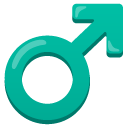


Appearance varies by platform and device. Google Noto, Twemoji, and OpenMoji are open-source.