⚧️
The Emoji
Transgender Symbol
U+26A7 U+FE0F · :transgender_symbol:
Trend 68
Meaning layers
- interpretation
- For Gen Z, ⚧️ is a casual, proud signifier of transgender identity or allyship. It's used unironically and matter-of-factly in bios, captions, and comments to signal identity or support without lengthy explanation.
- tiktok usage
- Appears in TikTok bios of trans creators, in 'transition timeline' videos, pride content, and comment sections of trans-supportive or trans-critical videos as a form of solidarity or identity assertion.
- irony level
- 1 / 10
Platform meanings
- meaning
- Identity marker and community signal used by trans TikTokers and allies to tag content as trans-positive or trans-created.
- trend usage
- Used in transition timeline videos, 'trans day of visibility' content, storytime videos about gender journeys, and duets responding to transphobic content.
- hashtags
- #TransTikTok#TransJoy#TransPride#TransVisibility#QueerTikTok
- virality score
- 72 / 100
Cultural meanings
🇺🇸
Western / Gen-Z
Widely recognized and casually used as a pride and identity symbol in bios, posts, and daily digital communication. Seen as a normalized part of queer identity expression online.
🇵🇰
Pakistan & India
Rarely used in mainstream digital culture due to social stigma, though urban, educated, and online LGBTQ+ communities use it privately. In India, it sometimes intersects with discourse around the Hijra community and the 2019 Transgender Persons Protection Act.
🌍
Middle East
Extremely rare in mainstream use due to legal and social prohibitions on LGBTQ+ expression in most countries. Used privately or in diaspora communities; public use can carry legal risk.
🌐
Global Neutral
Increasingly recognized internationally as a trans identity symbol, though interpretation varies widely by region from celebratory to controversial to unknown.
🇧🇩
Bangladesh
Largely unknown or taboo in mainstream culture; occasionally used by urban youth with exposure to global LGBTQ+ discourse. Intersects complexly with the Hijra identity, which has its own cultural framework separate from Western trans identity.
🇱🇰
Sri Lanka
Rarely used publicly; LGBTQ+ rights are legally restricted and social stigma is high. Small online communities of LGBTQ+ Sri Lankans may use it privately in international spaces.
🇨🇳
China
Usage is heavily restricted by platform censorship; the symbol may be filtered or flagged on Chinese social media. Known within niche LGBTQ+ communities but not widely visible in mainstream digital culture.
🇯🇵
Japan
Recognized in progressive and LGBTQ+ circles, especially in major cities like Tokyo. Japan's growing trans rights discourse (fueled by legal debates) has increased awareness, though use remains community-specific.
🇰🇷
South Korea
Known within LGBTQ+ activist communities and among international-facing youth; faces backlash in conservative circles. Trans rights are a rising but contested social issue.
🇹🇼
Taiwan
Taiwan's progressive LGBTQ+ legislation (Asia's first same-sex marriage) means the symbol is relatively well-known and positively received in urban, educated, and activist communities.
🇭🇰
Hong Kong
Recognized in urban LGBTQ+ communities; usage has become more cautious amid political changes and shrinking civil liberties, but exists in private and diaspora contexts.
🇵🇭
Philippines
Known in urban LGBTQ+ communities; the Philippines has a complex relationship with gender (bakla culture) that both overlaps with and differs from Western trans identity. Used by activists and younger Filipinos engaged with global queer discourse.
🇮🇩
Indonesia
Rarely used publicly due to strong conservative social and religious norms; the Waria community exists but operates outside mainstream digital visibility. LGBTQ+ expression online faces significant backlash.
🇹🇭
Thailand
Recognized in relation to Thailand's visible Kathoey (transgender women) community, though Western transgender identity frameworks don't perfectly map. Urban youth and activists use it in LGBTQ+ contexts.
🇻🇳
Vietnam
Known in urban LGBTQ+ communities; Vietnam has shown some legal openness to transgender identity but social acceptance varies. Used quietly in digital spaces by activists and queer youth.
🇲🇾
Malaysia
Usage is rare and risky due to strict laws against LGBTQ+ expression; known primarily in diaspora and urban underground communities. Islamic law in many states prohibits transgender identity expression publicly.
🇸🇦
Saudi Arabia
Effectively prohibited in public digital spaces; any positive use could carry serious legal consequences. Known only to Saudis with access to international LGBTQ+ content via VPNs or diaspora.
🇦🇪
UAE
Similar to Saudi Arabia — LGBTQ+ expression is legally restricted, and public use of the symbol is inadvisable. Known within expat communities and those consuming international media.
🇪🇬
Egypt
Rarely used openly; LGBTQ+ expression faces legal and social suppression. Any use is confined to private messaging or diaspora communities abroad.
🇹🇷
Turkey
In a complex position: historically more open, but increasing government restrictions have pushed LGBTQ+ expression underground. Known in urban progressive communities, especially Istanbul; used cautiously.
🇮🇷
Iran
Paradoxically, Iran legally permits gender reassignment surgery (though within strict state frameworks), creating a unique trans discourse. The symbol is not openly used online but is known in related communities.
🇳🇬
Nigeria
LGBTQ+ expression is criminalized; the symbol is largely unknown in mainstream culture or used only in diaspora and private contexts. Its use publicly carries significant personal risk.
🇿🇦
South Africa
South Africa has constitutional LGBTQ+ protections and a vibrant queer community, especially in Cape Town and Johannesburg. The symbol is recognized and used positively in activist and urban LGBTQ+ spaces.
🇬🇧
UK & Ireland
Well recognized and widely used in LGBTQ+ communities; trans rights are a major ongoing political and social debate in the UK, making this symbol both celebratory and politically charged depending on context.
🇫🇷
France
Recognized in LGBTQ+ activist communities; France has a growing trans rights movement, and the symbol appears in pride contexts and political advocacy, though French universalism sometimes creates tension with identity-specific symbols.
🇩🇪
Germany
Germany's relatively progressive LGBTQ+ legal framework means the symbol is well-known and used freely in queer communities, political advocacy, and increasingly in corporate DEI contexts.
🇪🇸
Spain & Italy
Spain is very progressive on LGBTQ+ rights, and the symbol is common in queer and activist circles. Italy is more conservative but has urban LGBTQ+ communities where it's recognized and used.
🇧🇷
Brazil
Brazil has a large and visible trans community; the symbol is used actively in pride and activist contexts despite a complex environment of high trans violence rates alongside strong queer cultural visibility.
🇲🇽
Mexico
Growing LGBTQ+ visibility means the symbol is recognized in urban queer communities; used in pride events, activist content, and by younger digitally connected users.
🌎
Latin America
Varies significantly by country; generally more recognized in urban, educated, and activist circles across Latin America, where trans rights movements are growing despite conservative social norms in many areas.
🇦🇺
Australia & NZ
Both countries have progressive LGBTQ+ frameworks; the symbol is widely recognized and used casually in queer communities, activist spaces, and increasingly in mainstream inclusive environments.
How its meaning shifted
- 2010
The transgender symbol existed as a text character but was largely confined to academic, medical, and activist documents. Digital use was minimal and mostly text-based in niche LGBTQ+ forums and early social media.
- 2015
Growing visibility of trans rights movements (fueled by figures like Laverne Cox and Caitlyn Jenner) increased the symbol's online presence. Used in advocacy posts, profile pictures, and LGBTQ+ blogs, though still not yet a standardized emoji.
- 2020
Added as an official emoji in 2020 (Unicode 13.0), triggering a significant spike in usage. Coinciding with increased trans rights activism and global pride visibility, it became a standard bio and post element for trans individuals and allies across platforms.
- 2026
Now deeply embedded in digital LGBTQ+ culture as a routine identity marker. Used casually alongside pronoun declarations, in corporate DEI contexts, and as a recognized symbol by mainstream audiences, though also increasingly a flashpoint in culture war discourse online.
See it on every platform
Compare with
Adjacent emojis
- Opposite
- no entryprohibitedcross mark
- Often confused with
- male signfemale signmedical symbol
- Can replace
- transgender flagrainbow flagpurple heart
Share & embed
Frequently asked
01What does the ⚧️ Transgender Symbol emoji mean?
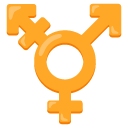
The Transgender Symbol (⚧️) represents the transgender community and identity. It combines the male (♂) and female (♀) symbols with an additional arm, creating a symbol that visually represents a gender beyond the binary.
02What does ⚧️ mean on TikTok?
Identity marker and community signal used by trans TikTokers and allies to tag content as trans-positive or trans-created.
03What does ⚧️ mean on WhatsApp?
Shared in supportive conversations among LGBTQ+ friend groups, often paired with pride flag emojis during pride month or when discussing trans topics.
04What does ⚧️ mean in Gen-Z slang?
For Gen Z, ⚧️ is a casual, proud signifier of transgender identity or allyship. It's used unironically and matter-of-factly in bios, captions, and comments to signal identity or support without lengthy explanation.
05Is the ⚧️ emoji safe to use?
A symbol of transgender identity, pride, and allyship used by the LGBTQ+ community and supporters to express solidarity, visibility, and community belonging.
06What does ⚧️ mean in texting?
For transgender individuals, this emoji can carry profound psychological weight — serving as a small but powerful act of self-identification and visibility in digital spaces. For allies, it signals safe-space communication and reduces social distance.
07What is the shortcode for ⚧️?
The shortcode for Transgender Symbol is :transgender_symbol:
08What does ⚧️ mean in dating?
Used by trans individuals on dating profiles and apps to disclose gender identity upfront and filter for accepting partners. Sometimes used by allies to signal openness to dating trans people.
Safety & usage
- Safe meaning
- A symbol of transgender identity, pride, and allyship used by the LGBTQ+ community and supporters to express solidarity, visibility, and community belonging.
- Caution
- In hostile online contexts, the symbol is sometimes weaponized in anti-trans harassment campaigns, used mockingly in transphobic memes, or deployed to tag content designed to demean trans individuals.
Content using this emoji can attract both supportive and hostile audiences depending on platform and context. In regions where LGBTQ+ expression is criminalized, using this emoji publicly can pose real-world safety risks. Platform moderators should be aware that this symbol is sometimes used to tag coordinated anti-trans harassment.
How it looks across platforms


Appearance varies by platform and device. Google Noto, Twemoji, and OpenMoji are open-source.