👨🏾🎨
The Emoji
Man Artist: Medium-dark Skin Tone
U+1F468 U+1F3FE U+200D U+1F3A8 · :man_artist_mediumdark_skin_tone:
Trend 58
Meaning layers
- interpretation
- Used to flex creative identity, signal 'main character' artistic energy, or self-identify as someone deeply invested in aesthetic expression and visual arts culture.
- tiktok usage
- Appears in art process videos, dark academia aesthetics, and POV content about creative life; also used ironically by non-artists claiming 'artist' status.
- irony level
- 4 / 10
Platform meanings
- meaning
- Signals artistic identity in captions and comments; used by creators in visual arts to brand their content.
- trend usage
- Frequently appears in art process time-lapses, digital art reveals, and 'artist vs. client' skits.
- hashtags
- #ArtTok#BlackArtists#CreativeLife#ArtProcess#PainterLife
- virality score
- 62 / 100
Cultural meanings
🇺🇸
Western / Gen-Z
Strongly associated with creative identity politics and the 'tortured artist' aesthetic; widely used by young Black and brown creatives to claim space in art discourse.
🇵🇰
Pakistan & India
Used to represent professional artists and craftspeople; particularly resonant in communities that value calligraphy, miniature painting, and street art traditions.
🌍
Middle East
Represents skilled artisans and calligraphers; appreciated in contexts celebrating Islamic geometric art and regional craft heritage.
🌐
Global Neutral
Universally understood as representing a male artist or creative professional; neutral enough to be used across most cultural contexts without misinterpretation.
🇧🇩
Bangladesh
Associated with traditional folk artists like Nakshi Kantha embroiderers and potters; also used by modern urban designers and art students.
🇱🇰
Sri Lanka
Connected to traditional mask-making and craft artisans; also used by the growing urban digital arts and illustration community.
🇨🇳
China
Linked to fine arts students and professional painters; used respectfully in contexts discussing traditional ink painting or contemporary digital art.
🇯🇵
Japan
Associated with manga artists, illustrators, and traditional woodblock print makers; used with admiration in creative communities.
🇰🇷
South Korea
Popular in webtoon creator communities and K-pop fan art circles; signals respected creative identity in digital art spaces.
🇹🇼
Taiwan
Used broadly by indie illustrators, comic artists, and designers; appears frequently in arts-and-culture social media communities.
🇭🇰
Hong Kong
Connected to graffiti and street art culture as well as traditional Chinese painting; used by a vibrant local visual arts scene.
🇵🇭
Philippines
Represents local illustrators, muralists, and digital artists gaining international recognition; used with community pride in arts spaces.
🇮🇩
Indonesia
Associated with batik artisans, street muralists, and a booming local digital art scene; seen as a marker of creative pride.
🇹🇭
Thailand
Linked to contemporary Thai illustrators, mural artists, and graphic designers; used in the growing Bangkok arts scene context.
🇻🇳
Vietnam
Represents lacquer painters, contemporary street artists, and a growing generation of digital illustrators asserting creative identity.
🇲🇾
Malaysia
Used by local graphic artists, illustrators, and muralists; reflects a culturally rich creative community blending traditional and modern styles.
🇸🇦
Saudi Arabia
Represents calligraphers and contemporary visual artists in a rapidly growing arts sector; used in contexts surrounding Vision 2030 cultural investment.
🇦🇪
UAE
Associated with the thriving Dubai and Abu Dhabi arts scenes; used by professional artists in a region investing heavily in cultural infrastructure.
🇪🇬
Egypt
Linked to fine arts graduates from institutions like Cairo's Faculty of Fine Arts; used to celebrate a long artistic heritage in a modern context.
🇹🇷
Turkey
Represents miniaturists, contemporary painters, and Istanbul's vibrant street art culture; seen as a marker of cultural pride and craft tradition.
🇮🇷
Iran
Deeply associated with Persian miniature painting and carpet design traditions; used by a passionate arts community navigating complex expression.
🇳🇬
Nigeria
Strongly resonant as a symbol of the booming Afrocontemporary art scene; used with high cultural pride by Lagos and Abuja-based artists.
🇿🇦
South Africa
Represents township muralists, fine arts graduates, and a politically engaged visual arts tradition; used by a culturally rich creative community.
🇬🇧
UK & Ireland
Associated with art school culture, independent galleries, and London's multicultural street art scene; used with creative confidence.
🇫🇷
France
Linked to a storied artistic tradition; used in contexts celebrating both classical fine arts heritage and the contemporary Parisian creative scene.
🇩🇪
Germany
Represents a respected professional creative identity; used in contexts relating to design, illustration, and gallery culture in a society that values craft.
🇪🇸
Spain & Italy
Evokes strong connections to fine arts tradition and passion-driven creativity; used to celebrate both classical and contemporary artistic practice.
🇧🇷
Brazil
Tied to a vibrant tradition of street art, capoeira visual culture, and São Paulo's world-class graffiti scene; used with strong cultural energy.
🇲🇽
Mexico
Deeply connected to muralism traditions inspired by figures like Diego Rivera; used with cultural reverence and contemporary creative pride.
🌎
Latin America
Broadly represents the region's rich tradition of public art, folk craft, and contemporary visual expression; a unifying creative symbol.
🇦🇺
Australia & NZ
Associated with Indigenous art appreciation, street art culture, and a thriving independent creative sector; used with inclusive creative identity.
How its meaning shifted
- 2010
Emoji did not exist yet; skin tone modifiers and profession emojis were not introduced until later Unicode versions.
- 2015
Newly introduced as part of Unicode 8.0 diversity updates; primarily used literally to indicate 'male artist' with an emphasis on celebrating representation.
- 2020
Widely adopted in BLM-adjacent creative solidarity posts and in Black artists' self-promotion; became a staple of creative POC identity on social media.
- 2026
Deeply embedded in creative identity culture across platforms; used casually by artists of color, ironically in meme contexts, and professionally in creative industry branding.
See it on every platform
Compare with
Adjacent emojis
Share & embed
Frequently asked
01What does the 👨🏾🎨 Man Artist: Medium-dark Skin Tone emoji mean?
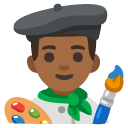
A man with medium-dark skin tone depicted as an artist, typically shown holding a paint palette and brush, representing creativity, visual arts, and artistic professions.
02What does 👨🏾🎨 mean on TikTok?
Signals artistic identity in captions and comments; used by creators in visual arts to brand their content.
03What does 👨🏾🎨 mean on WhatsApp?
Telling someone you are working on creative projects or art; casual shorthand for 'I'm in my creative zone.'
04What does 👨🏾🎨 mean in Gen-Z slang?
Used to flex creative identity, signal 'main character' artistic energy, or self-identify as someone deeply invested in aesthetic expression and visual arts culture.
05Is the 👨🏾🎨 emoji safe to use?
Represents a creative professional or artistic identity; overwhelmingly used in positive, constructive, and identity-affirming contexts.
06What does 👨🏾🎨 mean in texting?
The emoji taps into identity-based emotions — users deploying it often signal a core part of their personality rather than a casual hobby, reflecting deep alignment between self and creative vocation.
07What is the shortcode for 👨🏾🎨?
The shortcode for Man Artist: Medium-dark Skin Tone is :man_artist_mediumdark_skin_tone:
08What does 👨🏾🎨 mean in dating?
Used to signal a sensitive, creative, brooding personality — often paired with 'I'll draw you' energy to come across as romantic and attentive.
Safety & usage
- Safe meaning
- Represents a creative professional or artistic identity; overwhelmingly used in positive, constructive, and identity-affirming contexts.
- Caution
- Rarely weaponized; occasionally used condescendingly to mock someone's creative output or dismiss artistic ambitions.
No significant toxic usage patterns identified; the medium-dark skin tone modifier is a representation tool and should not be used by those of different backgrounds in contexts that appropriate or mock.
How it looks across platforms


Appearance varies by platform and device. Google Noto, Twemoji, and OpenMoji are open-source.