👩🏾🎨
The Emoji
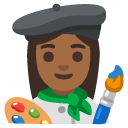
Woman Artist: Medium-dark Skin Tone
U+1F469 U+1F3FE U+200D U+1F3A8 · :woman_artist_mediumdark_skin_tone:
Trend 58
Meaning layers
- interpretation
- Used to signal creative identity, aesthetic vibes, or a DIY artsy personality. Often deployed by people who identify as creative types, even casually, not just professional artists.
- tiktok usage
- Appears in art transformation videos, thrift-flip aesthetics, and 'artist check' trend content. Used to caption creative processes or flex an artsy lifestyle.
- irony level
- 3 / 10
Platform meanings
- meaning
- Represents artistic identity, creative content creation, and the 'artist lifestyle' aesthetic. Heavily used by Black women in visual arts communities.
- trend usage
- Seen in art speedpaints, transformation reveals, 'day in my life as an artist' vlogs, and creative hustle content.
- hashtags
- #ArtistCheck#BlackArtist#WomenWhoCreate#ArtTok#CreativeVibes
- virality score
- 62 / 100
Cultural meanings
🇺🇸
Western / Gen-Z
Strongly associated with empowerment of Black and brown women in creative spaces; used frequently in affirmation culture, art identity posts, and 'girl boss creative' aesthetics.
🇵🇰
Pakistan & India
Used by urban, progressive women identifying as artists, designers, or craft enthusiasts; skin tone specificity adds a layer of representation that resonates with South Asian women embracing their complexion.
🌍
Middle East
Less commonly used but gaining traction among young Arab women in art and design fields; appreciated as a representation of professional female creativity in creative-forward communities.
🌐
Global Neutral
Universally understood as representing a woman artist; the medium-dark skin tone adds a layer of identity specificity that is increasingly seen as positive representation worldwide.
🇧🇩
Bangladesh
Used by creative women in urban centers like Dhaka who identify with arts, fashion design, or crafts; skin tone is relatable to many Bangladeshi users.
🇱🇰
Sri Lanka
Emerging use among Sri Lankan women in creative industries and art students; the medium-dark tone aligns with typical Sri Lankan skin tones, making it feel inclusive.
🇨🇳
China
Less culturally specific usage; primarily interpreted as a creative professional emoji. Skin tone diversity awareness is growing but the emoji is mostly used for its professional meaning.
🇯🇵
Japan
Appreciated in professional and hobby art communities; Japan's strong manga and illustration culture makes the artist emoji popular, though skin tone diversity is less emphasized culturally.
🇰🇷
South Korea
Used in K-beauty, fashion, and webtoon art communities; South Korean users appreciate it for creative identity, though skin tone diversity narratives differ from Western contexts.
🇹🇼
Taiwan
Common among Taiwanese digital artists and illustrators; used to express creative identity, with growing awareness of skin tone inclusivity in younger communities.
🇭🇰
Hong Kong
Used by creative professionals and art students; appreciated for its professional representation and increasingly valued for skin tone diversity in cosmopolitan Hong Kong.
🇵🇭
Philippines
Widely embraced by Filipino women artists and crafters; medium-dark skin tone resonates strongly with Filipino complexions and carries empowering representation meaning.
🇮🇩
Indonesia
Popular among Indonesian women in creative fields; the skin tone is highly relatable, and the emoji is used to celebrate local artisans, illustrators, and batik artists.
🇹🇭
Thailand
Used in creative and design communities in Thailand; skin tone representation is meaningful to those challenging local beauty standards that often favor lighter skin.
🇻🇳
Vietnam
Emerging usage among Vietnamese women in art, design, and crafts; appreciated as a creative identity marker with growing skin tone diversity awareness.
🇲🇾
Malaysia
Used widely by Malay, Indian-Malaysian, and mixed-heritage women in creative fields; medium-dark tone is highly relatable and represents a form of inclusive expression.
🇸🇦
Saudi Arabia
Used carefully in conservative social contexts but embraced by young Saudi women artists and creative professionals on platforms like Instagram and Twitter.
🇦🇪
UAE
Popular among UAE's diverse creative community including South Asian, Arab, and African expats; the emoji reflects the multicultural makeup of the UAE's art scene.
🇪🇬
Egypt
Used by Egyptian women in arts, crafts, and design; skin tone is relatable to many Egyptians and the emoji is embraced as a positive professional and creative identity symbol.
🇹🇷
Turkey
Common among Turkish women in visual arts, textile design, and digital media; used to express creative identity with growing appreciation for skin tone diversity.
🇮🇷
Iran
Used discreetly on social media by Iranian women artists and designers; carries empowering connotations for women asserting professional identity in creative fields.
🇳🇬
Nigeria
Highly embraced in Nigeria's booming creative industry; the medium-dark skin tone is deeply relatable and carries powerful representation and pride for Nigerian women artists.
🇿🇦
South Africa
Strongly resonates with South African women of color in the arts; used proudly in Cape Town and Johannesburg creative communities to celebrate African creative identity.
🇬🇧
UK & Ireland
Popular among British and Irish women of African, Caribbean, and South Asian descent in creative fields; part of broader representation conversations in UK media and art.
🇫🇷
France
Used in French creative communities, particularly among women of African and Caribbean heritage in Paris's thriving arts scene; tied to discussions of diversity in French cultural institutions.
🇩🇪
Germany
Emerging use in German creative communities; appreciated for representation of diverse women in arts and design, especially in Berlin's multicultural creative scene.
🇪🇸
Spain & Italy
Used by women of color in Spanish and Italian art communities; gaining visibility in representation conversations, particularly in fashion, design, and visual arts.
🇧🇷
Brazil
Widely used and loved in Brazil where medium-dark skin tones are very common; represents the rich creative culture of Afro-Brazilian women in art, music, and design.
🇲🇽
Mexico
Popular among Mexican women in arts and crafts, especially those celebrating indigenous heritage and Chicana artistic traditions; resonates with Latina creative identity.
🌎
Latin America
Broadly appreciated across Latin America for representing morena and mestiza women in creative fields; carries pride and empowerment for diverse creative professionals.
🇦🇺
Australia & NZ
Used by Aboriginal, Māori, Pacific Islander, and South Asian women in creative communities; tied to First Nations art pride and multicultural representation in Oceania.
How its meaning shifted
- 2010
This specific emoji did not exist in 2010; profession emojis with skin tone modifiers were not yet available in Unicode, and artist representation was limited to generic palette emojis.
- 2015
Skin tone modifiers were introduced in Unicode 8.0 (2015); the groundwork was laid for profession emojis with diverse skin tones, though the woman artist combo came slightly later.
- 2020
Became a key identity emoji for women of color in creative fields during the social justice awakening of 2020; widely used alongside #BlackLivesMatter and #BlackArtMatters movements.
- 2026
Now a standard identity emoji for women creatives of all backgrounds; increasingly used in AI art discussions, digital creator culture, and representation advocacy across all major platforms.
See it on every platform
Compare with
Adjacent emojis
Share & embed
Frequently asked
01What does the 👩🏾🎨 Woman Artist: Medium-dark Skin Tone emoji mean?
A woman with medium-dark skin tone depicted as an artist, typically shown holding a palette and paintbrush, representing creativity, visual arts, and artistic professions.
02What does 👩🏾🎨 mean on TikTok?
Represents artistic identity, creative content creation, and the 'artist lifestyle' aesthetic. Heavily used by Black women in visual arts communities.
03What does 👩🏾🎨 mean on WhatsApp?
Typically used to identify oneself or someone else as an artist or creative person in conversation.
04What does 👩🏾🎨 mean in Gen-Z slang?
Used to signal creative identity, aesthetic vibes, or a DIY artsy personality. Often deployed by people who identify as creative types, even casually, not just professional artists.
05Is the 👩🏾🎨 emoji safe to use?
A completely safe, positive emoji representing a woman artist with medium-dark skin tone; used for creative identity, representation, and professional expression.
06What does 👩🏾🎨 mean in texting?
Carries a strong sense of identity affirmation, particularly for women of color reclaiming space in creative industries. Evokes joy, passion, and a sense of purposeful self-expression.
07What is the shortcode for 👩🏾🎨?
The shortcode for Woman Artist: Medium-dark Skin Tone is :woman_artist_mediumdark_skin_tone:
08What does 👩🏾🎨 mean in dating?
Used in dating contexts to signal a creative, free-spirited personality. May suggest someone who is expressive, emotionally aware, and drawn to aesthetic experiences.
Safety & usage
- Safe meaning
- A completely safe, positive emoji representing a woman artist with medium-dark skin tone; used for creative identity, representation, and professional expression.
- Caution
- Rarely misused; occasionally weaponized in sarcastic or dismissive contexts to mock someone's creative efforts, but this is uncommon.
No significant warning notes. The emoji is overwhelmingly used in positive, empowering, and professional contexts. Skin tone specificity may occasionally attract colorism-related commentary in certain online spaces.
How it looks across platforms


Appearance varies by platform and device. Google Noto, Twemoji, and OpenMoji are open-source.