🚴♀️
The Emoji
Woman Biking
U+1F6B4 U+200D U+2640 U+FE0F · :woman_biking:
Trend 58
Meaning layers
- interpretation
- Used to signal a healthy, active lifestyle or an independent, unbothered attitude. Also used ironically to say 'I'm doing my own thing and not caring about drama.'
- tiktok usage
- Appears in workout motivation videos, outdoor aesthetic content, and ironic 'main character' energy posts where someone is literally or metaphorically pedaling away from problems.
- irony level
- 4 / 10
Platform meanings
- meaning
- Fitness motivation, outdoor lifestyle content, and ironic 'main character escaping reality' energy.
- trend usage
- Used in 'that girl' aesthetic videos, summer routine montages, and 'leaving my problems behind' transition edits.
- hashtags
- #girlboss#thatgirl#cyclinggirl#maincharacter#fitgirl
- virality score
- 62 / 100
Cultural meanings
🇺🇸
Western / Gen-Z
Widely used to signal fitness culture, independence, and the 'that girl' aesthetic. Also used ironically to mean 'cycling away from my problems.'
🇵🇰
Pakistan & India
Increasingly used among urban, fitness-conscious youth, though cycling is more gendered in conservative areas. Progressive women use it to signal freedom and modernity.
🌍
Middle East
In urban Gulf and Levant contexts it's used by fitness-forward women. In more conservative contexts it can be seen as a bold statement about female mobility and independence.
🌐
Global Neutral
Universally understood as cycling or an active, outdoor lifestyle. Broadly positive and without controversy in most global contexts.
🇧🇩
Bangladesh
Used primarily in fitness and urban youth circles. Cycling by women carries connotations of independence in a culture where female mobility is sometimes restricted.
🇱🇰
Sri Lanka
Used in fitness and outdoor communities, particularly in urban Colombo. Signals modernity and a health-conscious lifestyle among younger demographics.
🇨🇳
China
Popular among urban fitness communities and cycling enthusiasts. The rise of shared bike culture (DiDi Bike, Meituan) makes this emoji relatable for daily commuters.
🇯🇵
Japan
Very relatable as cycling is a dominant form of daily transportation. Used casually to mean commuting or weekend leisure rides without strong gendered connotations.
🇰🇷
South Korea
Strongly associated with the 'healthy girl' wellness trend and outdoor lifestyle culture that is popular on Korean social media platforms like KakaoStory and Instagram.
🇹🇼
Taiwan
Cycling culture is prominent, especially given the popularity of bike tourism. Used casually for commuting, fitness, and leisure ride contexts.
🇭🇰
Hong Kong
Used in fitness and leisure contexts. Urban density means cycling is often recreational rather than commuter-based, giving the emoji an aspirational outdoor feel.
🇵🇭
Philippines
Used in fitness communities and active lifestyle content. Cycling has grown significantly as both transport and sport, especially post-pandemic.
🇮🇩
Indonesia
Used in fitness-forward communities. Cycling had a major boom during COVID-19 and the emoji carries that cultural momentum in urban Indonesian social media.
🇹🇭
Thailand
Associated with fitness culture and weekend cycling groups that are very popular in Bangkok and Chiang Mai. Friendly, active lifestyle connotations.
🇻🇳
Vietnam
Cycling is traditional transport in Vietnam though motorbiking dominates. The emoji is more associated with sport and fitness for younger, urban users.
🇲🇾
Malaysia
Used in fitness and cycling club communities. Relatable in urban areas where cycling for leisure and fitness has grown significantly among younger Malaysians.
🇸🇦
Saudi Arabia
Has gained new cultural resonance since women in Saudi Arabia gained more freedoms in public life. It can symbolize empowerment and progressive change for Saudi women.
🇦🇪
UAE
Common in fitness-forward communities in Dubai and Abu Dhabi. Cycling paths in the UAE have expanded and the emoji reflects an active, modern Emirati and expat lifestyle.
🇪🇬
Egypt
Primarily used in fitness communities and by younger, urban Egyptians. A woman cycling independently can carry mild symbolic weight around female freedom.
🇹🇷
Turkey
Used in urban fitness and cycling communities. Istanbul's growing cycling culture makes it relatable, though it may carry slight connotations of a progressive or modern lifestyle.
🇮🇷
Iran
Used carefully by younger, progressive Iranians to signal fitness and independence. Iranian women cycling in public has been a politically charged act, giving this emoji subtle symbolic weight.
🇳🇬
Nigeria
Used in urban fitness communities in Lagos and Abuja. Signals an aspirational active lifestyle and is part of the growing Nigerian wellness culture.
🇿🇦
South Africa
Common in fitness and outdoor adventure communities. South Africa has a strong cycling culture (e.g., Cape Town Cycle Tour) making this emoji very relatable.
🇬🇧
UK & Ireland
Cycling is a major commuting and fitness activity, especially post-pandemic. The emoji is used casually for commutes, charity rides, and general fitness content.
🇫🇷
France
Deeply culturally resonant given France's cycling heritage (Tour de France). Used for both serious cycling content and casual 'I'm heading out on my vélo' messages.
🇩🇪
Germany
Germany has a strong cycling infrastructure and culture. Used commonly for commuting, sport, and eco-friendly transport messaging — very normalized and positive.
🇪🇸
Spain & Italy
Associated with Mediterranean outdoor lifestyle. Spain's Vuelta and Italy's Giro cycling heritage gives the emoji cultural weight among sports fans and casual riders alike.
🇧🇷
Brazil
Used in fitness communities and cycling clubs. Brazil's cycling culture is growing in urban centers and the emoji signals an active, sporty, modern identity.
🇲🇽
Mexico
Used in fitness and cycling content. Urban cycling culture in Mexico City has grown substantially, giving the emoji an eco-commuter and fitness resonance.
🌎
Latin America
Broadly used in fitness and outdoor lifestyle content across Latin America. Signals modernity, health consciousness, and an active urban lifestyle.
🇦🇺
Australia & NZ
Very common — both countries have strong cycling and outdoor fitness cultures. Used casually for commutes, weekend rides, and fitness content without much irony.
How its meaning shifted
- 2010
Emoji did not exist yet in gender-specific form. General cycling emoji was rarely used and mostly literal — sent to discuss biking plans.
- 2015
The woman variant was introduced; early adoption mostly literal for fitness and cycling hobby discussions.
- 2020
Exploded in usage during pandemic cycling booms globally. Also picked up ironic 'riding away from my problems' connotation and started appearing in feminist empowerment content.
- 2026
Firmly embedded in fitness culture, 'that girl' aesthetic content, and ironic 'unbothered exit' meme language. Used across lifestyle, wellness, and empowerment contexts with layered literal and metaphorical meanings.
See it on every platform
Compare with
Adjacent emojis
- Opposite
- person in bedcouch and lampsloth
- Often confused with
- person bikingman bikingmotorcycle
- Can replace
- bicycleperson bikingwoman running
Share & embed
Frequently asked
01What does the 🚴♀️ Woman Biking emoji mean?
A woman riding a bicycle, depicted in profile view pedaling forward. Represents cycling, biking as sport or recreation, fitness, and eco-friendly transportation.
02What does 🚴♀️ mean on TikTok?
Fitness motivation, outdoor lifestyle content, and ironic 'main character escaping reality' energy.
03What does 🚴♀️ mean on WhatsApp?
Sent when discussing cycling plans, outdoor activities, or fitness routines. Also informally means 'I'm out of here' or 'moving on.'
04What does 🚴♀️ mean in Gen-Z slang?
Used to signal a healthy, active lifestyle or an independent, unbothered attitude. Also used ironically to say 'I'm doing my own thing and not caring about drama.'
05Is the 🚴♀️ emoji safe to use?
A woman cycling for sport, recreation, commuting, or fitness. Universally positive and benign.
06What does 🚴♀️ mean in texting?
Cycling as a symbol taps into autonomy and forward momentum. Psychologically it conveys self-sufficiency and a grounded, physical engagement with the world — often associated with mindfulness and stress relief.
07What is the shortcode for 🚴♀️?
The shortcode for Woman Biking is :woman_biking:
08What does 🚴♀️ mean in dating?
Low flirt usage — sometimes sent to suggest a casual active date like 'wanna go biking?' or to signal an active, adventurous personality.
Safety & usage
- Safe meaning
- A woman cycling for sport, recreation, commuting, or fitness. Universally positive and benign.
- Caution
- No significant toxic usage documented. Occasionally used dismissively as 'she's just biking away' to minimize someone's legitimate exit from a situation.
No NSFW or harmful connotations. In extremely rare cases could be used condescendingly in contexts involving women's freedom of movement in restrictive cultural settings.
How it looks across platforms
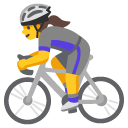
Appearance varies by platform and device. Google Noto, Twemoji, and OpenMoji are open-source.