🤸🏾♂️
The Emoji
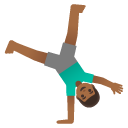
Man Cartwheeling: Medium-dark Skin Tone
U+1F938 U+1F3FE U+200D U+2642 U+FE0F · :man_cartwheeling_mediumdark_skin_tone:
Trend 52
Meaning layers
- interpretation
- Used to express unbothered energy, effortlessly moving past drama or stress. Also signals someone thriving or 'doing cartwheels' over good news, flexing on a situation with playful confidence.
- tiktok usage
- Appears in transition videos, hype reactions to good news, or as a visual metaphor for 'unbothered.' Often used in comment sections to say 'I am THRIVING.'
- irony level
- 4 / 10
Platform meanings
- meaning
- Symbolizes unbothered thriving, hype energy, or athletic flexing. Common in transition clips and celebratory reactions.
- trend usage
- Used in 'main character' energy trends, gymnastics and cheerleading content, and ironic 'living my best life' commentary. Appears in duets reacting to wild news.
- hashtags
- #cartwheel#gymnastics#unbothered#livingmybestlife#athleticvibes
- virality score
- 55 / 100
Cultural meanings
🇺🇸
Western / Gen-Z
Used heavily as a shorthand for unbothered confidence and thriving energy. Both sincere and ironic usage is widespread among young Western users.
🇵🇰
Pakistan & India
Used in celebratory contexts, especially around sports achievements, Bollywood dance references, or moments of personal joy. The medium-dark skin tone resonates as more representative for South Asian users.
🌍
Middle East
Used to express joy and celebration, particularly around sports achievements or family milestones. Athletic emojis are generally positive and uncontroversial.
🌐
Global Neutral
Universally understood as a symbol of physical activity, joy, and celebration. Safe for cross-cultural communication with minimal misinterpretation risk.
🇧🇩
Bangladesh
Used in contexts of personal achievement and celebration, particularly popular among youth sharing fitness or sports accomplishments online.
🇱🇰
Sri Lanka
Appears in social media posts celebrating athletic achievements or expressing carefree happiness. Generally positive and associated with youthful energy.
🇨🇳
China
Used to represent gymnastics — a sport of high national pride in China. Can carry extra celebratory weight when used around Olympic events.
🇯🇵
Japan
Associated with gymnastics and athletic precision. Used in sports content and to express energetic joy, fitting into Japan's culture of physical discipline and competition.
🇰🇷
South Korea
Popular in fitness and K-pop fan content to express high energy and hype. Appears in celebration posts and among fans of athletic and dance performances.
🇹🇼
Taiwan
Used in active lifestyle and sports contexts. Younger Taiwanese users also deploy it for its general 'thriving' energy in casual posts.
🇭🇰
Hong Kong
Seen in fitness communities and sports fan content. Also used ironically by younger users to express sardonic enthusiasm about demanding work or life situations.
🇵🇭
Philippines
Used enthusiastically in celebration posts and among gymnastics fans. Filipinos also use it to express general excitement and 'living my best life' energy.
🇮🇩
Indonesia
Common in youth fitness and sports content. Also used in casual celebratory messages among friends to express joy and positive momentum.
🇹🇭
Thailand
Associated with gymnastics, Muay Thai fitness content, and general athletic achievement. Used by younger Thais in celebratory and motivational contexts.
🇻🇳
Vietnam
Used in fitness and sports communities online. Among younger Vietnamese users it signals enthusiasm and positive energy in casual digital conversations.
🇲🇾
Malaysia
Appears in sporty and active lifestyle content. The medium-dark skin tone is seen as more relatable and representative for many Malaysian users.
🇸🇦
Saudi Arabia
Used in sports and fitness contexts, particularly among youth. Gymnastics has growing visibility in the region and the emoji carries positive athletic connotations.
🇦🇪
UAE
Common in fitness culture posts in a wellness-focused social media landscape. The diversity of UAE's population means skin tone modifiers are especially valued for representation.
🇪🇬
Egypt
Used to express joy and celebrate achievements, particularly in sports contexts. Young Egyptians use it in casual celebration posts and reactions.
🇹🇷
Turkey
Found in fitness, gymnastics, and general celebration content. Turkish youth use it to express happy, carefree energy in social media posts.
🇮🇷
Iran
Used in private and semi-public fitness and sports discussions. Carries generally positive athletic and joyful associations among younger users.
🇳🇬
Nigeria
Widely used with strong positive energy to express joy, celebration, and thriving. The medium-dark skin tone modifier increases personal identification and usage frequency.
🇿🇦
South Africa
Popular in fitness and sports communities. The medium-dark skin tone resonates strongly with the majority population, making this emoji feel inclusive and relatable.
🇬🇧
UK & Ireland
Used with a mix of genuine celebration and trademark British dry humor. Deployed ironically to react to disappointing news or minor inconveniences with mock enthusiasm.
🇫🇷
France
Used in sports and lifestyle content. French users appreciate the physical freedom the emoji conveys, and it fits into casual, expressive digital communication styles.
🇩🇪
Germany
More commonly used in literal sports and fitness contexts. German users are less likely to deploy it ironically and more likely to use it for actual gymnastic or athletic content.
🇪🇸
Spain & Italy
Used expressively in celebration posts, sports reactions, and to convey a spontaneous, joyful attitude. Fits into the expressive emotional communication styles of both cultures.
🇧🇷
Brazil
Highly popular given Brazil's vibrant gymnastics, dance, and capoeira culture. The emoji resonates strongly with physical expression and celebratory Brazilian digital culture.
🇲🇽
Mexico
Used in celebratory and sports contexts with expressive enthusiasm. Mexican youth also use it to convey carefree joy and positive energy in everyday conversations.
🌎
Latin America
Broadly positive across Latin America, associated with sport, dance, and joyful physical expression. Frequent in fitness content and celebratory social media posts throughout the region.
🇦🇺
Australia & NZ
Used casually to express enthusiasm and celebrate wins. Australians and Kiwis also apply it with self-deprecating humor in ironic contexts, fitting their laid-back communication style.
How its meaning shifted
- 2010
This specific emoji did not exist in 2010. Cartwheel and gymnastics representation in emoji was absent, with people using generic happy face emojis to express similar sentiments.
- 2015
The base cartwheeling emoji was introduced around this period. Usage was primarily literal — gymnasts, cheerleaders, and fitness enthusiasts used it for sports content.
- 2020
Skin tone modifiers were in wide use. The emoji expanded beyond literal gymnastics to metaphorical uses for joy, thriving, and unbothered energy, especially on TikTok.
- 2026
Fully established in ironic and sincere registers. Common in Gen Z communication for 'unbothered' energy, sarcastic reactions, and genuine athletic celebration. Medium-dark skin tone version is frequently chosen for representation and identity expression.
See it on every platform
Adjacent emojis
- Often confused with
- person doing cartwheelperson bouncing balldancer
- Can replace
- raised handsparty popperperson running
Share & embed
Frequently asked
01What does the 🤸🏾♂️ Man Cartwheeling: Medium-dark Skin Tone emoji mean?
A man performing a cartwheel, displayed with a medium-dark skin tone. The figure is shown mid-cartwheel with arms and legs extended.
02What does 🤸🏾♂️ mean on TikTok?
Symbolizes unbothered thriving, hype energy, or athletic flexing. Common in transition clips and celebratory reactions.
03What does 🤸🏾♂️ mean on WhatsApp?
Excitement or celebration in group chats. Used to react to good news with playful energy.
04What does 🤸🏾♂️ mean in Gen-Z slang?
Used to express unbothered energy, effortlessly moving past drama or stress. Also signals someone thriving or 'doing cartwheels' over good news, flexing on a situation with playful confidence.
05Is the 🤸🏾♂️ emoji safe to use?
Physical activity, gymnastics, celebration, joy, fitness, and carefree happiness. Completely safe for general audiences.
06What does 🤸🏾♂️ mean in texting?
The cartwheel motion psychologically evokes childlike freedom and uninhibited expression. Using this emoji signals someone is emotionally light, celebratory, or in a carefree headspace — often a performance of exuberance.
07What is the shortcode for 🤸🏾♂️?
The shortcode for Man Cartwheeling: Medium-dark Skin Tone is :man_cartwheeling_mediumdark_skin_tone:
08What does 🤸🏾♂️ mean in dating?
Used flirtatiously to show excitement about a date or crush — 'you make me want to do cartwheels.' Can signal someone is athletic, fun, and adventurous.
Safety & usage
- Safe meaning
- Physical activity, gymnastics, celebration, joy, fitness, and carefree happiness. Completely safe for general audiences.
- Caution
- No inherent toxic usage. In rare cases could be used sarcastically in a dismissive or condescending manner, but this is mild and context-dependent.
No significant warning flags. The medium-dark skin tone modifier is a positive representation choice. Ironic usage is mild and not harmful.
How it looks across platforms
Appearance varies by platform and device. Google Noto, Twemoji, and OpenMoji are open-source.