🧗🏻♂️
The Emoji
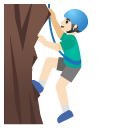
Man Climbing: Light Skin Tone
U+1F9D7 U+1F3FB U+200D U+2642 U+FE0F · :man_climbing_light_skin_tone:
Trend 52
Meaning layers
- interpretation
- Used to signal grinding through obstacles, personal growth hustle, or literally 'climbing' through life challenges. Also used ironically to describe someone overcomplicating a simple task or 'reaching' for a far-fetched point in an argument.
- tiktok usage
- Appears in fitness motivation videos, gym content, 'day in my life' outdoor adventure clips, and ironically in comment sections when someone is 'stretching' their logic.
- irony level
- 5 / 10
Platform meanings
- meaning
- Signals fitness culture, outdoor adventure, personal growth journeys, and motivational content. Also ironic use for 'reaching' in argument comments.
- trend usage
- Frequently paired with trending outdoor and gym content. Used in 'I woke up at 5am' hustle culture videos and rock climbing POV content.
- hashtags
- #RockClimbing#ClimbingLife#OutdoorAdventure#GymMotivation#BoulderingLife
- virality score
- 55 / 100
Cultural meanings
🇺🇸
Western / Gen-Z
Primarily used as a 'reaching' sarcasm tool in online discourse and authentically in fitness and outdoor adventure content among Gen Z.
🇵🇰
Pakistan & India
Used in fitness enthusiast communities and motivational content. The climbing metaphor resonates strongly with aspirational youth culture and 'struggle to success' narratives.
🌍
Middle East
Associated with ambition and hard work in professional and youth contexts. Outdoor climbing culture is growing in Gulf countries, increasing literal use.
🌐
Global Neutral
Universally understood as representing climbing activity and ambition. The upward movement is a cross-cultural symbol of progress.
🇧🇩
Bangladesh
Used in motivational and educational contexts by students and young professionals. Signals hard work and aspiration in a culturally resonant way.
🇱🇰
Sri Lanka
Appears in fitness and outdoor community content. Also used metaphorically in motivational social media posts about overcoming challenges.
🇨🇳
China
Used in fitness and extreme sports communities on platforms like Weibo and Douyin. The 'climbing up' metaphor aligns with cultural emphasis on self-improvement and career advancement.
🇯🇵
Japan
Associated with discipline, perseverance (gaman), and the sport of climbing which surged in popularity after the Tokyo 2020 Olympics. Climbing became a nationally celebrated sport.
🇰🇷
South Korea
Highly relevant post-2020 Olympics where Korean climbers gained fame. Used in fitness culture and K-culture hustle narratives about grinding toward success.
🇹🇼
Taiwan
Used in outdoor adventure and fitness communities. Taiwan's mountainous terrain makes climbing culturally relevant and this emoji sees genuine literal use.
🇭🇰
Hong Kong
Strong outdoor climbing culture due to proximity to great climbing spots. Used literally and metaphorically in aspirational content about advancing in competitive environments.
🇵🇭
Philippines
Used in motivational content popular on Facebook and TikTok. Resonates with themes of resilience and striving upward despite adversity.
🇮🇩
Indonesia
Appears in fitness and outdoor adventure content. Indonesia's mountainous geography makes climbing culturally relevant beyond just the emoji.
🇹🇭
Thailand
Used in fitness communities and motivational content. Rock climbing is a popular tourist and local activity making this emoji contextually meaningful.
🇻🇳
Vietnam
Growing climbing culture among Vietnamese youth. Used in fitness and aspirational content on social media by the younger generation.
🇲🇾
Malaysia
Used in adventure and outdoor sports communities. Also appears in motivational content among Malaysian youth pursuing career and academic goals.
🇸🇦
Saudi Arabia
Growing use as extreme sports culture expands under Vision 2030 initiatives. Used in fitness and adventure content by younger Saudis.
🇦🇪
UAE
Popular in the UAE's active fitness and outdoor adventure community. Used by expats and locals alike in gym and adventure content.
🇪🇬
Egypt
Used in motivational content and fitness communities. The metaphor of climbing to the top resonates with youth aspiration culture in Egypt.
🇹🇷
Turkey
Turkey has a growing climbing scene and this emoji is used both literally in outdoor communities and metaphorically in motivational content.
🇮🇷
Iran
Used among youth in fitness and aspirational contexts. Climbing is a popular sport in Iran given its mountainous terrain.
🇳🇬
Nigeria
Used heavily in motivational and hustle culture content. 'Climbing to the top' is a powerful narrative in Nigerian social media culture.
🇿🇦
South Africa
Outdoor adventure culture is strong in South Africa making this emoji genuinely relevant for climbing and hiking content. Also used motivationally.
🇬🇧
UK & Ireland
Used in outdoor adventure, climbing, and gym content. Also adopted the sarcastic 'reaching' usage popular across English-speaking internet culture.
🇫🇷
France
France has a strong climbing culture and this emoji is used in sports and outdoor community content. Also used in general motivational contexts.
🇩🇪
Germany
Associated with sport, discipline, and outdoor adventure in German social media culture. Climbing is a respected and popular sport.
🇪🇸
Spain & Italy
Used in adventure sports, outdoor content, and motivational contexts. Mediterranean outdoor culture embraces climbing as both sport and metaphor.
🇧🇷
Brazil
Brazil's outdoor culture and growing climbing scene make this emoji relevant. Also used in motivational hustle content popular on Brazilian social media.
🇲🇽
Mexico
Used in fitness and outdoor adventure communities. Motivational use is common among Mexican youth on Instagram and TikTok.
🌎
Latin America
Broadly used across Latin America in motivational content, fitness communities, and outdoor adventure spaces. The upward climb metaphor is universally resonant.
🇦🇺
Australia & NZ
Strong outdoor and adventure culture makes this emoji genuinely popular in climbing, hiking, and fitness content. Used both literally and as a motivational symbol.
How its meaning shifted
- 2010
Emoji did not exist in 2010. Rock climbing was represented by indirect emoji combinations if at all.
- 2015
Climbing emojis were introduced around this period. Usage was minimal and primarily literal among early adopters in outdoor sports communities.
- 2020
Surged in usage following sport climbing's inclusion in the Tokyo 2020 Olympics. Both literal sports use and metaphorical 'hustle/grind' meanings expanded significantly.
- 2026
Firmly established dual usage — literal in outdoor and fitness communities, ironic 'reaching' sarcasm tool in debate and meme culture. Skin tone variants increasingly used for personalization.
See it on every platform
Adjacent emojis
- Often confused with
- person cartwheelingperson doing cartwheelperson swimming
- Can replace
- mountainflexed bicepsperson running
Share & embed
Frequently asked
01What does the 🧗🏻♂️ Man Climbing: Light Skin Tone emoji mean?
A man with light skin tone climbing a rock face or wall, depicted mid-climb with hands and feet on the surface. Represents rock climbing, bouldering, wall climbing, and physical challenge activities.
02What does 🧗🏻♂️ mean on TikTok?
Signals fitness culture, outdoor adventure, personal growth journeys, and motivational content. Also ironic use for 'reaching' in argument comments.
03What does 🧗🏻♂️ mean on WhatsApp?
Signals being busy, active, or literally going climbing. Used to say 'I'm working hard' or 'grinding through obstacles' in personal chats.
04What does 🧗🏻♂️ mean in Gen-Z slang?
Used to signal grinding through obstacles, personal growth hustle, or literally 'climbing' through life challenges. Also used ironically to describe someone overcomplicating a simple task or 'reaching' for a far-fetched point in an argument.
05Is the 🧗🏻♂️ emoji safe to use?
Represents climbing, fitness, ambition, perseverance, and outdoor adventure. Completely safe in all standard contexts.
06What does 🧗🏻♂️ mean in texting?
Psychologically resonates with themes of perseverance and overcoming adversity. The upward movement triggers associations with progress and self-improvement, making it a powerful symbol for goal-oriented individuals.
07What is the shortcode for 🧗🏻♂️?
The shortcode for Man Climbing: Light Skin Tone is :man_climbing_light_skin_tone:
08What does 🧗🏻♂️ mean in dating?
Can be used flirtatiously to signal being fit, adventurous, or outdoorsy — implying 'I'm active and exciting, date me.' May appear in dating app bios to signal an adventurous personality.
Safety & usage
- Safe meaning
- Represents climbing, fitness, ambition, perseverance, and outdoor adventure. Completely safe in all standard contexts.
- Caution
- No inherently toxic meaning. In very rare cases used dismissively to mock someone's argument as 'reaching,' but this is mild and not harmful.
No significant safety concerns. The 'reaching' sarcasm usage is the most edgy application and even that is broadly considered acceptable internet discourse.
How it looks across platforms
Appearance varies by platform and device. Google Noto, Twemoji, and OpenMoji are open-source.