🏌️♂️
The Emoji
Man Golfing
U+1F3CC U+FE0F U+200D U+2642 U+FE0F · :man_golfing:
Trend 45
Meaning layers
- interpretation
- Used ironically to represent rich, out-of-touch behavior, corporate dad energy, or the classic 'old money' lifestyle. Also used to signal someone is unbothered and living leisurely.
- tiktok usage
- Appears in videos mocking corporate culture, rich dad stereotypes, or anyone acting overly casual about serious situations — 'woke up, gonna go golf 🏌️♂️'.
- irony level
- 7 / 10
Platform meanings
- meaning
- Represents the out-of-touch rich guy, corporate dad, or someone living their best unbothered life while chaos unfolds around them.
- trend usage
- Used in POV videos, 'day in the life of a rich dad' skits, and satirical takes on executive culture or nepotism.
- hashtags
- #GolfLife#CorporateDad#UnbotheredVibes#RichDadEnergy#GolfTok
- virality score
- 52 / 100
Cultural meanings
🇺🇸
Western / Gen-Z
Heavily ironic symbol of out-of-touch wealth and corporate 'dad' energy; rarely used sincerely unless actually into golf.
🇵🇰
Pakistan & India
Golf is an elite sport associated with business class and upper-crust society; this emoji signals wealth and status among those who use it.
🌍
Middle East
Golf is growing in the Gulf region and is associated with luxury resorts and business networking; used genuinely by the affluent.
🌐
Global Neutral
Universally understood as a golf/sports emoji; most neutral users apply it literally to golf activities or leisure.
🇧🇩
Bangladesh
Golf is a niche, elite sport; this emoji is rarely used outside of upper-class circles and signals significant wealth.
🇱🇰
Sri Lanka
Associated with colonial-era clubs and elite business circles; rarely used in everyday conversation.
🇨🇳
China
Golf has a complicated history in China (banned by CCP for a period); the emoji can signal nouveau riche status or Western aspirational lifestyle.
🇯🇵
Japan
Golf is immensely popular among salarymen and business professionals; this emoji is used genuinely and frequently in professional social contexts.
🇰🇷
South Korea
Golf is a prestigious and popular sport, especially among business professionals; the emoji is used sincerely and carries aspirational connotations.
🇹🇼
Taiwan
Golf is a popular upper-middle-class sport; the emoji is used naturally in lifestyle and sports contexts.
🇭🇰
Hong Kong
Associated with business culture and elite clubs like Hong Kong Golf Club; used professionally and in lifestyle contexts.
🇵🇭
Philippines
Golf is seen as an elite sport for the wealthy; this emoji signals prestige and is used mostly by business-class Filipinos.
🇮🇩
Indonesia
Golf is a sport of the wealthy elite; the emoji is used by business professionals and signals a high social status.
🇹🇭
Thailand
Popular among wealthy Thais and business executives; golf is a major networking tool and this emoji reflects that culture.
🇻🇳
Vietnam
Golf has surged in popularity among Vietnam's growing upper class; the emoji signals success and modern leisure.
🇲🇾
Malaysia
Golf is widely popular and used for business networking; the emoji is used naturally across professional and leisure contexts.
🇸🇦
Saudi Arabia
Golf is played at luxury resorts and by the elite; used genuinely in lifestyle content and among those in high-income circles.
🇦🇪
UAE
Golf is a major sport in Dubai and Abu Dhabi; the emoji is used frequently in luxury lifestyle content and business networking.
🇪🇬
Egypt
Golf is an elite sport associated with Westernized upper-class Egyptians; relatively rare in everyday emoji use.
🇹🇷
Turkey
Golf is growing but still niche; the emoji signals wealth and aspiration, used mostly by upper-class Turks.
🇮🇷
Iran
Golf is very niche and associated with pre-revolution aristocracy; rarely used in modern digital communication.
🇳🇬
Nigeria
Golf is played by business elites and government officials; using this emoji signals significant wealth and status in Nigerian context.
🇿🇦
South Africa
Golf is hugely popular across demographics thanks to legends like Gary Player; used genuinely and frequently in sports and lifestyle conversations.
🇬🇧
UK & Ireland
Golf is deeply embedded in culture from casual public courses to prestigious clubs; used both sincerely by enthusiasts and ironically in class commentary.
🇫🇷
France
Golf is associated with bourgeois leisure and the upper class; used authentically by enthusiasts and sarcastically in discussions about elite privilege.
🇩🇪
Germany
Golf has a growing and enthusiastic following; used straightforwardly in sports contexts with less ironic baggage than in Anglo cultures.
🇪🇸
Spain & Italy
Golf is popular in both countries and associated with tourism and resort culture; used genuinely in leisure and holiday contexts.
🇧🇷
Brazil
Golf is a sport of the wealthy elite in Brazil; the emoji signals money and privilege, used ironically or sarcastically in class discussions.
🇲🇽
Mexico
Golf is played by the business class and elite; used sincerely by enthusiasts and sarcastically to comment on class and corruption.
🌎
Latin America
Across Latin America, golf is an upper-class marker; the emoji carries strong connotations of wealth and is used in ironic commentary on inequality.
🇦🇺
Australia & NZ
Golf is widely popular across all demographics; used naturally and frequently, both by serious golfers and in laid-back 'living the good life' contexts.
How its meaning shifted
- 2010
Golf emojis didn't exist yet; golf was communicated via text like ':golf:' or simple ball emoji. The sport had no dedicated representation.
- 2015
Early sports emoji sets were emerging; golf began appearing in proposals. Usage was straightforward, literally representing the sport.
- 2020
The man golfing emoji gained ironic traction during the Trump presidency due to his well-documented golf habits; political meme usage surged significantly.
- 2026
Fully dual-purpose: sincere use by golf communities and the old-money aesthetic crowd, plus heavy ironic use to represent out-of-touch elite behavior, CEO nonchalance, and 'rich dad' archetypes.
See it on every platform
Adjacent emojis
- Opposite
- person facepalmingfiresos button
- Often confused with
- person bouncing ballcricket gamefield hockey
- Can replace
- trophyflag in holemoney bag
Share & embed
Frequently asked
01What does the 🏌️♂️ Man Golfing emoji mean?
A man engaged in the sport of golf, typically depicted mid-swing with a golf club on a course.
02What does 🏌️♂️ mean on TikTok?
Represents the out-of-touch rich guy, corporate dad, or someone living their best unbothered life while chaos unfolds around them.
03What does 🏌️♂️ mean on WhatsApp?
Signals someone is out playing golf, taking leisure time, or is unreachable for a while.
04What does 🏌️♂️ mean in Gen-Z slang?
Used ironically to represent rich, out-of-touch behavior, corporate dad energy, or the classic 'old money' lifestyle. Also used to signal someone is unbothered and living leisurely.
05Is the 🏌️♂️ emoji safe to use?
Represents the sport of golf, leisure activity, and an affluent or relaxed lifestyle.
06What does 🏌️♂️ mean in texting?
Golf is culturally associated with privilege and relaxation, so this emoji often signals a psychological state of being unbothered or in a position of power/comfort. Low emotional intensity but high symbolic weight.
07What is the shortcode for 🏌️♂️?
The shortcode for Man Golfing is :man_golfing:
08What does 🏌️♂️ mean in dating?
Rarely used as a flirt tool; sometimes used to suggest a laid-back, successful lifestyle — 'I'll take you somewhere nice after my round 🏌️♂️'.
Safety & usage
- Safe meaning
- Represents the sport of golf, leisure activity, and an affluent or relaxed lifestyle.
- Caution
- Can be weaponized to mock politicians during crises or used in class-warfare rhetoric to symbolize elite indifference to public suffering.
Generally safe with no NSFW connotations. In political contexts, it can be charged content depending on the target. No hate speech or explicit associations.
How it looks across platforms
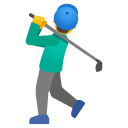
Appearance varies by platform and device. Google Noto, Twemoji, and OpenMoji are open-source.