👨🦽
The Emoji
Man In Manual Wheelchair
U+1F468 U+200D U+1F9BD · :man_in_manual_wheelchair:
Trend 35
Meaning layers
- interpretation
- Used literally for disability or mobility topics, but also ironically to say 'I'm done walking away from this situation' or 'rolling into chaos.' Sometimes used self-deprecatingly when someone is exhausted or injured.
- tiktok usage
- Appears in 'getting rolled out' memes, disability advocacy content, and ironically when creators say they can't deal with drama anymore — 'rolling away slowly.'
- irony level
- 4 / 10
Platform meanings
- meaning
- Used in disability advocacy, personal recovery TikToks, ironic 'rolling away from problems' content, and representation discussions.
- trend usage
- Paired with 'POV: me after leg day,' accessibility challenge videos, or 'rolling in' to a situation dramatically.
- hashtags
- #DisabilityAwareness#WheelchairLife#Accessibility#RollingAway#DisabledAndProud
- virality score
- 38 / 100
Cultural meanings
🇺🇸
Western / Gen-Z
Used both earnestly for disability representation and ironically in memes about exhaustion or escaping drama; Gen Z appreciates the dual sincerity and humor.
🇵🇰
Pakistan & India
Primarily used literally to refer to physical disability; cultural sensitivity around disability means it's less likely used humorously and more for genuine medical or awareness contexts.
🌍
Middle East
Generally used literally to indicate disability or physical limitation; disability representation in digital culture is growing but the emoji retains straightforward meaning.
🌐
Global Neutral
Universally recognized as representing a wheelchair-using man; used across cultures for accessibility, disability, and mobility topics.
🇧🇩
Bangladesh
Used literally for disability awareness and medical contexts; humor around disability is generally avoided, so ironic use is rare.
🇱🇰
Sri Lanka
Appears in health-related communication and disability NGO content; straightforward representation with little ironic subtext.
🇨🇳
China
Used in health and disability discussions; also appears in contexts referencing elderly care and mobility assistance, reflecting family-centered cultural values.
🇯🇵
Japan
Used respectfully in disability advocacy and accessibility content; Japan's strong visual culture of disability symbols (the wheelchair icon) gives this emoji clear, literal meaning.
🇰🇷
South Korea
Used in disability rights conversations and increasingly in self-deprecating humor among younger Koreans about physical exhaustion, particularly post-workout.
🇹🇼
Taiwan
Appears in accessibility advocacy and public health communication; Taiwan's progressive disability rights movement gives this emoji a politically aware dimension.
🇭🇰
Hong Kong
Used in disability awareness content and occasionally in protest or social movement contexts to signify those with mobility challenges being included in civic life.
🇵🇭
Philippines
Primarily literal use for disability and medical contexts; also seen in OFW communities when referencing work injuries or health struggles abroad.
🇮🇩
Indonesia
Used in disability awareness posts and health communication; Islamic values of compassion for the disabled give the emoji a tone of care and empathy.
🇹🇭
Thailand
Appears in medical and disability content; also used humorously in tourist contexts about scooter injuries and the classic 'Phuket leg.'
🇻🇳
Vietnam
Used literally in health and disability discussions; growing disability rights movement means the emoji is becoming more visible in advocacy contexts.
🇲🇾
Malaysia
Used in disability awareness campaigns and health posts; multicultural context means it's interpreted straightforwardly across ethnic communities.
🇸🇦
Saudi Arabia
Used respectfully in health and disability contexts; government accessibility initiatives give the emoji official, institutional resonance.
🇦🇪
UAE
Appears in accessibility and inclusion content, especially tied to UAE's smart city and inclusive infrastructure initiatives.
🇪🇬
Egypt
Used in disability and health contexts; occasionally appears in social commentary about inadequate infrastructure for wheelchair users.
🇹🇷
Turkey
Used in health and disability discussions; younger Turks may use it humorously post-injury or in meme formats similar to Western usage.
🇮🇷
Iran
Used primarily literally for disability and medical contexts; social media restrictions mean its ironic meme use is limited.
🇳🇬
Nigeria
Used in disability awareness and health content; also appears in religious contexts of healing and recovery narratives.
🇿🇦
South Africa
Used in disability advocacy, particularly intersecting with conversations about healthcare access and inequality.
🇬🇧
UK & Ireland
Used both genuinely for disability representation and in dry British humor — 'wheeling out of this conversation' style jokes are common.
🇫🇷
France
Used in disability rights (handicap) discussions and laïcité-themed inclusivity content; French irony culture means it occasionally appears in satirical contexts.
🇩🇪
Germany
Used very literally and respectfully; Germany's strong disability rights legislation (SGB IX) culture means casual ironic use is less common.
🇪🇸
Spain & Italy
Used in disability and health contexts; Mediterranean expressiveness means it occasionally appears in dramatic declarations of physical exhaustion.
🇧🇷
Brazil
Used in disability and health content, but also in humorous memes about being physically destroyed by samba, sports, or life — 'cadeirante meme' culture is growing.
🇲🇽
Mexico
Used in disability awareness and health posts; also appears humorously in 'after the quesabirria destroyed my knees' style meme content.
🌎
Latin America
Broadly used for disability representation and health communication; humor around exhaustion and physical struggle is common across Latin American digital culture.
🇦🇺
Australia & NZ
Used literally for disability and accessibility content, and in quintessential Aussie/Kiwi self-deprecating humor about sports injuries or after a big night out.
How its meaning shifted
- 2010
Emoji did not exist yet; disability representation in digital communication was limited to text descriptions or generic smiley faces.
- 2015
Introduced as part of Unicode 12.0 push for diversity; initial usage was almost entirely literal and clinical, tied to disability awareness campaigns.
- 2020
Usage expanded significantly during COVID-19 as discussions of vulnerability, healthcare access, and disability intersected; also began appearing in gym/exhaustion humor memes.
- 2026
Firmly established dual identity — serious disability representation tool and a lighthearted 'rolling away' meme staple; increasingly featured in DEI corporate communications and Paralympic coverage.
See it on every platform
Compare with
Adjacent emojis
Share & embed
Frequently asked
01What does the 👨🦽 Man In Manual Wheelchair emoji mean?
A man using a manual wheelchair, depicted in profile or frontal view propelling himself forward. Part of the Unicode disability representation set introduced to promote inclusivity.
02What does 👨🦽 mean on TikTok?
Used in disability advocacy, personal recovery TikToks, ironic 'rolling away from problems' content, and representation discussions.
03What does 👨🦽 mean on WhatsApp?
Sent to indicate a wheelchair user, injury, disability, or humorously to say 'I'm so tired I need a wheelchair.'
04What does 👨🦽 mean in Gen-Z slang?
Used literally for disability or mobility topics, but also ironically to say 'I'm done walking away from this situation' or 'rolling into chaos.' Sometimes used self-deprecatingly when someone is exhausted or injured.
05Is the 👨🦽 emoji safe to use?
Represents disability, wheelchair users, mobility aid, accessibility, and physical rehabilitation — a universally recognized inclusive symbol.
06What does 👨🦽 mean in texting?
Evokes empathy and a recognition of physical limitation overcome by strength and independence. Can trigger both solidarity and self-reflection about ableism.
07What is the shortcode for 👨🦽?
The shortcode for Man In Manual Wheelchair is :man_in_manual_wheelchair:
08What does 👨🦽 mean in dating?
Rarely used in flirting; when it appears, it typically signals a genuine personal detail about disability or is used humorously post-injury.
Safety & usage
- Safe meaning
- Represents disability, wheelchair users, mobility aid, accessibility, and physical rehabilitation — a universally recognized inclusive symbol.
- Caution
- Rarely weaponized, but can appear in ableist mockery or be used dismissively to invalidate someone's argument ('just roll away').
Care should be taken to avoid using this emoji in contexts that mock disability or use it as a punchline in ways that could be seen as ableist. Always prioritize respectful, contextually appropriate use.
How it looks across platforms
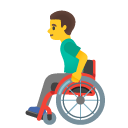


Appearance varies by platform and device. Google Noto, Twemoji, and OpenMoji are open-source.