👨🏿🦽➡️
The Emoji
Man In Manual Wheelchair Facing Right: Dark Skin Tone
U+1F468 U+1F3FF U+200D U+1F9BD U+200D U+27A1 U+FE0F · :man_in_manual_wheelchair_facing_right_dark_skin_tone:
Trend 32
Meaning layers
- interpretation
- Used to represent mobility, independence, pushing forward despite obstacles, or literally depicting a wheelchair user. Also used in disability pride contexts and accessibility advocacy.
- tiktok usage
- Appears in disability awareness content, representation celebrations, and accessibility-focused videos. Sometimes used humorously by disabled creators reclaiming their narrative.
- irony level
- 2 / 10
Platform meanings
- meaning
- Represents disabled pride, mobility independence, and forward movement. Used by disability advocates and creators celebrating representation.
- trend usage
- Appears in #DisabilityTok, accessibility rant videos, and 'representation matters' trending sounds.
- hashtags
- #DisabilityTok#WheelchairLife#DisabilityPride#AccessibilityMatters#RepresentationMatters
- virality score
- 38 / 100
Cultural meanings
🇺🇸
Western / Gen-Z
Embraced as a symbol of disability pride and representation; Gen Z uses it to signal allyship and inclusive values, often pairing it with accessibility advocacy.
🇵🇰
Pakistan & India
Primarily used in literal contexts to refer to wheelchair users or disabled family members; growing use in disability NGO and awareness content on social media.
🌍
Middle East
Used mostly in health and disability charity contexts; representation of wheelchair users in social posts, often in humanitarian or medical fundraising settings.
🌐
Global Neutral
Universally understood as a representation of a dark-skinned man using a manual wheelchair moving forward; used in accessibility and diversity contexts worldwide.
🇧🇩
Bangladesh
Used in disability rights NGO communications and awareness campaigns; relatively rare in casual conversation but meaningful in advocacy circles.
🇱🇰
Sri Lanka
Appears in disability welfare posts and health awareness content; associated with charity and rehabilitation services.
🇨🇳
China
Used in discussions about disability rights (残障权利) and accessibility; more common in progressive urban social media than traditional platforms due to censorship of sensitive topics.
🇯🇵
Japan
Used respectfully in disability welfare (福祉) contexts; Japan's strong culture of accessibility makes this emoji meaningful in public infrastructure discussions.
🇰🇷
South Korea
Used in disability awareness and inclusion campaigns; Korean disability advocates use it on platforms like Instagram and Twitter for visibility.
🇹🇼
Taiwan
Common in disability rights and social welfare discussions; Taiwan's progressive values make this emoji well-received in inclusion advocacy.
🇭🇰
Hong Kong
Used in accessibility and disability advocacy, particularly relevant given discussions of accessible public transport and infrastructure.
🇵🇭
Philippines
Used in PWD (Persons with Disabilities) awareness campaigns and social media posts about inclusive rights and accessibility.
🇮🇩
Indonesia
Appears in disability (disabilitas) awareness content and inclusive education discussions on social media platforms.
🇹🇭
Thailand
Used in disability welfare posts and inclusive tourism content; Thailand's growing accessible tourism sector makes this relevant.
🇻🇳
Vietnam
Used in disability rights (khuyết tật) contexts and NGO communications; growing in social media disability awareness content.
🇲🇾
Malaysia
Common in OKU (Orang Kurang Upaya) community posts and disability rights discussions; used in both English and Malay language content.
🇸🇦
Saudi Arabia
Used in disability charity and awareness contexts; aligns with Vision 2030 inclusivity goals and disability welfare communications.
🇦🇪
UAE
Appears in inclusive society campaigns and disability sports content, reflecting the UAE's growing emphasis on accessibility and inclusion.
🇪🇬
Egypt
Used in disability awareness (إعاقة) posts and rehabilitation center communications; more common in NGO than casual use.
🇹🇷
Turkey
Used in disability rights (engelli hakları) advocacy and accessibility discussions; common in social responsibility posts.
🇮🇷
Iran
Used in disability welfare and charity contexts; appears in health and rehabilitation-related social media content.
🇳🇬
Nigeria
Used in disability advocacy and inclusion campaigns by NGOs; growing presence in social media discussions about accessible infrastructure.
🇿🇦
South Africa
Used in disability rights and inclusive society discussions; relevant to conversations about accessible public spaces and employment equity.
🇬🇧
UK & Ireland
Common in disability pride, Disability History Month, and accessibility advocacy content; widely understood and positively received.
🇫🇷
France
Used in disability inclusion (handicap) discussions and accessibility advocacy; appears in Semaine Européenne pour l'Emploi des Personnes Handicapées content.
🇩🇪
Germany
Used in Inklusion and accessibility (Barrierefreiheit) discussions; appears in professional DEI and social welfare communications.
🇪🇸
Spain & Italy
Used in disability rights and inclusion campaigns; relevant in discussions about accessible infrastructure in both countries.
🇧🇷
Brazil
Used in disability (deficiência) rights and inclusion discussions; common in social media accessibility advocacy, especially around inclusive sports.
🇲🇽
Mexico
Used in disability awareness and inclusive rights campaigns; appears in NGO content and discussions about accessible public spaces.
🌎
Latin America
Broadly used across Latin America in disability advocacy and inclusion discussions; associated with empowerment and rights-based approaches.
🇦🇺
Australia & NZ
Widely used in disability pride, NDIS-related discussions (Australia), and accessibility advocacy; positively received in inclusive community contexts.
How its meaning shifted
- 2010
This specific emoji did not exist in 2010; manual wheelchair emojis were not yet part of Unicode, and skin tone modifiers were not yet introduced.
- 2015
Wheelchair emojis began appearing in Unicode proposals; base wheelchair emoji was being discussed but directional variants and skin tone modifiers were not yet standardized.
- 2020
The manual wheelchair emoji existed but directional facing variants were newer; primarily used in disability advocacy and representation contexts as awareness grew significantly.
- 2026
Widely recognized symbol of disability pride and representation; used extensively in DEI content, disability advocacy, accessibility discussions, and by disabled creators as identity markers across all major platforms.
See it on every platform
Compare with
Adjacent emojis
Share & embed
Frequently asked
01What does the 👨🏿🦽➡️ Man In Manual Wheelchair Facing Right: Dark Skin Tone emoji mean?
A man using a manual wheelchair, depicted facing right, with dark skin tone. This is a ZWJ sequence combining the man emoji, dark skin tone modifier, manual wheelchair emoji, and a rightward arrow.
02What does 👨🏿🦽➡️ mean on TikTok?
Represents disabled pride, mobility independence, and forward movement. Used by disability advocates and creators celebrating representation.
03What does 👨🏿🦽➡️ mean on WhatsApp?
Used to represent a wheelchair user, often in conversations about disability, accessibility, or to identify oneself or a family member.
04What does 👨🏿🦽➡️ mean in Gen-Z slang?
Used to represent mobility, independence, pushing forward despite obstacles, or literally depicting a wheelchair user. Also used in disability pride contexts and accessibility advocacy.
05Is the 👨🏿🦽➡️ emoji safe to use?
Represents a dark-skinned man using a manual wheelchair moving to the right; used in disability awareness, representation, and accessibility contexts.
06What does 👨🏿🦽➡️ mean in texting?
This emoji carries strong connotations of determination and forward momentum. For disabled communities, it represents self-advocacy and pride; for others, it can signal allyship or awareness.
07What is the shortcode for 👨🏿🦽➡️?
The shortcode for Man In Manual Wheelchair Facing Right: Dark Skin Tone is :man_in_manual_wheelchair_facing_right_dark_skin_tone:
08What does 👨🏿🦽➡️ mean in dating?
Rarely used in flirting contexts; when used by wheelchair users, it can be an honest and proud self-identifier in profiles.
Safety & usage
- Safe meaning
- Represents a dark-skinned man using a manual wheelchair moving to the right; used in disability awareness, representation, and accessibility contexts.
- Caution
- Rarely used toxically; could potentially be used mockingly in ableist contexts, though this is uncommon given the specificity of the emoji.
Care should be taken not to use this emoji in ableist or mocking contexts. When used by non-disabled people, it should be deployed thoughtfully and not as a punchline. Representation should be respectful.
How it looks across platforms
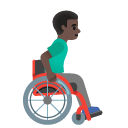
Appearance varies by platform and device. Google Noto, Twemoji, and OpenMoji are open-source.