🧎🏻♂️➡️
The Emoji
Man Kneeling Facing Right: Light Skin Tone
U+1F9CE U+1F3FB U+200D U+2642 U+FE0F U+200D U+27A1 U+FE0F · :man_kneeling_facing_right_light_skin_tone:
Trend 28
Meaning layers
- interpretation
- Used to humorously depict someone crawling, bowing out, retreating, or doing the 'walk of shame' in kneeling form. Also used for dramatic submission, begging, or prayer-walking memes.
- tiktok usage
- Appears in TikTok comments to signify someone dramatically crawling away from embarrassment or doing a comedic 'retreat' after being called out.
- irony level
- 7 / 10
Platform meanings
- meaning
- Represents someone dramatically retreating, crawling in shame, or kneeling in submission/defeat after being exposed or embarrassed.
- trend usage
- Appears in duet reactions and comment sections when someone gets roasted or has to admit defeat; paired with trending audio of dramatic music.
- hashtags
- #kneeling#crawlingback#defeated#shamewalk#submitking
- virality score
- 42 / 100
Cultural meanings
🇺🇸
Western / Gen-Z
Primarily used as a comedic or ironic emoji to signal retreat, groveling, or submission in online banter; the directional movement adds a 'walking away in shame' layer.
🇵🇰
Pakistan & India
May be interpreted in context of prayer or bowing in reverence, though younger audiences use it humorously for dramatic begging or submission in chat.
🌍
Middle East
The kneeling posture can evoke religious prostration (sujood), so some users may read this as a prayer-adjacent gesture; others in younger demographics use it humorously.
🌐
Global Neutral
Generally understood as a kneeling figure moving right, used to express submission, defeat, or humble retreat across most international contexts.
🇧🇩
Bangladesh
Younger users interpret it similarly to South Asian peers — either as a reverent bowing figure or humorous begging; less widespread compared to face-based emojis.
🇱🇰
Sri Lanka
May carry connotations of religious humility or physical prostration given cultural context; in youth culture, used for comedic submission in group chats.
🇨🇳
China
Less commonly used due to different emoji preferences; when used, may be associated with bowing in respect or leaving a situation humbly.
🇯🇵
Japan
The kneeling gesture resonates with Japanese cultural norms of bowing and showing respect; may be read as a deep apology or departure in humility.
🇰🇷
South Korea
Used in online communities to express deep apology (like the classic Korean bow) or comedically to show someone is groveling; K-pop fan communities might use it to express devotion.
🇹🇼
Taiwan
Interpreted similarly to broader East Asian contexts — humility, bowing, or retreat; online youth culture uses it for ironic submission or defeat.
🇭🇰
Hong Kong
In Cantonese internet culture, may be used humorously to say someone has been utterly defeated or is crawling away; also carries religious bowing connotations.
🇵🇭
Philippines
Used in Filipino group chats to humorously depict someone begging or groveling, often paired with exaggerated pleading messages.
🇮🇩
Indonesia
May connect to Islamic prostration imagery for some users; younger, secular users more likely to use it for comedic begging or retreat scenarios.
🇹🇭
Thailand
The kneeling posture may evoke respect gestures in Thai culture; younger users adapt it for humor around submission or defeat in online spaces.
🇻🇳
Vietnam
Generally used for comedic effect in chat to show someone is begging or has been humbled; less tied to specific cultural rituals online.
🇲🇾
Malaysia
Similar to Indonesian interpretation — dual reading of reverent bowing versus comedic defeat depending on audience age and context.
🇸🇦
Saudi Arabia
Kneeling imagery is closely associated with Islamic prayer (sujood); this emoji may be interpreted religiously by some, while youth use it for dramatic humor.
🇦🇪
UAE
In the cosmopolitan UAE context, interpreted both through an Islamic prayer lens by some and as a comedic submission emoji by the internationally influenced youth demographic.
🇪🇬
Egypt
May evoke prayer or humility in religious contexts; in secular or younger online Egyptian communities, used to mock someone backing down or groveling.
🇹🇷
Turkey
Used in Turkish social media to signal someone has been humbled or is retreating from an argument; occasionally tied to cultural gestures of deep respect.
🇮🇷
Iran
Can carry religious connotations of prostration; in secular online spaces among younger Iranians, used humorously to signal defeat or crawling away.
🇳🇬
Nigeria
In Nigerian internet culture (Naija Twitter/TikTok), used to humorously indicate that someone has been embarrassed and is retreating; pairs well with 'ment' and shaming meme formats.
🇿🇦
South Africa
Used across South African social media to signal comedic defeat or groveling; resonates in both English and local-language youth communities.
🇬🇧
UK & Ireland
Fits well into British and Irish dry humor — used to sarcastically suggest someone is crawling away in shame or groveling dramatically after a mistake.
🇫🇷
France
Used in French internet spaces to signal self-deprecating submission or defeat; less common than other emojis but understood in ironic humor contexts.
🇩🇪
Germany
Practical interpretation: someone kneeling and moving — used humorously for retreat or submission; German online culture applies it in straightforward sarcastic defeat scenarios.
🇪🇸
Spain & Italy
In expressive Southern European online culture, used dramatically for comedic begging or crawling back to someone; fits the theatrical communication style well.
🇧🇷
Brazil
Brazilian internet culture embraces exaggerated reaction emojis; this one is used for dramatic crawling-back-to-ex or groveling meme formats with high comedic energy.
🇲🇽
Mexico
Used in Mexican social media to humorously depict someone begging or backing down; pairs with self-deprecating humor common in Mexican meme culture.
🌎
Latin America
Across Latin America, the emoji signals dramatic submission or retreat — fitting for the emotionally expressive and meme-heavy communication styles of the region.
🇦🇺
Australia & NZ
Used in Aussie and Kiwi online spaces for dry-humor retreat or 'yeah nah I'm out on my knees' jokes; fits the self-deprecating, irreverent humor style of the region.
How its meaning shifted
- 2010
This emoji did not exist in 2010; kneeling and directional emoji variants were not yet part of Unicode.
- 2015
Still not available; basic kneeling emojis had not yet been introduced to Unicode at this time.
- 2020
Directional kneeling emojis were newly introduced or in development; usage was minimal and experimental, mostly by emoji enthusiasts.
- 2026
Established in niche meme culture and Gen Z communication for signaling retreat, defeat, or comedic submission; recognized across major platforms though still relatively specialized.
See it on every platform
Compare with
Adjacent emojis
- Often confused with
- person in lotus positionperson bowingperson gesturing no
- Can replace
- folded handsman kneelingperson facepalming
Share & embed
Frequently asked
01What does the 🧎🏻♂️➡️ Man Kneeling Facing Right: Light Skin Tone emoji mean?
A man with light skin tone kneeling and facing to the right, indicating movement or direction while in a kneeling position.
02What does 🧎🏻♂️➡️ mean on TikTok?
Represents someone dramatically retreating, crawling in shame, or kneeling in submission/defeat after being exposed or embarrassed.
03What does 🧎🏻♂️➡️ mean on WhatsApp?
Begging or pleading in a casual, humorous way; 'please I'm on my knees going towards you'.
04What does 🧎🏻♂️➡️ mean in Gen-Z slang?
Used to humorously depict someone crawling, bowing out, retreating, or doing the 'walk of shame' in kneeling form. Also used for dramatic submission, begging, or prayer-walking memes.
05Is the 🧎🏻♂️➡️ emoji safe to use?
Represents a kneeling male figure facing right; commonly used for submission, humility, retreat, or comedic begging.
06What does 🧎🏻♂️➡️ mean in texting?
The kneeling posture universally signals subordination or supplication; the rightward direction adds a sense of motion or departure, evoking shame-walking or reluctant retreat.
07What is the shortcode for 🧎🏻♂️➡️?
The shortcode for Man Kneeling Facing Right: Light Skin Tone is :man_kneeling_facing_right_light_skin_tone:
08What does 🧎🏻♂️➡️ mean in dating?
Sent to signal playful submission to a crush — 'I'd kneel for you' — or as a flirty way to beg for attention or a date.
Safety & usage
- Safe meaning
- Represents a kneeling male figure facing right; commonly used for submission, humility, retreat, or comedic begging.
- Caution
- Could theoretically be used in harassment contexts to mock someone being 'forced to kneel' in a degrading or humiliating way.
Generally safe; minimal misuse potential. In very rare cases may be combined with other emojis to imply forced submission in a bullying context — monitor in harassment-heavy threads.
How it looks across platforms
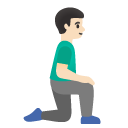
Appearance varies by platform and device. Google Noto, Twemoji, and OpenMoji are open-source.