🧎🏽♂️➡️
The Emoji
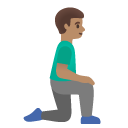
Man Kneeling Facing Right: Medium Skin Tone
U+1F9CE U+1F3FD U+200D U+2642 U+FE0F U+200D U+27A1 U+FE0F · :man_kneeling_facing_right_medium_skin_tone:
Trend 38
Meaning layers
- interpretation
- Used to depict someone bowing out, submitting, or moving on in a specific direction — often paired with other emojis to tell a story of defeat, humility, or dramatic exit. Also used humorously to show 'leaving the situation on my knees.'
- tiktok usage
- Appears in skits and video captions where someone is dramatically crawling or kneeling away from a bad situation, a breakup, or an embarrassing moment.
- irony level
- 6 / 10
Platform meanings
- meaning
- Symbolizes a dramatic exit, submission, or crawling away from chaos. Often used in trending skits about escaping awkward or painful situations.
- trend usage
- Appears in comment sections of videos about relationship drama, work stress, or social embarrassment — 'me leaving that conversation 🧎🏽♂️➡️'
- hashtags
- #dramaqueenexit#kneeling#leavingthescene#relatablehumor#emojistorytime
- virality score
- 42 / 100
Cultural meanings
🇺🇸
Western / Gen-Z
Commonly used as a comedic shorthand for surrender, begging, or dramatically exiting a situation — fits neatly into Gen Z's ironic emoji storytelling style.
🇵🇰
Pakistan & India
May be interpreted as a gesture of humility or reverence, but also used humorously by younger users familiar with global emoji culture to depict surrender or groveling.
🌍
Middle East
Kneeling can carry connotations of prayer or submission in religious contexts, so this emoji may be interpreted with spiritual undertones by some users.
🌐
Global Neutral
Universally readable as a kneeling figure moving right, generally associated with humility, forward movement from a low position, or dramatic retreat.
🇧🇩
Bangladesh
Younger, internet-savvy users use it similarly to global Gen Z culture; older users might associate kneeling with respect or prayer postures.
🇱🇰
Sri Lanka
Interpreted through a lens of cultural humility and respect — kneeling is a gesture of reverence in many Sri Lankan traditions, so context matters greatly.
🇨🇳
China
Kneeling (跪) carries strong cultural weight — historically a sign of deep respect or submission. This emoji might be used sarcastically or cautiously given that connotation.
🇯🇵
Japan
Kneeling is associated with formal apology (dogeza) culture in Japan, so this emoji could carry sincere or ironic apologetic meaning in Japanese social media contexts.
🇰🇷
South Korea
Resonates with internet humor culture (짤 meme culture) as a comedic submission or begging gesture, often used humorously in KakaoTalk and Twitter/X spaces.
🇹🇼
Taiwan
Used similarly to broader East Asian emoji culture — kneeling can imply respect, apology, or dramatic surrender, often with ironic flair online.
🇭🇰
Hong Kong
In a politically and culturally layered context, kneeling imagery can carry protest or defiance connotations alongside traditional humility meanings.
🇵🇭
Philippines
Used in meme and humor culture to depict someone defeated or begging; Filipinos' rich emoji storytelling culture embraces this for comedic relationship content.
🇮🇩
Indonesia
Interpreted through Islamic and Javanese cultural lenses where kneeling shows deference; younger users repurpose it for humor and online banter.
🇹🇭
Thailand
Kneeling has strong associations with deference to royalty and religion in Thai culture, making this emoji potentially more serious in tone than in Western usage.
🇻🇳
Vietnam
Used by younger Vietnamese netizens as a comedic defeat or surrender emoji, especially on TikTok and Facebook, which dominate social media there.
🇲🇾
Malaysia
Blend of Malay, Chinese, and Indian cultural interpretations — generally read as humility or defeat, used humorously in meme-heavy online spaces.
🇸🇦
Saudi Arabia
Kneeling in religious context (sujud) is deeply significant; this emoji is unlikely to be used casually and may be avoided to prevent cultural insensitivity.
🇦🇪
UAE
In a cosmopolitan digital culture, younger users familiar with global trends use it humorously, while traditional audiences may interpret it with religious or formal connotations.
🇪🇬
Egypt
Used among younger Egyptian internet users for humor about submission or defeat; older users might associate kneeling with prayer or deep respect.
🇹🇷
Turkey
Adopted in meme culture similarly to global usage — comedic defeat or begging, especially popular among younger Turkish social media users on Twitter/X and Instagram.
🇮🇷
Iran
Used cautiously; kneeling has religious and ceremonial significance, but younger Iranians in online spaces adopt it for ironic or humorous storytelling.
🇳🇬
Nigeria
Popular in meme and hustle culture contexts — 'kneeling before the grind' or dramatic defeat humor resonates with Nigeria's vibrant internet culture.
🇿🇦
South Africa
Used across diverse communities mostly in humor contexts — representing giving up, begging, or crawling through tough situations like load-shedding or life stress.
🇬🇧
UK & Ireland
Embraced with dry British humor — used ironically to represent groveling, submission to bureaucracy, or self-deprecating defeat in a very British way.
🇫🇷
France
Used somewhat sparingly; French digital culture tends toward verbal wit, but the emoji appears in meme spaces to signal dramatic surrender or theatrical submission.
🇩🇪
Germany
Interpreted straightforwardly as kneeling/submission; used in humor contexts but less frequently than in more emoji-heavy cultures.
🇪🇸
Spain & Italy
Used expressively and dramatically in keeping with Mediterranean communication styles — begging, surrender, or theatrical defeat all resonate strongly here.
🇧🇷
Brazil
Highly embraced in Brazil's meme-rich culture — kneeling away from a situation is perfect for the dramatic, expressive storytelling common on Brazilian Twitter and TikTok.
🇲🇽
Mexico
Used similarly to broader LATAM culture with flair and dramatic humor — represents begging, retreat, or comedic defeat in telenovela-level exaggeration.
🌎
Latin America
Across Latin America, this emoji fits well into expressive, dramatic online communication styles — deployed for humor, apology, begging, or retreating from chaos.
🇦🇺
Australia & NZ
Used with classic Australian and Kiwi irreverence — comedic defeat, crawling away from embarrassing situations, or self-deprecating humor about life's absurdities.
How its meaning shifted
- 2010
This specific emoji did not exist in 2010; kneeling and directional emoji variants had not yet been introduced to the Unicode standard.
- 2015
Still not available; basic emoji sets were being expanded but directional kneeling figures with skin tone modifiers were not yet part of the library.
- 2020
Kneeling emojis gained significant cultural resonance globally during the Black Lives Matter movement protests; directional variants began rolling out around this era.
- 2026
Fully integrated into Gen Z emoji storytelling — used in narrative emoji sequences, meme formats, and platform-specific trend contexts with medium skin tone representation celebrated.
See it on every platform
Compare with
Adjacent emojis
- Often confused with
- person kneelingman in lotus positionperson bowing
- Can replace
- man kneelingfolded handsperson bowing
Share & embed
Frequently asked
01What does the 🧎🏽♂️➡️ Man Kneeling Facing Right: Medium Skin Tone emoji mean?
A man with medium skin tone kneeling on one knee and facing to the right, representing a kneeling posture directed rightward.
02What does 🧎🏽♂️➡️ mean on TikTok?
Symbolizes a dramatic exit, submission, or crawling away from chaos. Often used in trending skits about escaping awkward or painful situations.
03What does 🧎🏽♂️➡️ mean on WhatsApp?
Used in personal chats to convey dramatic kneeling or begging, often in a humorous or self-deprecating way.
04What does 🧎🏽♂️➡️ mean in Gen-Z slang?
Used to depict someone bowing out, submitting, or moving on in a specific direction — often paired with other emojis to tell a story of defeat, humility, or dramatic exit. Also used humorously to show 'leaving the situation on my knees.'
05Is the 🧎🏽♂️➡️ emoji safe to use?
Represents a man kneeling and moving right — used for humility, apology, retreat, storytelling, or comedic defeat.
06What does 🧎🏽♂️➡️ mean in texting?
Kneeling facing right suggests forward movement despite vulnerability — psychologically associated with humble progression, surrender with dignity, or the act of crawling toward something better.
07What is the shortcode for 🧎🏽♂️➡️?
The shortcode for Man Kneeling Facing Right: Medium Skin Tone is :man_kneeling_facing_right_medium_skin_tone:
08What does 🧎🏽♂️➡️ mean in dating?
Rarely used for direct flirting, but can humorously suggest 'I'm on my knees for you' in a playful or submissive romantic gesture.
Safety & usage
- Safe meaning
- Represents a man kneeling and moving right — used for humility, apology, retreat, storytelling, or comedic defeat.
- Caution
- In rare contexts, could be used to mock someone being forced to submit or kneel in a demeaning power-dynamic conversation.
The kneeling gesture has become culturally and politically charged in some regions since 2020 due to protest imagery; use with contextual awareness. Generally safe but context-dependent.
How it looks across platforms
Appearance varies by platform and device. Google Noto, Twemoji, and OpenMoji are open-source.