🏋🏾♂️
The Emoji
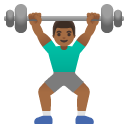
Man Lifting Weights: Medium-dark Skin Tone
U+1F3CB U+1F3FE U+200D U+2642 U+FE0F · :man_lifting_weights_mediumdark_skin_tone:
Trend 68
Meaning layers
- interpretation
- Used to flex gym dedication, signal a 'gym bro' identity, or ironically reference skipping leg day and toxic hustle culture aesthetics.
- tiktok usage
- Appears in gym check videos, 'no days off' content, before/after transformation posts, and ironically in lazy or couch content.
- irony level
- 5 / 10
Platform meanings
- meaning
- Represents gym culture, workout motivation, and physical transformation content.
- trend usage
- Appears in 'gym check,' 'POV: you started your training arc,' and before/after fitness transformation videos.
- hashtags
- #gymbro#trainingarc#gainz#liftinglife#nodaysoff
- virality score
- 72 / 100
Cultural meanings
🇺🇸
Western / Gen-Z
Core symbol of 'gym bro' culture and the 'training arc' meme; used both sincerely for fitness pride and ironically in self-deprecating humor.
🇵🇰
Pakistan & India
Widely used among urban youth to signal gym culture, masculinity, and self-improvement; growing fitness industry makes this increasingly common.
🌍
Middle East
Associated with gym culture that has boomed across Gulf states; represents masculinity, discipline, and health-conscious identity among young men.
🌐
Global Neutral
Universally understood as representing physical exercise, strength training, and athletic dedication across cultures.
🇧🇩
Bangladesh
Emerging gym culture in Dhaka's urban youth scene uses this emoji as a fitness status symbol; associated with aspirational lifestyle.
🇱🇰
Sri Lanka
Used among fitness-conscious urban youth; gym culture is growing and this emoji represents dedication to health and physical appearance.
🇨🇳
China
Popular in fitness communities on WeChat and Weibo; associated with 健身 (fitness) culture and the growing gym industry among young professionals.
🇯🇵
Japan
Used in fitness contexts but with the cultural nuance of discipline and self-improvement (自己鍛錬); less about showing off, more about personal growth.
🇰🇷
South Korea
Tied strongly to appearance culture and 'body management' (몸관리); used in gym selfie culture and K-pop idol workout aspirations.
🇹🇼
Taiwan
Common in fitness social media; associated with healthy lifestyle influencers and the growing gym culture in Taipei's urban areas.
🇭🇰
Hong Kong
Used in fitness contexts among gym-going professionals; represents the busy-but-fit lifestyle aspirational identity in urban HK.
🇵🇭
Philippines
Popular among gym-going youth as a status signal; tied to aspirational body image and the booming Philippine fitness industry.
🇮🇩
Indonesia
Used in fitness content across Instagram and TikTok; associated with urban gym culture and the aspirational healthy lifestyle movement.
🇹🇭
Thailand
Common in Muay Thai and general fitness content; represents physical discipline and the strong martial arts + gym culture tradition.
🇻🇳
Vietnam
Growing use alongside Vietnam's booming gym industry; younger generations use it to signal modern fitness-oriented lifestyles.
🇲🇾
Malaysia
Appears in fitness content across platforms; associated with gym culture that spans ethnic communities and is linked to healthy masculinity.
🇸🇦
Saudi Arabia
Very popular as gym culture has exploded post-Vision 2030 lifestyle reforms; strongly tied to masculine identity and modern Saudi youth culture.
🇦🇪
UAE
Heavily used in Dubai and Abu Dhabi fitness scenes; associated with luxury gym culture, wellness trends, and the aspirational expat lifestyle.
🇪🇬
Egypt
Used among Egyptian gym culture enthusiasts; associated with masculinity, physical strength, and the growing urban fitness movement.
🇹🇷
Turkey
Common in Turkish fitness communities; associated with masculine pride, gym dedication, and the popular bodybuilding culture in Turkish cities.
🇮🇷
Iran
Used in fitness contexts despite social restrictions; gyms are popular social spaces and this emoji signals health-conscious identity among youth.
🇳🇬
Nigeria
Popular among Lagos gym culture crowd; associated with physical fitness pride, masculinity, and the growing Nigerian fitness influencer scene.
🇿🇦
South Africa
Used across fitness communities; tied to CrossFit, rugby training culture, and the aspirational fit lifestyle in urban South African youth.
🇬🇧
UK & Ireland
Used sincerely for gym culture and ironically in British banter; 'gym lad' culture references and ironic flexes are both common.
🇫🇷
France
Associated with fitness and sport culture; used more straightforwardly in wellness contexts with less of the 'gym bro' irony seen in Anglophone contexts.
🇩🇪
Germany
Used in fitness and sport contexts with German practicality; associated with discipline, health-consciousness, and structured workout culture.
🇪🇸
Spain & Italy
Tied to Mediterranean culture around physical appearance and health; gym culture is prominent and this emoji signals an active, appearance-conscious lifestyle.
🇧🇷
Brazil
Strongly associated with the intense Brazilian gym and fitness culture; body image is culturally central and this emoji is widely used without irony.
🇲🇽
Mexico
Used in growing Mexican gym culture; associated with masculine strength, physical pride, and urban youth fitness identity.
🌎
Latin America
Broadly used across Latin America's expanding gym culture; represents physical dedication, masculine identity, and health aspirations.
🇦🇺
Australia & NZ
Used sincerely in 'gym sesh' culture and ironically in Aussie/Kiwi banter; fits into active outdoor lifestyle identity alongside traditional gym use.
How its meaning shifted
- 2010
Emoji did not exist; weightlifting imagery was used in text-based fitness forums without emoji representation.
- 2015
Introduced as part of expanded emoji set with skin tone modifiers; used straightforwardly to indicate gym activity or fitness posts.
- 2020
Exploded alongside pandemic home workout culture and fitness content boom; began developing ironic 'training arc' meme usage.
- 2026
Dual existence as sincere gym culture symbol and ironic meme shorthand for 'entering a self-improvement montage'; deeply embedded in fitness and hustle culture discourse.
See it on every platform
Adjacent emojis
- Often confused with
- construction workerman dancingsuperhero
- Can replace
- flexed bicepsperson runningfire
Share & embed
Frequently asked
01What does the 🏋🏾♂️ Man Lifting Weights: Medium-dark Skin Tone emoji mean?
A man with medium-dark skin tone performing a weightlifting exercise, typically depicted pressing a barbell overhead.
02What does 🏋🏾♂️ mean on TikTok?
Represents gym culture, workout motivation, and physical transformation content.
03What does 🏋🏾♂️ mean on WhatsApp?
Letting someone know you're at the gym or have been working out.
04What does 🏋🏾♂️ mean in Gen-Z slang?
Used to flex gym dedication, signal a 'gym bro' identity, or ironically reference skipping leg day and toxic hustle culture aesthetics.
05Is the 🏋🏾♂️ emoji safe to use?
Fitness, gym culture, exercise, physical strength, self-improvement, athletic dedication.
06What does 🏋🏾♂️ mean in texting?
Signals self-improvement drive and discipline; often tied to identity-building around physical achievement and masculine validation.
07What is the shortcode for 🏋🏾♂️?
The shortcode for Man Lifting Weights: Medium-dark Skin Tone is :man_lifting_weights_mediumdark_skin_tone:
08What does 🏋🏾♂️ mean in dating?
Used to signal physical fitness and attractiveness, implying 'I take care of my body' as a subtle flex in DMs or bios.
Safety & usage
- Safe meaning
- Fitness, gym culture, exercise, physical strength, self-improvement, athletic dedication.
- Caution
- Can be used in body-shaming contexts, toxic masculinity signaling, or to mock those who don't exercise.
Occasionally appears in steroid culture discussions or extreme body dysmorphia communities; generally safe but context-dependent.
How it looks across platforms
Appearance varies by platform and device. Google Noto, Twemoji, and OpenMoji are open-source.