🤽🏽♂️
The Emoji
Man Playing Water Polo: Medium Skin Tone
U+1F93D U+1F3FD U+200D U+2642 U+FE0F · :man_playing_water_polo_medium_skin_tone:
Trend 18
Meaning layers
- interpretation
- Used by Gen Z to flex athletic or sporty identity, often ironically to represent being 'in the deep end' of a situation, or genuinely to signal water sports enthusiasm.
- tiktok usage
- Appears in athlete POV content, sports highlight captions, or humorously when someone is overwhelmed — 'me trying to handle my life rn 🤽🏽♂️'
- irony level
- 4 / 10
Platform meanings
- meaning
- Symbol of athletic hustle, summer energy, or comedic chaos — used in sports vlogs, athlete challenges, or 'drowning in tasks' metaphor videos.
- trend usage
- Appears in 'day in my life as a water polo player' content, summer aesthetic compilations, and 'POV you're overwhelmed' trend captions.
- hashtags
- #waterpolo#athletelife#swimmer#summersports#poolday
- virality score
- 28 / 100
Cultural meanings
🇺🇸
Western / Gen-Z
Used casually as both a literal sports emoji and an ironic metaphor for chaotic effort, fitting Gen Z's love of self-deprecating sports humor.
🇵🇰
Pakistan & India
Relatively niche as water polo is not widely played; used mainly by urban youth familiar with global sports or in aspirational athletic content.
🌍
Middle East
Uncommon in everyday use; occasionally seen in international sports contexts, particularly during Gulf Games or regional aquatics events.
🌐
Global Neutral
Universally understood as a water sports emoji; safe for international sports communication without cultural misinterpretation.
🇧🇩
Bangladesh
Extremely rare in common usage; may be recognized by sports enthusiasts but holds no cultural resonance in everyday messaging.
🇱🇰
Sri Lanka
Mostly unfamiliar to general public; could appear in content by Sri Lankan athletes participating in Commonwealth or regional games.
🇨🇳
China
Water polo has a modest following; used by sports fans during major international competitions like the Asian Games or Olympics.
🇯🇵
Japan
Japan has a competitive water polo tradition; used by sports fans and athletes in aquatics-related content and team messaging.
🇰🇷
South Korea
Recognized in athletic communities, especially around Olympics; used in sports fan chats and youth sports culture.
🇹🇼
Taiwan
Niche usage in sports communities; occasionally seen in Olympic coverage discussions and aquatics enthusiast groups.
🇭🇰
Hong Kong
Used by sports-savvy users familiar with international athletics; appears in discussions around aquatic sports events.
🇵🇭
Philippines
Water polo is played but not mainstream; used mainly by competitive athletes and sports school communities.
🇮🇩
Indonesia
Limited mainstream resonance; occasionally seen in sports club communities or during international aquatics competitions.
🇹🇭
Thailand
Minimal everyday use; appears in content from athletic clubs, military sports programs, and SEA Games coverage.
🇻🇳
Vietnam
Rare in common usage; seen in sports forums during regional aquatics competitions or SEA Games discussions.
🇲🇾
Malaysia
Niche usage; appears in sports club messaging and during Commonwealth Games or SEA Games coverage.
🇸🇦
Saudi Arabia
Uncommon in casual use; may appear in elite sports circles given Saudi investment in international sports.
🇦🇪
UAE
Slightly more familiar due to Dubai's sports tourism culture; used in luxury athletic lifestyle content.
🇪🇬
Egypt
Limited usage in general population; Egypt has historical strength in water polo, so it appears among dedicated sports fans.
🇹🇷
Turkey
Turkey has an active water polo culture; used by sports communities and fans following national teams.
🇮🇷
Iran
Iran participates in international water polo; used in sports fan communities and during major tournaments.
🇳🇬
Nigeria
Very niche; water polo is not prominent, so this emoji rarely appears outside of international sports commentary.
🇿🇦
South Africa
Limited but present in swimming and water sports communities, particularly in Cape Town's active aquatics culture.
🇬🇧
UK & Ireland
Recognized in sports communities; used by water polo clubs, university sport teams, and Olympic coverage audiences.
🇫🇷
France
France has an active water polo scene; used by sports fans, especially around major European and Olympic competitions.
🇩🇪
Germany
Appears in German sports communities; water polo has a dedicated following and the emoji is used in club and fan messaging.
🇪🇸
Spain & Italy
Both countries have strong water polo traditions; the emoji is relatively well-recognized and used in sports fan circles and club content.
🇧🇷
Brazil
Brazil has a competitive water polo team; used in sports media, Olympic coverage, and aquatics community chats.
🇲🇽
Mexico
Niche usage; appears in sports university contexts and among fans following Pan American Games aquatics events.
🌎
Latin America
Generally low usage across Latin America with peaks during Pan American Games or Olympics coverage.
🇦🇺
Australia & NZ
Australia has a strong aquatics culture; used in sports communities, school sports programs, and Olympic coverage with genuine enthusiasm.
How its meaning shifted
- 2010
Emoji did not exist yet; water sports representation was limited to generic swim or wave emojis.
- 2015
Introduced as part of Unicode 8.0 sports expansion; primarily used literally by water polo players and sports enthusiasts.
- 2020
Gained minor ironic usage as 'out of my depth' or 'flailing' metaphor alongside growing Gen Z emoji creativity.
- 2026
Maintains niche athletic usage with a stable ironic secondary meaning; spikes during Olympic cycles and summer content seasons.
See it on every platform
Adjacent emojis
- Often confused with
- person rowing boatperson playing handballperson surfing
- Can replace
- person swimmingwater wavesport medal
Share & embed
Frequently asked
01What does the 🤽🏽♂️ Man Playing Water Polo: Medium Skin Tone emoji mean?
A man with medium skin tone playing water polo, depicted in the water and typically shown throwing or holding a ball.
02What does 🤽🏽♂️ mean on TikTok?
Symbol of athletic hustle, summer energy, or comedic chaos — used in sports vlogs, athlete challenges, or 'drowning in tasks' metaphor videos.
03What does 🤽🏽♂️ mean on WhatsApp?
Signals sporty activity, swimming plans, or is used humorously to say someone is 'all over the place' in a situation.
04What does 🤽🏽♂️ mean in Gen-Z slang?
Used by Gen Z to flex athletic or sporty identity, often ironically to represent being 'in the deep end' of a situation, or genuinely to signal water sports enthusiasm.
05Is the 🤽🏽♂️ emoji safe to use?
Represents water polo sport and athletic activity; completely benign and sports-positive.
06What does 🤽🏽♂️ mean in texting?
Reflects a sense of competitive drive and physical agency. Water sports often symbolize resilience — staying afloat under pressure — which makes this emoji psychologically layered beyond its literal meaning.
07What is the shortcode for 🤽🏽♂️?
The shortcode for Man Playing Water Polo: Medium Skin Tone is :man_playing_water_polo_medium_skin_tone:
08What does 🤽🏽♂️ mean in dating?
Used to hint at athletic physique, active lifestyle, or to subtly signal 'I look good in a pool' — often a humble brag in dating app bios.
Safety & usage
- Safe meaning
- Represents water polo sport and athletic activity; completely benign and sports-positive.
- Caution
- No known toxic usage patterns; the ironic 'flailing' metaphor is mild and self-deprecating at worst.
No significant misuse patterns documented. Skin tone modifier adds representation without controversy.
How it looks across platforms
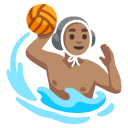
Appearance varies by platform and device. Google Noto, Twemoji, and OpenMoji are open-source.