🤷🏽♂️
The Emoji
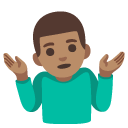
Man Shrugging: Medium Skin Tone
U+1F937 U+1F3FD U+200D U+2642 U+FE0F · :man_shrugging_medium_skin_tone:
Trend 85
Meaning layers
- interpretation
- The go-to emoji for 'not my problem,' 'I literally don't care,' or 'I have no idea and I'm unbothered about it.' Often used to signal detachment, low-key chaos energy, or passive refusal to engage with drama.
- tiktok usage
- Used in comment sections to dismiss discourse or in captions when creators do something chaotic and refuse to justify it. Frequently paired with 'idk idc' energy.
- irony level
- 7 / 10
Platform meanings
- meaning
- Signals unbothered energy, plausible deniability, or comedic confusion. Used when a creator does something unhinged and refuses to elaborate.
- trend usage
- Appears in POV videos, duets, and comment replies where the creator deliberately avoids explaining their actions. Also used in 'day in my life' captions to describe chaotic choices.
- hashtags
- #idk#notmyproblem#unbothered#shruglife#idontcare
- virality score
- 82 / 100
Cultural meanings
🇺🇸
Western / Gen-Z
Core emoji in digital vernacular — used constantly across all platforms to signal detachment, irony, or genuine confusion. Carries heavy cultural weight as the universal 'idk' symbol.
🇵🇰
Pakistan & India
Widely used in urban youth communication on WhatsApp and Instagram. Often deployed to avoid giving a direct opinion in social situations where neutrality is safer.
🌍
Middle East
Used in casual digital communication, particularly among younger generations on WhatsApp and Instagram. Can imply polite avoidance of a topic in culturally sensitive discussions.
🌐
Global Neutral
Universally understood as 'I don't know' or 'I don't care' — one of the most cross-culturally legible emojis due to the universal nature of the shrug gesture.
🇧🇩
Bangladesh
Common in youth WhatsApp groups and Facebook communication. Used to sidestep uncomfortable questions or to express genuine uncertainty in academic and social contexts.
🇱🇰
Sri Lanka
Frequently used among younger Sri Lankans on Facebook and WhatsApp to convey indifference or to avoid taking sides in family or community discussions.
🇨🇳
China
Less culturally dominant than native Chinese shrug equivalents, but used by younger, internationally connected users on platforms like WeChat and Weibo. Seen as a 'Western' expression of indifference.
🇯🇵
Japan
The shrug gesture is less traditionally Japanese, so the emoji is understood through global internet culture rather than local gesture norms. Used primarily by younger, globally connected users.
🇰🇷
South Korea
Popular among Korean youth influenced by global internet culture, particularly on KakaoTalk and Instagram. Often used in response to K-drama discourse or idol fan debates.
🇹🇼
Taiwan
Used casually in LINE and Instagram communication by younger Taiwanese users, primarily meaning 'not sure' or 'whatever.' Carries light-hearted rather than dismissive connotation.
🇭🇰
Hong Kong
Deployed in casual Cantonese digital communication as a visual shorthand for 'mo idea la' (no idea). Common in WhatsApp and Instagram among younger generations.
🇵🇭
Philippines
Very popular in Filipino digital communication — used extensively on Facebook, TikTok, and Twitter/X to express 'bahala na' (come what may) energy and genuine uncertainty.
🇮🇩
Indonesia
Common on Twitter/X and TikTok among Indonesian youth. Often used to sidestep opinionated discourse or to express indifference in a culturally non-confrontational way.
🇹🇭
Thailand
Used by Thai youth on Facebook and TikTok to express confusion or indifference. The laid-back 'mai pen rai' (never mind) cultural attitude aligns well with the shrug's energy.
🇻🇳
Vietnam
Popular among Vietnamese youth on Zalo and Facebook, used to signal 'không biết' (don't know) casually. Pairs well with the cultural tendency toward indirect communication.
🇲🇾
Malaysia
Widely used across Malaysian social media platforms in both Malay and English communication. Often conveys polite indifference or genuine ignorance without seeming rude.
🇸🇦
Saudi Arabia
Used by younger Saudis on Snapchat and Twitter/X, often to avoid direct opinions on sensitive topics. Carries plausible deniability value in restrictive social environments.
🇦🇪
UAE
Popular in the UAE's multicultural digital landscape across all nationalities. Used frequently in English-language social media to signal casual indifference or genuine confusion.
🇪🇬
Egypt
Common on Facebook and TikTok among Egyptian youth to express 'mesh aref' (I don't know) vibes. The shrug aligns with a culturally familiar gesture of resigned uncertainty.
🇹🇷
Turkey
Used widely on Twitter/X and Instagram by Turkish users to express indifference or to opt out of political or social debates. Carries strong 'whatever happens, happens' energy.
🇮🇷
Iran
Used by younger Iranians on Instagram (accessed via VPN) and Telegram to express detachment, often ironically in response to unpredictable social or political situations.
🇳🇬
Nigeria
Extremely popular in Nigerian Twitter and WhatsApp culture. Used in response to the constant unpredictability of daily life — pairs well with 'e don do' energy and Naija humor.
🇿🇦
South Africa
Common in South African digital communication across racial and language groups. Used to express genuine uncertainty or to humorously shrug off load-shedding and other national frustrations.
🇬🇧
UK & Ireland
Heavily ironic usage — the British/Irish tendency toward understatement makes this emoji a perfect vehicle for sardonic indifference. Frequently used in dry humor contexts.
🇫🇷
France
The Gallic shrug is a real cultural institution, making this emoji deeply resonant for French users. Used with genuine cultural pride to convey philosophical indifference.
🇩🇪
Germany
Used more literally and less ironically than in English-speaking cultures. German digital users deploy it for genuine uncertainty rather than sarcastic detachment.
🇪🇸
Spain & Italy
Highly relatable in cultures where the physical shrug is already an expressive part of communication. Used enthusiastically in casual WhatsApp and Instagram interactions.
🇧🇷
Brazil
Very popular in Brazilian digital culture on WhatsApp and TikTok. Often used humorously in response to Brazil's chaotic political and social landscape — 'what do you expect?'
🇲🇽
Mexico
Common in Mexican social media humor and casual conversation. Pairs well with fatalistic humor about daily life challenges — strong 'ni modo' (oh well) energy.
🌎
Latin America
Broadly resonant across Latin American digital culture as a universal expression of resignation, uncertainty, or comedic indifference to life's unpredictability.
🇦🇺
Australia & NZ
Used with heavy irony and dry humor, consistent with Australian/NZ laid-back cultural norms. Common response to overly serious discourse or surprising news.
How its meaning shifted
- 2010
The shrug emoji didn't exist yet — users relied on the text emoticon '¯\_(ツ)_/¯' which was already gaining popularity in internet forums and early social media.
- 2015
The base shrug emoji (🤷) was introduced in Unicode 9.0 in 2016, so 2015 usage was still primarily the text emoticon. Skin tone modifiers arrived shortly after in Unicode 10.0.
- 2020
Fully established as a core emoji in digital communication. Medium skin tone variant widely used for representation. Heavy usage across all platforms during COVID uncertainty and social media discourse.
- 2026
Remains a top-tier communication emoji with no signs of decline. Has evolved to carry increasingly nuanced ironic and passive-aggressive subtext, especially in Gen Z communication patterns.
See it on every platform
Adjacent emojis
- Often confused with
- woman shrugging medium skin toneperson gesturing okwaving hand
Share & embed
Frequently asked
01What does the 🤷🏽♂️ Man Shrugging: Medium Skin Tone emoji mean?
A man with medium skin tone raising both hands and shoulders in a shrug gesture, indicating uncertainty, indifference, or lack of knowledge.
02What does 🤷🏽♂️ mean on TikTok?
Signals unbothered energy, plausible deniability, or comedic confusion. Used when a creator does something unhinged and refuses to elaborate.
03What does 🤷🏽♂️ mean on WhatsApp?
Classic 'I don't know' or 'I don't care' in casual group chats and personal conversations. Very widely used across age groups.
04What does 🤷🏽♂️ mean in Gen-Z slang?
The go-to emoji for 'not my problem,' 'I literally don't care,' or 'I have no idea and I'm unbothered about it.' Often used to signal detachment, low-key chaos energy, or passive refusal to engage with drama.
05Is the 🤷🏽♂️ emoji safe to use?
Universally understood as a benign expression of uncertainty, indifference, or lack of knowledge. Safe in virtually all contexts.
06What does 🤷🏽♂️ mean in texting?
Psychologically, the shrug gesture signals a withdrawal of responsibility or investment. It can represent genuine uncertainty, learned helplessness, or a defensive mechanism to avoid vulnerability. In digital spaces it often masks stronger underlying emotions.
07What is the shortcode for 🤷🏽♂️?
The shortcode for Man Shrugging: Medium Skin Tone is :man_shrugging_medium_skin_tone:
08What does 🤷🏽♂️ mean in dating?
Used flirtatiously to seem laid-back and low-maintenance, like 'I'm easy-going, whatever you want.' Can signal nonchalance to appear mysterious or unattainable.
Safety & usage
- Safe meaning
- Universally understood as a benign expression of uncertainty, indifference, or lack of knowledge. Safe in virtually all contexts.
- Caution
- Can be weaponized as a dismissive non-answer in conflicts, implying the other person's concerns are not worth engaging with. Passive-aggressive when used to invalidate someone's feelings.
Overuse in relationship communication can signal emotional unavailability. In professional settings, repeated use may undermine credibility. Can come across as mocking when used in response to someone's genuine distress.
How it looks across platforms
Appearance varies by platform and device. Google Noto, Twemoji, and OpenMoji are open-source.