🚶🏿♂️
The Emoji
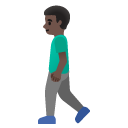
Man Walking: Dark Skin Tone
U+1F6B6 U+1F3FF U+200D U+2642 U+FE0F · :man_walking_dark_skin_tone:
Trend 68
Meaning layers
- interpretation
- Used to signal leaving a situation, unbothered confidence, or a casual 'I'm out' vibe. Often deployed when someone is done with drama or simply moving on without explanation.
- tiktok usage
- Appears in 'walking away' trend videos, POV skits where someone exits a toxic situation unbothered, and as a visual punctuation for 'not my problem' energy.
- irony level
- 4 / 10
Platform meanings
- meaning
- Symbolizes the unbothered walk-away, used in POV skits and trending 'leaving toxic situations' content. Also used in streetwear and Black culture celebration content.
- trend usage
- Appears heavily in 'walk away from negativity' motivational content, Black joy TikToks, and ironically in chaotic 'I'm just gonna go' moments.
- hashtags
- #unbothered#walkingaway#walkinginmypurpose#blackboyjoy#leavingthechat
- virality score
- 72 / 100
Cultural meanings
🇺🇸
Western / Gen-Z
Universally understood as the 'unbothered walk-away' — used to signal calm detachment from drama, toxic situations, or boring conversations. It's a badge of emotional maturity and coolness.
🇵🇰
Pakistan & India
Used more literally to indicate someone is going for a walk or heading out. Also gaining traction in urban youth culture as a 'I'm out of this drama' signal influenced by Western social media.
🌍
Middle East
Primarily interpreted as going for a walk or commuting; younger demographics influenced by global trends may use it to signal moving on from negativity.
🌐
Global Neutral
Universally readable as a person in motion — used across cultures to convey departure, movement, or an active lifestyle without strong cultural baggage.
🇧🇩
Bangladesh
Mostly literal in usage — signals someone is on the move or going for a walk. Less meme-coded than in Western contexts but understood in urban youth settings.
🇱🇰
Sri Lanka
Used to indicate being on foot, commuting, or going somewhere. Among English-speaking youth online, the 'moving on' connotation is increasingly recognized.
🇨🇳
China
Interpreted straightforwardly as walking or being on the move. The dark skin tone modifier is notable as skin tone diversity in emoji use is less emphasized in Chinese digital culture.
🇯🇵
Japan
Emoji culture in Japan tends toward literal interpretation — this signals walking, commuting, or a stroll. The skin tone variant may be less commonly selected due to default yellow emoji preference.
🇰🇷
South Korea
Primarily used to indicate physical movement or exercise. K-culture's emphasis on fitness gives it a positive, health-conscious connotation in casual contexts.
🇹🇼
Taiwan
Used literally for going for a walk or being in transit. Among globally connected youth, the 'unbothered departure' meaning has some recognition.
🇭🇰
Hong Kong
Interpreted as commuting or walking in a fast-paced urban context. Younger users familiar with English-language meme culture may use it sarcastically.
🇵🇭
Philippines
Used to signal being on the move or heading out. In Filipino internet culture, it's also used humorously to exit awkward conversations or group chats.
🇮🇩
Indonesia
Mostly literal — indicates someone is walking or on their way. Urban youth may use it to signal leaving drama, influenced by global TikTok trends.
🇹🇭
Thailand
Used to convey movement or being outside. Among Thai youth active on TikTok, the 'walking away from drama' usage is gaining familiarity.
🇻🇳
Vietnam
Primarily literal, conveying physical movement or daily commute. Younger Vietnamese users on international platforms recognize its meme context.
🇲🇾
Malaysia
Used to indicate heading out or being on foot. In Malaysian internet culture, it occasionally appears in multilingual group chats as a 'goodbye' or 'I'm done' signal.
🇸🇦
Saudi Arabia
Interpreted as physical movement or commuting. The representation of a dark-skinned man carries social sensitivity in some contexts; usage is generally literal.
🇦🇪
UAE
In the diverse, cosmopolitan UAE digital landscape, this emoji is used across communities. Expat and global communities use it with Western meme connotations while locals use it literally.
🇪🇬
Egypt
Used to signal walking, commuting, or leaving. In Egyptian meme culture, walking-away emojis have been adopted humorously to exit online arguments.
🇹🇷
Turkey
Primarily used to convey movement or being outdoors. Turkish youth familiar with global meme formats use it in the 'walking away from problems' context.
🇮🇷
Iran
Used straightforwardly to indicate walking or departure. Among internationally connected Iranian youth on platforms like Instagram, the 'unbothered' connotation is understood.
🇳🇬
Nigeria
Strongly resonates in Nigerian internet culture — the dark skin tone makes it a default choice. Used to signal confidence, forward movement, and Afrocentric pride alongside the 'I'm out' meme usage.
🇿🇦
South Africa
Widely used and culturally resonant, especially in Black South African digital spaces. Signals movement, confidence, and unbothered energy; commonly paired with slang like 'siyabona' culture.
🇬🇧
UK & Ireland
Used in line with global Gen Z meme culture — 'I'll just be off then' energy. The dark skin tone is actively chosen in diverse UK communities as a matter of representation.
🇫🇷
France
Used among French youth to signal departure or a nonchalant exit from online drama. In diverse French communities, the dark skin tone is appreciated for its representational value.
🇩🇪
Germany
Primarily used literally in German digital communication to signal walking or being active outdoors. Younger users with global internet exposure recognize its meme usage.
🇪🇸
Spain & Italy
Used to signal movement, heading somewhere, or taking a stroll — fitting the Mediterranean culture of leisurely walks. Among youth, the unbothered exit meme is also recognized.
🇧🇷
Brazil
Popular in Brazilian internet culture (especially on Twitter/X) as part of the 'saindo dessa' (getting out of this) meme format. The dark skin tone resonates strongly in Brazil's diverse, Afro-Brazilian communities.
🇲🇽
Mexico
Used to signal departure or moving on. In Mexican youth culture online, it's recognized in the 'walking away from drama' context, especially on TikTok and X.
🌎
Latin America
Broadly understood across Latin America as a departure signal. Resonates in Afro-Latino communities as both a practical and symbolic emoji of dignified forward movement.
🇦🇺
Australia & NZ
Used in line with global Gen Z meme culture for the unbothered exit. In Aboriginal and Pacific Islander communities in the region, the dark skin tone is actively and positively selected for self-representation.
How its meaning shifted
- 2010
This specific emoji did not exist in 2010. The base walking person emoji was available but skin tone modifiers were not yet part of Unicode standard.
- 2015
Introduced with Unicode 8.0's skin tone modifier system. Initially used almost exclusively for literal representation and diversity celebration — the joy of seeing oneself represented in emoji.
- 2020
Became embedded in meme culture, particularly in Black Twitter and TikTok communities, as a symbol of unbothered confidence and the dignified exit from drama or toxic situations.
- 2026
A multi-layered emoji carrying cultural weight — simultaneously a literal walking icon, a Black identity representation tool, a meme format for dignified departure, and a symbol of forward motion in personal growth content.
See it on every platform
Compare with
Adjacent emojis
Share & embed
Frequently asked
01What does the 🚶🏿♂️ Man Walking: Dark Skin Tone emoji mean?
A man walking facing left with dark skin tone, represented as a sequence of the man walking emoji combined with the dark skin tone modifier (Fitzpatrick Type 6).
02What does 🚶🏿♂️ mean on TikTok?
Symbolizes the unbothered walk-away, used in POV skits and trending 'leaving toxic situations' content. Also used in streetwear and Black culture celebration content.
03What does 🚶🏿♂️ mean on WhatsApp?
Signals that the sender is on their way, heading out, or literally going for a walk.
04What does 🚶🏿♂️ mean in Gen-Z slang?
Used to signal leaving a situation, unbothered confidence, or a casual 'I'm out' vibe. Often deployed when someone is done with drama or simply moving on without explanation.
05Is the 🚶🏿♂️ emoji safe to use?
A man walking, used to represent physical movement, commuting, leaving a place, or forward progress in life. Completely safe and positive in standard usage.
06What does 🚶🏿♂️ mean in texting?
The walking figure represents forward motion and autonomy — psychologically tied to themes of independence, boundary-setting, and deliberate movement away from stressors.
07What is the shortcode for 🚶🏿♂️?
The shortcode for Man Walking: Dark Skin Tone is :man_walking_dark_skin_tone:
08What does 🚶🏿♂️ mean in dating?
Rarely used as a flirt tool directly; may appear in a 'come walk with me' context or to suggest a casual date like a walk in the park.
Safety & usage
- Safe meaning
- A man walking, used to represent physical movement, commuting, leaving a place, or forward progress in life. Completely safe and positive in standard usage.
- Caution
- In very rare cases, could be used dismissively in targeted harassment to tell someone to 'walk away' or 'leave' a community, though this is uncommon and context-dependent.
The dark skin tone modifier is a representation choice that should be used thoughtfully — people of all backgrounds should feel free to use emojis that represent them. No significant misuse patterns documented.
How it looks across platforms
Appearance varies by platform and device. Google Noto, Twemoji, and OpenMoji are open-source.