🦽
The Emoji
Manual Wheelchair
U+1F9BD · :manual_wheelchair:
Trend 38
Meaning layers
- interpretation
- Used to signal exhaustion, being 'carried' by someone, or metaphorically needing help getting through something tough. Also used in disability advocacy contexts with genuine pride or awareness.
- tiktok usage
- Appears in 'struggle' content, disability representation videos, or ironically when someone says they're 'barely surviving' an event, class, or relationship.
- irony level
- 5 / 10
Platform meanings
- meaning
- Represents exhaustion, defeat, or dramatic suffering after a hard experience; also used sincerely in disability representation content.
- trend usage
- Appears in 'POV: you survived ___' videos, gym humor, and disability awareness campaigns under #DisabilityTikTok.
- hashtags
- #DisabilityTikTok#WheelchairLife#MeAfterLegDay#AccessibilityMatters#ChronicIllness
- virality score
- 42 / 100
Cultural meanings
🇺🇸
Western / Gen-Z
Primarily used ironically to express being metaphorically 'destroyed' by something, but also embraced genuinely within disability pride and advocacy communities.
🇵🇰
Pakistan & India
Used mainly in literal contexts related to disability, hospital situations, or prayer for someone's recovery; disability humor is less common digitally.
🌍
Middle East
Interpreted literally as a symbol of disability or medical need; used in awareness campaigns and to express sympathy for those with mobility challenges.
🌐
Global Neutral
Universally recognized as a symbol of manual wheelchair use and disability mobility; context determines whether usage is literal or humorous.
🇧🇩
Bangladesh
Used primarily in literal contexts referencing disability or medical assistance; disability representation in digital culture is growing but still emerging.
🇱🇰
Sri Lanka
Associated with disability awareness campaigns and hospital or rehabilitation contexts; occasionally appears in empathy-driven social media posts.
🇨🇳
China
Used on platforms like WeChat and Weibo to represent disability or accessibility; ironic usage is less prevalent due to cultural sensitivities around disability topics.
🇯🇵
Japan
Used respectfully in accessibility discussions and disability representation contexts; emoji culture in Japan tends toward literal interpretation for this symbol.
🇰🇷
South Korea
Appears in disability advocacy content and accessibility discussions; younger users on platforms like KakaoTalk may use it humorously in exhaustion contexts.
🇹🇼
Taiwan
Used in accessibility and disability rights conversations; younger Taiwanese users may adopt the ironic 'exhausted' usage seen in Western internet culture.
🇭🇰
Hong Kong
Common in disability awareness posts and medical contexts; bilingual internet culture means both ironic and literal uses coexist.
🇵🇭
Philippines
Used genuinely in disability support communities and prayer/sympathy messages; humor use is emerging among younger Filipino netizens.
🇮🇩
Indonesia
Appears in disability awareness content and hospital-related posts; occasionally used humorously in exhaustion contexts on Twitter and TikTok.
🇹🇭
Thailand
Used in medical and disability contexts; Thai social media users may adopt humorous exhaustion usage influenced by global meme culture.
🇻🇳
Vietnam
Primarily literal usage related to disability and healthcare; disability representation in Vietnamese digital spaces is growing steadily.
🇲🇾
Malaysia
Used in disability advocacy and accessibility discussions; younger Malaysians on TikTok may mirror Western ironic exhaustion usage.
🇸🇦
Saudi Arabia
Interpreted literally in most contexts relating to disability or medical care; used in charity and awareness campaigns for disabled communities.
🇦🇪
UAE
Appears in inclusive design and accessibility campaigns promoted by UAE government and NGOs; literal usage dominates with some ironic adoption among younger users.
🇪🇬
Egypt
Used mainly in disability support and sympathy contexts; Egyptian meme culture occasionally adopts it for dramatic exhaustion humor.
🇹🇷
Turkey
Used in disability awareness posts and medical discussions; Turkish Twitter (X) users may use it humorously in 'me after this argument' contexts.
🇮🇷
Iran
Appears in disability-related content and medical contexts; given platform restrictions, usage is more contained and primarily literal.
🇳🇬
Nigeria
Used in medical and disability awareness contexts; Nigerian Twitter culture may adopt it humorously in dramatic 'I'm finished' reactions.
🇿🇦
South Africa
Used in disability rights advocacy and accessibility discussions; humorous exhaustion usage is common among South African social media users.
🇬🇧
UK & Ireland
Widely used both literally in disability advocacy and sarcastically in British humor to describe being 'absolutely battered' by an experience.
🇫🇷
France
Used in disability representation and accessibility policy discussions; French internet users may use it ironically in dramatized exhaustion contexts.
🇩🇪
Germany
Appears in disability rights and accessibility content; German social media culture leans toward literal and professional usage of this emoji.
🇪🇸
Spain & Italy
Used in disability awareness campaigns and medical contexts; younger users in Spain and Italy may use it dramatically to signal exhaustion or defeat.
🇧🇷
Brazil
Frequently used in humorous 'me after [anything]' formats on Brazilian Twitter; also present in genuine disability advocacy and adaptive sports communities.
🇲🇽
Mexico
Used humorously and literally; Mexican internet culture embraces dramatic emoji usage, making this a common 'I'm wrecked' reaction emoji.
🌎
Latin America
Across Latin America, used both in disability solidarity content and comedic exhaustion memes, with variation by country and platform.
🇦🇺
Australia & NZ
Used in disability advocacy and accessibility discussions; Australians may also use it in dry humor contexts to describe being 'done in' by something.
How its meaning shifted
- 2010
Did not exist in Unicode; disability representation online was handled by the generic ♿ (wheelchair symbol) with very limited emoji vocabulary for disability topics.
- 2015
Still not available as an emoji; disability online communities were advocating for more inclusive emoji representation, relying on text and generic symbols.
- 2020
Newly introduced in 2019, the emoji began gaining traction in disability pride communities, accessibility advocacy, and early ironic meme usage about exhaustion.
- 2026
Firmly established in both genuine disability representation and internet humor culture; widely used in meme formats, Disability Pride Month campaigns, and adaptive sports communities globally.
See it on every platform
Adjacent emojis
Share & embed
Frequently asked
01What does the 🦽 Manual Wheelchair emoji mean?
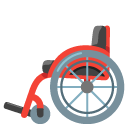
A manual wheelchair propelled by the user's own hands, depicted as a standard mobility device with large rear wheels and smaller front wheels.
02What does 🦽 mean on TikTok?
Represents exhaustion, defeat, or dramatic suffering after a hard experience; also used sincerely in disability representation content.
03What does 🦽 mean on WhatsApp?
Sent to express being completely worn out or to indicate a friend or family member uses a wheelchair.
04What does 🦽 mean in Gen-Z slang?
Used to signal exhaustion, being 'carried' by someone, or metaphorically needing help getting through something tough. Also used in disability advocacy contexts with genuine pride or awareness.
05Is the 🦽 emoji safe to use?
Represents disability, mobility aid usage, accessibility awareness, and disability pride in a positive and inclusive context.
06What does 🦽 mean in texting?
Evokes a dual emotional response — for some it signals solidarity and pride in the disability community, for others it may trigger empathy or awareness of physical limitation and human endurance.
07What is the shortcode for 🦽?
The shortcode for Manual Wheelchair is :manual_wheelchair:
08What does 🦽 mean in dating?
Rarely used in flirting contexts; could appear humorously after someone says they were 'destroyed' by a date or activity, e.g., 'you did that to me 🦽'.
Safety & usage
- Safe meaning
- Represents disability, mobility aid usage, accessibility awareness, and disability pride in a positive and inclusive context.
- Caution
- Can be used mockingly to demean or belittle someone with a disability, or weaponized as an insult implying weakness or helplessness.
Care should be taken not to use this emoji to mock disabled individuals or reduce disability to a punchline. Humor should never punch down at the disability community. Usage in political or policy debates should remain respectful.
How it looks across platforms


Appearance varies by platform and device. Google Noto, Twemoji, and OpenMoji are open-source.