👨🏻🤝👨🏿
The Emoji
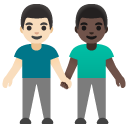
Men Holding Hands: Light Skin Tone, Dark Skin Tone
U+1F468 U+1F3FB U+200D U+1F91D U+200D U+1F468 U+1F3FF · :men_holding_hands_light_skin_tone_dark_skin_tone:
Trend 58
Meaning layers
- interpretation
- Used to celebrate interracial male friendships, bromances, or queer relationships. Often posted as a show of solidarity, allyship, or genuine affection between guys regardless of race or orientation.
- tiktok usage
- Appears in 'found my person' videos, diversity and inclusion content, and 'this is my bestie' type videos showing cross-racial friendships or couples.
- irony level
- 2 / 10
Platform meanings
- meaning
- Represents interracial male friendship or gay couple content, frequently used in wholesome or Pride-themed videos.
- trend usage
- Appears in duet videos, 'meet my best friend' reveals, Pride month compilations, and diversity storytelling content.
- hashtags
- #Pride#InterracialFriendship#Bromance#RepresentationMatters#LoveIsLove
- virality score
- 62 / 100
Cultural meanings
🇺🇸
Western / Gen-Z
Widely recognized as both a gay couple symbol and an interracial friendship icon; used freely and positively in progressive social spaces. Carries strong connotations of inclusivity and representation.
🇵🇰
Pakistan & India
Holding hands between men is traditionally non-romantic and a common sign of friendship, so many may read this as simple male camaraderie; the LGBTQ+ connotation is less prominent in mainstream usage but recognized by urban, globally connected youth.
🌍
Middle East
Male hand-holding is culturally normal as a friendship gesture, so the emoji may be interpreted innocuously; however, the known LGBTQ+ framing of the emoji globally makes it controversial in conservative contexts.
🌐
Global Neutral
Generally understood as a symbol of male solidarity, friendship, or partnership with an emphasis on cross-racial connection and diversity.
🇧🇩
Bangladesh
Likely interpreted as two male friends due to the cultural normalcy of male hand-holding; LGBTQ+ reading is uncommon in mainstream society but understood by globally connected youth.
🇱🇰
Sri Lanka
Similar to South Asian norms, male hand-holding is a platonic gesture, so the emoji is often read as close friendship rather than romantic partnership.
🇨🇳
China
May be seen as a friendship symbol by most users; the LGBTQ+ connotation is recognized in younger, cosmopolitan circles but is sensitive given social norms and platform censorship.
🇯🇵
Japan
Interpreted by many as close male friendship or a bromance; the queer reading is understood in LGBTQ+ communities but is not the default interpretation in broader society.
🇰🇷
South Korea
Younger generations familiar with LGBTQ+ discourse recognize its full meaning; broader society may read it as deep friendship or a 'broship,' common in Korean friendship culture.
🇹🇼
Taiwan
Taiwan's progressive stance on LGBTQ+ rights makes this emoji widely recognized and positively received as a symbol of gay couples or diverse male friendship.
🇭🇰
Hong Kong
Recognized in its full LGBTQ+ and diversity context among cosmopolitan youth; older or more conservative users may read it simply as friendship.
🇵🇭
Philippines
Often interpreted as close friendship or brotherhood; the LGBTQ+ community, which is vibrant in the Philippines, also uses it to represent gay relationships and solidarity.
🇮🇩
Indonesia
Primarily read as male friendship given cultural norms; LGBTQ+ usage is less visible publicly but exists within private and online queer communities.
🇹🇭
Thailand
Thailand's relatively tolerant attitude toward gender and sexuality means this emoji is often understood in both its friendship and romantic gay couple contexts.
🇻🇳
Vietnam
Male closeness is culturally normal, so many interpret this as friendship; younger and LGBTQ+ communities understand the broader connotations.
🇲🇾
Malaysia
Generally read as friendship due to cultural norms; the LGBTQ+ reading is sensitive given legal and social context but recognized in progressive urban circles.
🇸🇦
Saudi Arabia
Male hand-holding is common as a friendship gesture so the emoji may not immediately signal LGBTQ+ meaning; however, the known Western LGBTQ+ framing makes it contentious in public discourse.
🇦🇪
UAE
Similar to Saudi Arabia — male platonic hand-holding is normal, but the emoji's LGBTQ+ associations make public use sensitive in a country where homosexuality is criminalized.
🇪🇬
Egypt
Read primarily as friendship given cultural norms around male closeness; LGBTQ+ context is underground and sensitive given legal and social environment.
🇹🇷
Turkey
Younger, cosmopolitan Turks recognize the LGBTQ+ meaning; broader society may read it as close friendship, and political climate has made public LGBTQ+ expression increasingly sensitive.
🇮🇷
Iran
Mostly interpreted as male friendship due to social and legal context; underground LGBTQ+ communities recognize its full meaning but use it discreetly.
🇳🇬
Nigeria
Likely read as male friendship given cultural norms; LGBTQ+ interpretation is largely underground due to social and legal pressures, though recognized in diaspora and online spaces.
🇿🇦
South Africa
South Africa's constitution protects LGBTQ+ rights, making this emoji generally understood and positively used to represent gay couples or diverse male friendships.
🇬🇧
UK & Ireland
Widely recognized as a gay couple or interracial friendship symbol; used positively in LGBTQ+ and multicultural contexts with broad social acceptance.
🇫🇷
France
Understood in its full LGBTQ+ and diversity context; used in Pride content, diversity advocacy, and everyday expressions of male affection in a socially progressive culture.
🇩🇪
Germany
Recognized positively as a symbol of diverse male friendship or a gay couple; Germany's strong LGBTQ+ culture and diversity advocacy make it a well-received emoji.
🇪🇸
Spain & Italy
Spain has strong LGBTQ+ acceptance, making the emoji widely used positively; Italy has a more mixed reception, with younger generations embracing it and older/conservative communities less so.
🇧🇷
Brazil
Brazil's vibrant LGBTQ+ culture and large Pride celebrations make this emoji widely recognized and used positively, especially to represent interracial gay couples or friendships.
🇲🇽
Mexico
Recognized in LGBTQ+ contexts in progressive urban areas; machismo culture in some regions may lead to it being read simply as friendship or met with discomfort.
🌎
Latin America
Usage varies across the region — progressive urban centers in Argentina, Chile, and Colombia embrace it fully, while more conservative areas may read it as mere friendship.
🇦🇺
Australia & NZ
Both countries have strong LGBTQ+ acceptance, making this emoji used freely and positively to celebrate diverse male relationships and friendships.
How its meaning shifted
- 2010
This specific multi-skin-tone combination did not exist in 2010; basic same-sex couple emojis were just beginning to emerge, and skin tone modifiers were not yet available.
- 2015
Skin tone modifiers were introduced by Unicode 8.0 in 2015, but multi-person skin tone combinations were complex and not yet widely supported; usage was minimal and primarily by early adopters.
- 2020
By 2020, cross-skin-tone couple emojis gained broader platform support; usage increased significantly during the Black Lives Matter movement and COVID-era Pride celebrations emphasizing intersectionality.
- 2026
Fully normalized across major platforms; used regularly in Pride content, DEI advocacy, interracial relationship representation, and everyday friendship expression by globally connected users.
See it on every platform
Adjacent emojis
- Often confused with
- men holding hands medium light skin tonetwo men holding handshandshake
- Can replace
- red heartrainbow flagraised hands
Share & embed
Frequently asked
01What does the 👨🏻🤝👨🏿 Men Holding Hands: Light Skin Tone, Dark Skin Tone emoji mean?
Two men holding hands side by side, with the left figure having a light skin tone and the right figure having a dark skin tone, representing male friendship, partnership, or romantic connection across different skin tones.
02What does 👨🏻🤝👨🏿 mean on TikTok?
Represents interracial male friendship or gay couple content, frequently used in wholesome or Pride-themed videos.
03What does 👨🏻🤝👨🏿 mean on WhatsApp?
Signals close male friendship or a gay relationship between two men of different racial backgrounds.
04What does 👨🏻🤝👨🏿 mean in Gen-Z slang?
Used to celebrate interracial male friendships, bromances, or queer relationships. Often posted as a show of solidarity, allyship, or genuine affection between guys regardless of race or orientation.
05Is the 👨🏻🤝👨🏿 emoji safe to use?
A wholesome representation of male friendship, bromance, or a gay romantic couple with an emphasis on racial diversity and cross-cultural unity.
06What does 👨🏻🤝👨🏿 mean in texting?
Evokes a sense of unconditional acceptance and bond. The dual skin tone aspect amplifies feelings of cross-cultural connection and the breaking of social barriers, resonating deeply with themes of unity and belonging.
07What is the shortcode for 👨🏻🤝👨🏿?
The shortcode for Men Holding Hands: Light Skin Tone, Dark Skin Tone is :men_holding_hands_light_skin_tone_dark_skin_tone:
08What does 👨🏻🤝👨🏿 mean in dating?
Used by gay or queer men to hint at interest in or celebration of a relationship, particularly in interracial dating contexts. Can signal openness to interracial dating on profiles.
Safety & usage
- Safe meaning
- A wholesome representation of male friendship, bromance, or a gay romantic couple with an emphasis on racial diversity and cross-cultural unity.
- Caution
- Can be used mockingly in homophobic or racist contexts to demean or ridicule same-sex relationships or interracial pairings, though this usage is uncommon.
Generally safe and positive, but may be used provocatively in highly conservative or anti-LGBTQ+ spaces. The interracial component may also attract racist commentary in toxic online environments.
How it looks across platforms


Appearance varies by platform and device. Google Noto, Twemoji, and OpenMoji are open-source.