👨🏾🤝👨🏽
The Emoji
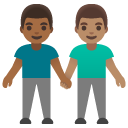
Men Holding Hands: Medium-dark Skin Tone, Medium Skin Tone
U+1F468 U+1F3FE U+200D U+1F91D U+200D U+1F468 U+1F3FD · :men_holding_hands_mediumdark_skin_tone_medium_skin_tone:
Trend 58
Meaning layers
- interpretation
- Used to celebrate gay/queer male relationships, brotherhood, allyship, or simply two guys who are ride-or-die friends. Gen Z uses it without hesitation for both romantic and platonic male bonds.
- tiktok usage
- Appears in queer couples content, Pride-related videos, bromance compilations, and commentary on male platonic affection being normalized.
- irony level
- 2 / 10
Platform meanings
- meaning
- Represents queer male love, interracial couples, Pride celebration, or deep male friendship depending on context.
- trend usage
- Featured in LGBTQ+ couple reveal videos, Pride month trends, 'normalize men showing affection' content, and interracial relationship positivity trends.
- hashtags
- #gaycouples#pridetok#queercouple#loveislove#normalizemalelove
- virality score
- 62 / 100
Cultural meanings
🇺🇸
Western / Gen-Z
Widely embraced as a natural symbol of queer love and male friendship; Gen Z uses it freely without stigma for both romantic and platonic male bonds across racial lines.
🇵🇰
Pakistan & India
Largely interpreted as two male friends given cultural norms around same-sex public displays of affection; male friends holding hands is common platonically, making the romantic reading less salient in mainstream usage.
🌍
Middle East
Generally read as close male friendship, which is culturally normal in many Middle Eastern countries; the romantic LGBTQ+ interpretation is largely avoided or unrecognized in conservative contexts.
🌐
Global Neutral
Universally readable as either close male friendship or a same-sex male couple; interpretation depends heavily on the cultural and contextual lens of the viewer.
🇧🇩
Bangladesh
Seen primarily as a symbol of close male friendship since platonic male physical affection is normalized; LGBTQ+ interpretation is rare in mainstream use.
🇱🇰
Sri Lanka
Interpreted mostly as a representation of close male friendship or brotherhood; LGBTQ+ connotation exists but is not the primary reading in most social contexts.
🇨🇳
China
Male friendship and brotherhood are the dominant interpretations; same-sex romantic reading exists among younger urban LGBTQ+ communities but is not mainstream.
🇯🇵
Japan
Read as either close male friendship or a gay couple depending on context; BL (Boys' Love) culture means some users associate it with romantic male pairings in fandom spaces.
🇰🇷
South Korea
Platonic male friendship is the dominant reading; however, younger progressive Koreans and K-pop fan communities may use it in queer romantic contexts.
🇹🇼
Taiwan
Taiwan's progressive stance on LGBTQ+ rights means this emoji is openly used to represent same-sex male couples and Pride; it carries both romantic and friendly meanings.
🇭🇰
Hong Kong
Used in both platonic male friendship and queer romantic contexts; progressive urban youth are more likely to use it in LGBTQ+ affirming ways.
🇵🇭
Philippines
Interpreted as close male friendship in mainstream use; the LGBTQ+ community actively uses it for gay couple representation, and Filipino culture's relative openness allows both readings.
🇮🇩
Indonesia
Predominantly read as male friendship; LGBTQ+ interpretation is present in underground or online queer communities but not mainstream due to conservative social norms.
🇹🇭
Thailand
Thailand's relatively visible LGBTQ+ culture means this emoji can comfortably represent gay male couples; friendship interpretation also common.
🇻🇳
Vietnam
Mostly read as close male friendship; among younger urban LGBTQ+ Vietnamese users it carries romantic connotations, but this is not the dominant mainstream interpretation.
🇲🇾
Malaysia
Given conservative legal and religious contexts, this is generally interpreted as male friendship; LGBTQ+ usage exists in private or online spaces.
🇸🇦
Saudi Arabia
Understood almost exclusively as close male friendship, which is culturally normalized; LGBTQ+ romantic interpretation is avoided due to strict social and legal norms.
🇦🇪
UAE
Read primarily as male friendship; in cosmopolitan expat communities a queer romantic reading may be understood, but publicly this would be interpreted conservatively.
🇪🇬
Egypt
Close male friendship is the dominant and socially acceptable interpretation; LGBTQ+ connotation is largely suppressed in public discourse.
🇹🇷
Turkey
Predominantly read as male friendship, which carries cultural normalcy; younger urban LGBTQ+ Turks may use it romantically but this is not the mainstream reading.
🇮🇷
Iran
Strictly interpreted as male friendship; any LGBTQ+ romantic connotation is culturally and legally sensitive and not part of mainstream emoji use.
🇳🇬
Nigeria
Generally read as male friendship or brotherhood; LGBTQ+ romantic interpretation exists among online progressive youth but is largely avoided in mainstream contexts.
🇿🇦
South Africa
South Africa's constitution protects LGBTQ+ rights, so this emoji can be used openly to represent gay male couples; both romantic and friendship readings coexist comfortably.
🇬🇧
UK & Ireland
Freely used to represent gay male couples, male friendship, Pride, and interracial relationships; LGBTQ+ reading is natural and widely accepted.
🇫🇷
France
Used openly for gay male couple representation and male friendship alike; French culture's relative acceptance of LGBTQ+ identities makes both readings mainstream.
🇩🇪
Germany
Openly represents gay male relationships and male friendship; Germany's strong LGBTQ+ rights culture ensures this emoji is used freely in both romantic and platonic contexts.
🇪🇸
Spain & Italy
Spain's progressive LGBTQ+ laws mean open romantic interpretation is common; Italy has a more mixed reception but urban progressive communities use it for queer couple representation.
🇧🇷
Brazil
Brazil's vibrant LGBTQ+ culture and large Pride events mean this emoji is enthusiastically used for gay couple representation alongside platonic male friendship contexts.
🇲🇽
Mexico
Used for both gay couple representation in LGBTQ+-affirming spaces and close male friendship; cultural machismo may affect mainstream interpretation but progressive youth use it openly.
🌎
Latin America
Interpretation varies across the region; in more progressive urban areas it reads as a gay couple symbol, while in conservative contexts it defaults to male friendship.
🇦🇺
Australia & NZ
Openly used to represent gay male couples, Pride, and close male friendship; strong LGBTQ+ rights culture in both countries makes queer reading natural and celebrated.
How its meaning shifted
- 2010
Emoji like this did not yet exist; same-sex couple emojis and skin tone modifiers had not been introduced, and representation of diverse couples in emoji form was absent.
- 2015
Basic same-sex couple emojis were being introduced; skin tone modifiers were new and the specific combination of skin tones for this emoji was being developed as part of Unicode diversity initiatives.
- 2020
Widely available and used across major platforms; seen frequently in Pride Month content, LGBTQ+ representation discussions, and increasingly normalized in everyday messaging among queer users and allies.
- 2026
Fully normalized across most major platforms; used freely in LGBTQ+ spaces, mainstream media, brand communications, and everyday conversation without the novelty factor it once had; interracial element adds additional representation significance.
See it on every platform
Compare with
Adjacent emojis
- Opposite
- broken heartno entrycollision
- Often confused with
- handshakemen holding hands medium skin tonepeople holding hands
Share & embed
Frequently asked
01What does the 👨🏾🤝👨🏽 Men Holding Hands: Medium-dark Skin Tone, Medium Skin Tone emoji mean?
Two men holding hands, depicted with medium-dark skin tone for the left figure and medium skin tone for the right figure, representing companionship, partnership, solidarity, or romantic same-sex relationships between men of these specific skin tones.
02What does 👨🏾🤝👨🏽 mean on TikTok?
Represents queer male love, interracial couples, Pride celebration, or deep male friendship depending on context.
03What does 👨🏾🤝👨🏽 mean on WhatsApp?
Sent between close male friends as a sign of brotherhood or used by gay couples to affirm their relationship in conversation.
04What does 👨🏾🤝👨🏽 mean in Gen-Z slang?
Used to celebrate gay/queer male relationships, brotherhood, allyship, or simply two guys who are ride-or-die friends. Gen Z uses it without hesitation for both romantic and platonic male bonds.
05Is the 👨🏾🤝👨🏽 emoji safe to use?
Represents love, friendship, partnership, solidarity, and LGBTQ+ Pride between two men of different skin tones.
06What does 👨🏾🤝👨🏽 mean in texting?
Represents the human need for connection and visible representation; seeing interracial same-sex couples depicted in emoji form can evoke strong feelings of validation, inclusion, and joy for those who identify with the representation.
07What is the shortcode for 👨🏾🤝👨🏽?
The shortcode for Men Holding Hands: Medium-dark Skin Tone, Medium Skin Tone is :men_holding_hands_mediumdark_skin_tone_medium_skin_tone:
08What does 👨🏾🤝👨🏽 mean in dating?
Used by gay or queer men to signal romantic interest, express couple goals, or hint at wanting a relationship with someone.
Safety & usage
- Safe meaning
- Represents love, friendship, partnership, solidarity, and LGBTQ+ Pride between two men of different skin tones.
- Caution
- Could theoretically be used mockingly in homophobic contexts by bad actors, though the emoji itself carries no inherently toxic meaning.
Content featuring this emoji may be hidden, suppressed, or flagged in regions or platforms with anti-LGBTQ+ policies; users in conservative or legally restrictive countries should be aware of potential social or legal sensitivities.
How it looks across platforms


Appearance varies by platform and device. Google Noto, Twemoji, and OpenMoji are open-source.