🧜🏿♂️
The Emoji
Merman: Dark Skin Tone
U+1F9DC U+1F3FF U+200D U+2642 U+FE0F · :merman_dark_skin_tone:
Trend 48
Meaning layers
- interpretation
- Used to express a deep connection to the ocean, a carefree or magical vibe, or as a way to claim an otherworldly, unbothered aesthetic. Also used humorously to describe being in your element or 'living in water' energy.
- tiktok usage
- Appears in ocean-themed POVs, fantasy edits, Black excellence mythological content, and 'main character' storytelling videos featuring water or sea aesthetics.
- irony level
- 4 / 10
Platform meanings
- meaning
- Represents mythical ocean energy, Black fantasy aesthetics, and main-character water vibes. Used in fantasy POVs and afro-futurism content.
- trend usage
- Frequently appears in #afrofantasy edits, ocean TikTok, water sign astrology content, and Black mythology appreciation videos.
- hashtags
- #afrofantasy#merman#oceanvibes#blackmythology#watersign
- virality score
- 55 / 100
Cultural meanings
🇺🇸
Western / Gen-Z
Embraced enthusiastically as a symbol of Black representation in fantasy and mythology — used in afro-futurism content and to reclaim mythological spaces for dark-skinned people.
🇵🇰
Pakistan & India
Less culturally resonant as a specific symbol; generally understood as a sea creature or fantasy figure, occasionally used in coastal or ocean-related contexts without deep cultural significance.
🌍
Middle East
Viewed primarily as a fantasy/mythology reference; in coastal regions like the Gulf, may be used casually for ocean content, though the mythological framing is more Western in context.
🌐
Global Neutral
Universally understood as a male sea creature figure; the dark skin tone is noted as a diversity inclusion marker, making it a positive symbol of representation globally.
🇧🇩
Bangladesh
Primarily interpreted as a sea or river creature reference given the country's strong water culture; the fantasy context is recognized but not deeply embedded in local mythology.
🇱🇰
Sri Lanka
Associated with ocean life given Sri Lanka's island identity; used casually for beach and sea content, though the specific merman mythology is more Western than local.
🇨🇳
China
Interpreted through the lens of Chinese mythology where sea creatures and dragon-like beings exist; the dark skin tone may be noted as a diversity element but the figure itself may be read as a foreign mythological concept.
🇯🇵
Japan
Connected to Japanese kappa and other water spirits in interpretation; appreciated in anime and fantasy communities as a dark-skinned mythological character, which is celebrated in diverse character art circles.
🇰🇷
South Korea
Popular in K-fantasy and webtoon communities where dark-skinned mythological characters are gaining visibility; used in fan art and fantasy content discussions.
🇹🇼
Taiwan
Used in fantasy fan communities and ocean-themed content; the dark skin tone is recognized as an inclusive representation choice and appreciated in progressive creative spaces.
🇭🇰
Hong Kong
Appreciated in urban pop culture and fantasy media contexts; used by ocean lovers and fantasy enthusiasts, with the skin tone recognized as a diversity statement.
🇵🇭
Philippines
Resonates well given the Philippines' rich ocean culture and indigenous sea mythology — this emoji can align with local sea-spirit folklore while also celebrating dark-skinned mythological representation.
🇮🇩
Indonesia
Connected to Indonesian sea mythology and ocean culture; the dark skin tone is particularly resonant given the diverse ethnic makeup of Indonesia and its strong maritime heritage.
🇹🇭
Thailand
Used in fantasy and ocean content; Thai mythology has its own water spirits (Naga), making this emoji interpretable through a local mythological lens as well.
🇻🇳
Vietnam
Generally used for ocean or water-related content; Vietnamese water mythology exists but the Western merman concept is more of a pop culture/fantasy reference here.
🇲🇾
Malaysia
Resonates in coastal communities and among fantasy fans; the dark skin tone is appreciated in a diverse, multicultural context where Malay, Chinese, and Indian communities interact.
🇸🇦
Saudi Arabia
Primarily used for ocean or sea content given Saudi Arabia's Red Sea and Gulf coastline; the mythological figure is understood as a fantasy/Western reference rather than local folklore.
🇦🇪
UAE
Used casually for sea and beach content by the diverse, cosmopolitan UAE population; the dark skin tone is noted positively in a country with significant South Asian and African diaspora communities.
🇪🇬
Egypt
Connected to ancient Egyptian mythology and the Nile's cultural importance; while mermen aren't core Egyptian mythology, the dark skin tone makes this emoji a point of cultural pride for Afrocentric communities in Egypt.
🇹🇷
Turkey
Used in fantasy and ocean content; Turkey's coastal culture makes ocean emojis broadly relatable, and the mythological figure is understood through a fantasy lens.
🇮🇷
Iran
Interpreted as a fantasy figure; Persian mythology has sea creatures, making this somewhat relatable, though the Western merman concept is primarily understood through global media.
🇳🇬
Nigeria
Strongly resonates as a symbol of Afro-mythology and cultural pride — connects to Yoruba water deity Yemoja and Mami Wata traditions, making this emoji deeply culturally significant.
🇿🇦
South Africa
Appreciated in creative and progressive communities as a symbol of Black representation in fantasy; connects to South Africa's ocean culture and growing afro-futurism movement.
🇬🇧
UK & Ireland
Used in beach, ocean, and fantasy contexts; the dark skin tone is recognized as an important diversity statement and is celebrated in Black British creative communities.
🇫🇷
France
Appreciated in diverse urban communities and fantasy fandoms; French Caribbean communities (Martinique, Guadeloupe) may find particular resonance with the dark-skinned sea figure.
🇩🇪
Germany
Used primarily in fantasy and ocean contexts; appreciated in diverse communities and among afro-futurism fans, though it remains a niche emoji in mainstream German digital culture.
🇪🇸
Spain & Italy
Used for beach, ocean, and fantasy content in coastal cultures; the dark skin tone is recognized as an inclusivity marker and is appreciated in Afro-European communities.
🇧🇷
Brazil
Strongly resonates in Brazil's rich Afro-Brazilian culture — connects to Iemanjá (goddess of the sea) and Candomblé water deities, making this emoji culturally significant for Afro-Brazilian communities.
🇲🇽
Mexico
Used for ocean and fantasy content; resonates in coastal communities and connects loosely to pre-Columbian water deity mythology, with the dark skin tone appreciated in Afro-Mexican communities.
🌎
Latin America
Broadly relatable across Latin America's coastal cultures and indigenous water mythology; particularly meaningful in countries with significant Afro-Latino populations like Colombia and Peru.
🇦🇺
Australia & NZ
Used casually for beach and ocean content in these surf-culture nations; the dark skin tone is celebrated as a diversity inclusion symbol, and Indigenous Pacific connections to ocean mythology add cultural depth.
How its meaning shifted
- 2010
This emoji did not exist in 2010 — Unicode had not yet introduced mythological creature emojis or skin tone modifiers, so no usage was possible.
- 2015
Still non-existent in 2015; the mermaid/merman emojis and systematic skin tone diversity options were not yet part of Unicode, though the groundwork was being laid.
- 2020
Newly available and gaining traction in afro-futurism, Black mythology appreciation, and ocean aesthetics communities; seen in early Black Lives Matter cultural conversations about representation in all spaces including fantasy.
- 2026
Established as a meaningful symbol in afro-fantasy, Black representation in mythology, and ocean culture content; frequently used in TikTok and Instagram afro-futurism aesthetics and by Gen Z creators celebrating dark-skinned mythological figures.
See it on every platform
Adjacent emojis
- Often confused with
- mermaidmerman medium skin toneperson swimming
- Can replace
- mermaidwater wavefish
Share & embed
Frequently asked
01What does the 🧜🏿♂️ Merman: Dark Skin Tone emoji mean?
A merman with dark skin tone — a mythological male half-human, half-fish creature depicted with a human upper body and a fish tail, rendered with the Fitzpatrick Type-6 dark skin tone modifier.
02What does 🧜🏿♂️ mean on TikTok?
Represents mythical ocean energy, Black fantasy aesthetics, and main-character water vibes. Used in fantasy POVs and afro-futurism content.
03What does 🧜🏿♂️ mean on WhatsApp?
Casual use to express a love for the ocean, a fantasy mood, or to describe someone who is 'in their element' near water.
04What does 🧜🏿♂️ mean in Gen-Z slang?
Used to express a deep connection to the ocean, a carefree or magical vibe, or as a way to claim an otherworldly, unbothered aesthetic. Also used humorously to describe being in your element or 'living in water' energy.
05Is the 🧜🏿♂️ emoji safe to use?
A positive, inclusive representation of a mythological sea being with dark skin — used to celebrate ocean culture, afro-fantasy, and diverse representation in mythology.
06What does 🧜🏿♂️ mean in texting?
This emoji taps into the human fascination with mythological beings and escapism. The dark skin tone adds a layer of cultural reclamation and visibility for Black and brown people in fantasy spaces, evoking empowerment and self-expression.
07What is the shortcode for 🧜🏿♂️?
The shortcode for Merman: Dark Skin Tone is :merman_dark_skin_tone:
08What does 🧜🏿♂️ mean in dating?
Used flirtatiously to imply being a mysterious, enchanting partner — someone who pulls you in like the sea. Can signal that someone sees themselves as irresistibly charming or untamed.
Safety & usage
- Safe meaning
- A positive, inclusive representation of a mythological sea being with dark skin — used to celebrate ocean culture, afro-fantasy, and diverse representation in mythology.
- Caution
- Extremely rare potential for misuse; could theoretically be used in racially charged contexts mocking Black mythological representation, though this is highly uncommon.
Generally a very safe emoji with no significant toxic usage patterns. The skin tone modifier makes it a symbol of inclusion rather than a target for abuse in most contexts.
How it looks across platforms
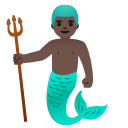
Appearance varies by platform and device. Google Noto, Twemoji, and OpenMoji are open-source.