🕐
The Emoji
One O’clock
U+1F550 · :one_oclock:
Trend 28
Meaning layers
- interpretation
- Used ironically to mark specific moments, deadlines, or 'the time has come' energy. Also used in 'it's giving [time] o'clock' constructions meaning a vibe or aesthetic.
- tiktok usage
- Appears in 'main character' countdown videos, chaotic scheduling jokes, or 'it's [something] o'clock' trend implying it's time for a particular behavior or mood.
- irony level
- 6 / 10
Platform meanings
- meaning
- Signals a specific moment, countdown, or 'the time is NOW' energy in video captions and comment sections.
- trend usage
- Used in 'it's giving [vibe] o'clock' trend and countdown-to-chaos videos; also marks timestamps in multi-part story content.
- hashtags
- #oclock#timecheck#maincharacter#countdownvibes#chaosoclock
- virality score
- 42 / 100
Cultural meanings
🇺🇸
Western / Gen-Z
Used ironically in 'it's [vibe] o'clock' constructions and as a chaos countdown marker in memes and social content.
🇵🇰
Pakistan & India
Primarily functional, used in WhatsApp and group chats to schedule calls, prayers, or meal times; Zuhr prayer falls near 1 PM adding mild religious resonance.
🌍
Middle East
Functional scheduling use; in some Gulf contexts the 1 PM hour marks post-prayer rest or lunch, lending it a routine daily significance.
🌐
Global Neutral
Universally understood as representing 1 o'clock; used cross-culturally for scheduling and time communication without additional connotation.
🇧🇩
Bangladesh
Used in group chats for scheduling meetings, online classes, or family calls; straightforward time communication tool.
🇱🇰
Sri Lanka
Functional time marker used in professional and family messaging to coordinate 1 PM activities or appointments.
🇨🇳
China
Used on WeChat and other platforms to indicate meeting times; 1 PM is a common post-lunch work restart hour carrying productivity connotations.
🇯🇵
Japan
Associated with precision and punctuality culture; used to confirm exact meeting start times, reflecting Japan's emphasis on time discipline.
🇰🇷
South Korea
Used in KakaoTalk and Instagram to schedule meetups or mark content drop times; K-pop fandom culture uses it heavily for 1 PM album or teaser releases.
🇹🇼
Taiwan
Functional scheduling use in LINE and messaging apps; also appears in social media for content creators announcing afternoon live streams.
🇭🇰
Hong Kong
Commonly used in WhatsApp and Telegram to coordinate lunch meetings and afternoon work schedules.
🇵🇭
Philippines
Used in Facebook and Messenger to confirm sked (schedule) for group activities, online meetings, or social gatherings at 1 PM.
🇮🇩
Indonesia
Appears in WhatsApp and LINE chats for scheduling; 1 PM aligns with post-Zuhur prayer time, giving it mild daily routine significance in Muslim communities.
🇹🇭
Thailand
Used in LINE messaging to confirm meeting or activity times; also appears in content creator posts for announcing afternoon streams.
🇻🇳
Vietnam
Functional time marker in Zalo and Facebook Messenger; 1 PM is typical post-lunch return to work, making it a common productivity reference.
🇲🇾
Malaysia
Widely used in WhatsApp for scheduling; in Muslim-majority context 1 PM is close to Zuhur prayer time, adding mild spiritual-routine resonance.
🇸🇦
Saudi Arabia
Used for scheduling with awareness of prayer time proximity; functional in professional WhatsApp communication for afternoon meetings.
🇦🇪
UAE
Common in multicultural professional messaging to schedule 1 PM meetings; used across nationalities in a purely functional scheduling capacity.
🇪🇬
Egypt
Used in WhatsApp and social platforms for scheduling; in Egyptian informal chat culture it's often paired with 'inshallah' for loosely scheduled 1 PM plans.
🇹🇷
Turkey
Functional scheduling emoji in WhatsApp and Telegram; 1 PM aligns with Turkish lunch culture, making it a common lunchtime coordination symbol.
🇮🇷
Iran
Used in Telegram (widely popular in Iran) for scheduling; functional time communication with no significant secondary meaning.
🇳🇬
Nigeria
Used in WhatsApp for scheduling and reminders; in Nigerian meme culture occasionally used in 'time to [do something bold]' humor contexts.
🇿🇦
South Africa
Functional scheduling use across WhatsApp and Facebook; occasionally used humorously to reference 'lunchtime chaos' in workplace meme groups.
🇬🇧
UK & Ireland
Used for scheduling and time references; in British meme culture sometimes appears in dry humor about being perpetually late or passive-aggressive punctuality reminders.
🇫🇷
France
Primarily functional for scheduling; 1 PM (13h in 24-hour format common in France) is associated with the sacred lunch hour, lending it cultural weight around meal breaks.
🇩🇪
Germany
Strongly associated with punctuality — used to confirm precise meeting times; Germans use it in a literal, zero-ambiguity scheduling context.
🇪🇸
Spain & Italy
Used for scheduling though 1 PM is considered early for lunch in both cultures, sometimes used humorously to note 'only tourists eat at 1'.
🇧🇷
Brazil
Used in WhatsApp scheduling; in informal Brazilian chat culture may appear with irony since 1 PM is considered early and Brazilian time flexibility is culturally acknowledged.
🇲🇽
Mexico
Functional scheduling use in WhatsApp; culturally 1 PM is sometimes early for the Mexican lunch hour, occasionally used with light irony about timing.
🌎
Latin America
Broadly used for scheduling across Latin American WhatsApp culture; flexible time culture means the emoji is sometimes accompanied by a winking face acknowledging approximate timing.
🇦🇺
Australia & NZ
Functional scheduling use; in Australian meme culture occasionally appears in 'arvo' (afternoon) planning contexts or dry humor about midday productivity drops.
How its meaning shifted
- 2010
Purely functional Unicode clock symbol used in early smartphone messaging to indicate the time 1:00, with no cultural or ironic layer.
- 2015
Became more widely used across messaging apps as emoji keyboards standardized; still primarily functional for scheduling with minor decorative use.
- 2020
Began appearing in meme contexts and aesthetic content; TikTok and Instagram drove creative usage like 'chaos o'clock' and countdown culture.
- 2026
Fully absorbed into Gen Z irony lexicon with 'it's [X] o'clock' meme format thriving; dual existence as functional scheduler and cultural commentary tool.
See it on every platform
Emoji combinations
Adjacent emojis
- Often confused with
- one thirtytwelve oclocktimer clock
- Can replace
- alarm clockstopwatchcalendar
Share & embed
Frequently asked
01What does the 🕐 One O’clock emoji mean?
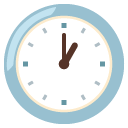
A clock face showing 1:00, representing the first hour of the clock cycle, used to indicate the time of one o'clock.
02What does 🕐 mean on TikTok?
Signals a specific moment, countdown, or 'the time is NOW' energy in video captions and comment sections.
03What does 🕐 mean on WhatsApp?
Directly used to indicate meeting time at 1 o'clock or to ask if someone is available at that hour.
04What does 🕐 mean in Gen-Z slang?
Used ironically to mark specific moments, deadlines, or 'the time has come' energy. Also used in 'it's giving [time] o'clock' constructions meaning a vibe or aesthetic.
05Is the 🕐 emoji safe to use?
A simple clock face indicating 1 o'clock used for time communication, scheduling, and mild meme culture.
06What does 🕐 mean in texting?
Clocks psychologically evoke time pressure and anticipation. The 1 o'clock position suggests a just-begun cycle, carrying a sense of fresh starts or early-stage urgency.
07What is the shortcode for 🕐?
The shortcode for One O’clock is :one_oclock:
08What does 🕐 mean in dating?
Sent late at night as a subtle 'it's 1 AM and I'm thinking about you' signal, often paired with other late-night emojis.
Safety & usage
- Safe meaning
- A simple clock face indicating 1 o'clock used for time communication, scheduling, and mild meme culture.
- Caution
- Extremely rarely misused; in some edge cases sent repeatedly as passive-aggressive harassment implying someone is perpetually late or wasting time.
No significant safety concerns. Extremely low risk of misuse or harmful interpretation across all platforms and demographics.
How it looks across platforms


Appearance varies by platform and device. Google Noto, Twemoji, and OpenMoji are open-source.