🕛
The Emoji
Twelve O’clock
U+1F55B · :twelve_oclock:
Trend 58
Meaning layers
- interpretation
- Used to signal 'it's that time' — often midnight energy, late-night chaos, or the witching hour vibe. Also used to indicate something is 'right on time' or at a pivotal moment.
- tiktok usage
- Appears in late-night TikTok content, 'what I do at midnight' trends, New Year countdown videos, and 'POV: it's 12am and I'm still awake' storytelling.
- irony level
- 4 / 10
Platform meanings
- meaning
- Represents midnight energy, late-night content creation, or countdown moments. Used heavily in New Year TikToks, 'midnight thoughts' series, and spooky/liminal content.
- trend usage
- Featured in 'it's 12am and I can't sleep' trends, New Year's Eve countdown overlays, Cinderella-themed transitions, and 'before midnight vs after midnight' duet formats.
- hashtags
- #midnight#12oclock#midnightvibes#newyearcountdown#latenightclub
- virality score
- 62 / 100
Cultural meanings
🇺🇸
Western / Gen-Z
Represents midnight energy, late-night social media activity, and New Year countdowns. Strongly associated with Cinderella metaphors and album drop culture.
🇵🇰
Pakistan & India
Used practically for scheduling and time references in chats. Also appears in New Year messages, midnight Eid celebrations, and late-night cricket match updates.
🌍
Middle East
Commonly used in scheduling contexts and Ramadan messaging, as Iftar and Suhoor times revolve around precise clock moments. Also used in New Year and celebration countdowns.
🌐
Global Neutral
Universally understood as a clock showing 12:00. Serves as a neutral, cross-cultural time marker for scheduling, deadlines, and event coordination.
🇧🇩
Bangladesh
Used in practical scheduling and New Year messaging. Also appears in late-night cricket or sports commentary and Eid celebration countdown messages.
🇱🇰
Sri Lanka
Commonly used for time references in messaging apps and appears in New Year (Sinhala/Tamil) celebration posts and religious event scheduling.
🇨🇳
China
Used in everyday time communication and prominently in Chinese New Year countdown content. The symmetry of 12 o'clock aligns aesthetically with balance concepts.
🇯🇵
Japan
Used precisely in scheduling — Japanese communication culture values exact time references. Also appears in New Year (Oshogatsu) midnight celebration content.
🇰🇷
South Korea
Common in scheduling messages and appears heavily in K-pop midnight album drop culture, where new releases at 12am midnight have become a major tradition.
🇹🇼
Taiwan
Used in scheduling and New Year countdown content. The midnight fireworks tradition makes this emoji especially visible during Taiwanese New Year celebrations.
🇭🇰
Hong Kong
Used in event scheduling and New Year countdown messaging. Also appears in midnight sale announcements popular in Hong Kong retail culture.
🇵🇭
Philippines
Prominently used in New Year's Eve messaging, as Filipino New Year traditions are intensely midnight-focused. Also used in late-night chat culture common among Filipino youth.
🇮🇩
Indonesia
Used in scheduling and appears in New Year messages. Also seen in late-night study culture posts and Idul Fitri celebration countdown content.
🇹🇭
Thailand
Used for time references and New Year countdowns. Appears in Songkran and international New Year celebration content shared on Thai social media.
🇻🇳
Vietnam
Featured in Tết (Lunar New Year) countdown content where midnight holds deep cultural significance. Also used in everyday scheduling and late-night chat communication.
🇲🇾
Malaysia
Used in practical scheduling and appears in New Year celebration content across multicultural Malaysian communities. Common in late-night mamak stall social media references.
🇸🇦
Saudi Arabia
Used in scheduling and appears in Ramadan content referencing the precise timing of prayers and Suhoor. New Year messaging uses it despite differing attitudes toward Gregorian New Year.
🇦🇪
UAE
Widely used in event scheduling and New Year's Eve countdown content, as Dubai's midnight fireworks are globally famous and heavily documented on social media.
🇪🇬
Egypt
Used in time references and appears in New Year messaging. Also seen in late-night Ramadan social content where midnight gatherings are culturally significant.
🇹🇷
Turkey
Used in scheduling and New Year (Yılbaşı) countdown messaging. Turkey's strong New Year celebration tradition makes midnight clock imagery very culturally resonant.
🇮🇷
Iran
Used in time references and appears in Nowruz (Persian New Year) content. The exact moment of the new year in Nowruz is astronomically calculated, giving precision clock imagery cultural weight.
🇳🇬
Nigeria
Used in New Year countdown messages and late-night social content. Also appears in church crossover night service posts where midnight prayer is a major tradition.
🇿🇦
South Africa
Used in New Year countdown content and scheduling. Midnight church services and braai (barbecue) traditions at New Year give the midnight clock emoji festive associations.
🇬🇧
UK & Ireland
Associated with New Year's Eve, pub closing time, and midnight deadlines. Also appears in Big Ben countdown content and late-night British meme culture.
🇫🇷
France
Used in scheduling and New Year réveillon celebration content. The French midnight dinner tradition gives 🕛 a festive, celebratory cultural context.
🇩🇪
Germany
Used very practically for scheduling — German communication culture values precision. Also appears in Silvester (New Year's Eve) countdown content and midnight fireworks posts.
🇪🇸
Spain & Italy
Associated with late-night culture — in Spain and Italy, midnight is practically 'early evening' socially. Used in nightlife content, New Year posts, and dinner reservation scheduling.
🇧🇷
Brazil
Strongly associated with New Year's Eve Reveillon celebrations on Copacabana Beach. The 🕛 emoji appears heavily in midnight countdown and celebration content.
🇲🇽
Mexico
Used in New Year countdown content and late-night festivity posts. Also appears in Nochevieja celebration messaging and midnight church attendance references.
🌎
Latin America
Generally associated with New Year celebrations, midnight family gatherings, and late-night social culture common across Latin American countries.
🇦🇺
Australia & NZ
Associated with New Year's Eve — Sydney and Auckland's midnight fireworks are among the world's first and most shared. Strong celebratory connotation for the emoji in this region.
How its meaning shifted
- 2010
Used almost entirely as a literal time indicator in early SMS and BBM messaging. Functional, not expressive — simply meant '12 o'clock appointment' or 'see you at noon/midnight.'
- 2015
Gained New Year's Eve cultural usage as smartphones became ubiquitous. Started appearing in countdown posts and midnight celebration selfies on early Instagram and Facebook.
- 2020
Became associated with midnight album drops (especially in K-pop and pop music), late-night TikTok content, and the 'midnight thoughts' trend that exploded during pandemic insomnia culture.
- 2026
Deeply embedded in midnight release culture, New Year content, late-night social media identity, and Cinderella-metaphor storytelling. Also used in AI scheduling interfaces and automated reminder systems.
See it on every platform
Emoji combinations
Adjacent emojis
- Opposite
- sunsunrisebright button
- Often confused with
- twelve oclock twostopwatchhourglass done
- Can replace
- crescent moonparty popperalarm clock
Share & embed
Frequently asked
01What does the 🕛 Twelve O’clock emoji mean?
A clock face showing 12:00, representing noon or midnight on an analog clock with both hands pointing straight up.
02What does 🕛 mean on TikTok?
Represents midnight energy, late-night content creation, or countdown moments. Used heavily in New Year TikToks, 'midnight thoughts' series, and spooky/liminal content.
03What does 🕛 mean on WhatsApp?
Simply indicates the time is 12 o'clock — either noon or midnight. Often used in scheduling messages or to note the time of sending.
04What does 🕛 mean in Gen-Z slang?
Used to signal 'it's that time' — often midnight energy, late-night chaos, or the witching hour vibe. Also used to indicate something is 'right on time' or at a pivotal moment.
05Is the 🕛 emoji safe to use?
A completely safe, neutral time indicator representing 12 o'clock used for scheduling, celebrations, and time-based expressions.
06What does 🕛 mean in texting?
The 12 o'clock position psychologically represents a turning point or threshold — midnight evokes mystery, endings, and new beginnings, while noon represents peak productivity or the apex of the day. It triggers temporal awareness and can amplify urgency or reflection.
07What is the shortcode for 🕛?
The shortcode for Twelve O’clock is :twelve_oclock:
08What does 🕛 mean in dating?
Sending 🕛 late at night is a soft signal — it says 'I'm up thinking about you' without being too forward. Often paired with '...' or a vague message.
Safety & usage
- Safe meaning
- A completely safe, neutral time indicator representing 12 o'clock used for scheduling, celebrations, and time-based expressions.
- Caution
- No inherently toxic usage. In extremely rare contexts, 'the clock strikes 12' could be used as a veiled threat metaphor, but this is not a recognized pattern.
No significant safety concerns. The emoji is universally benign and carries no known associations with hate speech, coded language, or harmful communities.
How it looks across platforms
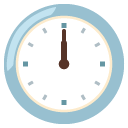


Appearance varies by platform and device. Google Noto, Twemoji, and OpenMoji are open-source.