⛹🏻
The Emoji
Person Bouncing Ball: Light Skin Tone
U+26F9 U+1F3FB · :person_bouncing_ball_light_skin_tone:
Trend 38
Meaning layers
- interpretation
- Used to flex athletic skills, signal a sporty identity, or hype up someone doing their thing on the court. Also used metaphorically to mean 'keeping things moving' or 'staying in my lane doing my thing.'
- tiktok usage
- Appears in sports highlight reels, gym motivation content, and aesthetic athlete edits. Sometimes dropped in comments to hype someone's hustle or skill.
- irony level
- 2 / 10
Platform meanings
- meaning
- Represents athletic energy, basketball culture, and sporty vibes. Often used in athlete POV content or gym motivation videos.
- trend usage
- Appears in sports edits, NBA highlights reactions, 'day in the life of an athlete' content, and fitness transformation videos.
- hashtags
- #basketballlife#sportyvibes#athletecheck#hoopsdaily#gymgrind
- virality score
- 42 / 100
Cultural meanings
🇺🇸
Western / Gen-Z
Represents basketball culture, which is deeply embedded in Gen Z identity in the West through NBA fandom, streetwear, and athletic aspiration. Used frequently and naturally.
🇵🇰
Pakistan & India
Basketball is a growing sport in urban areas of Pakistan and India. This emoji is used by urban youth involved in the sport, though cricket emojis dominate sports conversations.
🌍
Middle East
Basketball has a growing following in the Middle East, especially among youth in major cities. The emoji is used in sports contexts but is less dominant than football-related emojis.
🌐
Global Neutral
Universally understood as a basketball or sports-related emoji. Carries positive, energetic connotations regardless of cultural context.
🇧🇩
Bangladesh
Limited basketball culture means this emoji is used mainly by urban youth and those exposed to NBA content through social media and streaming platforms.
🇱🇰
Sri Lanka
Basketball is a niche sport in Sri Lanka; this emoji is occasionally used by school and university players but is uncommon in general conversation.
🇨🇳
China
Basketball is extremely popular in China due to the NBA's massive following. This emoji is widely recognized and used by a large fan base and active player community.
🇯🇵
Japan
Japan has a growing basketball culture especially since the NBA's expansion efforts and anime like Slam Dunk. Used with enthusiasm by fans and players alike.
🇰🇷
South Korea
Basketball has a solid following in South Korea. The emoji is used by sports fans and is also absorbed into general K-culture aesthetics around athleticism.
🇹🇼
Taiwan
Basketball is popular in Taiwan with an enthusiastic local league scene. The emoji is used naturally in sports contexts and by NBA fans.
🇭🇰
Hong Kong
Has an active basketball community and strong NBA fandom. The emoji is used in sports chats and by younger generations who follow American basketball culture.
🇵🇭
Philippines
Basketball is the national sport of the Philippines, making this one of the most culturally relevant sports emojis in the country. Used enthusiastically and frequently.
🇮🇩
Indonesia
Basketball is growing in Indonesia, particularly among urban youth. The emoji is used in sports communities and increasingly among NBA-following Gen Z users.
🇹🇭
Thailand
Basketball has a growing following in Thailand, especially with NBA broadcasts. The emoji is used in sports groups and among younger, internationally-connected users.
🇻🇳
Vietnam
Basketball interest is rising in Vietnam, particularly among urban youth. The emoji appears in sports content and among NBA fans on social media.
🇲🇾
Malaysia
Basketball is moderately popular in Malaysia. The emoji is used by players and fans, particularly in urban centers where the sport has a stronger following.
🇸🇦
Saudi Arabia
Basketball interest is growing in Saudi Arabia, especially with Vision 2030 sports development initiatives and NBA streaming access. Used by young sports fans.
🇦🇪
UAE
The UAE has a cosmopolitan sports culture where basketball is popular, especially in schools and among expat communities. The emoji is used openly in sports contexts.
🇪🇬
Egypt
Football dominates Egyptian sports culture, but basketball has a following. This emoji is used by the basketball community and NBA fans, particularly younger demographics.
🇹🇷
Turkey
Turkey has a strong basketball tradition with competitive leagues. The emoji is used enthusiastically by fans and players who follow both local and international basketball.
🇮🇷
Iran
Basketball has a following in Iran, particularly in urban areas. The emoji is used in sports contexts and among youth who follow NBA content via social media.
🇳🇬
Nigeria
Basketball is growing rapidly in Nigeria, boosted by NBA Africa initiatives and homegrown NBA stars. The emoji is used with pride and increasing frequency.
🇿🇦
South Africa
Basketball is growing in South Africa with increasing NBA exposure. The emoji is used by sports enthusiasts and the growing basketball player community.
🇬🇧
UK & Ireland
Basketball is gaining popularity in the UK, especially among urban youth influenced by American culture. The emoji is used in sports contexts and streetwear aesthetic content.
🇫🇷
France
France has a strong basketball tradition and produces many NBA players. The emoji is used naturally and enthusiastically within a well-established basketball culture.
🇩🇪
Germany
Germany has a solid basketball following with competitive leagues. The emoji is used in sports communities and by NBA fans, fitting into an active sports culture.
🇪🇸
Spain & Italy
Both countries have strong basketball traditions and competitive leagues. The emoji is used naturally in sports conversations alongside football-related content.
🇧🇷
Brazil
Basketball is popular in Brazil alongside football. The emoji is used by sports fans and players, with a growing NBA-following community especially among youth.
🇲🇽
Mexico
Basketball is growing in Mexico with NBA streaming popularity. The emoji is used in sports contexts and increasingly among younger fans who follow American basketball.
🌎
Latin America
Basketball has a growing presence across Latin America, driven by NBA content. The emoji is used in sports communities throughout the region with increasing frequency.
🇦🇺
Australia & NZ
Basketball is popular in Australia and New Zealand, supported by the NBL and NBA fandom. The emoji is used naturally in sports and active lifestyle content.
How its meaning shifted
- 2010
Barely existed in this form — skin tone modifiers weren't available yet. The base ⛹ emoji was new and used almost exclusively for literal basketball references.
- 2015
Skin tone variants were introduced (Unicode 8.0, 2015). Usage was still primarily literal — basketball players and sports fans adopted it to represent themselves more accurately.
- 2020
Usage expanded beyond literal basketball to signal athletic lifestyle, gym culture, and the 'sports aesthetic' that grew with fitness influencer culture on Instagram and TikTok.
- 2026
Now used broadly across athletic identity expression, motivational content, sports commentary, and metaphorically for 'staying in motion' or 'doing your thing.' Integrated into basketball culture social media language.
See it on every platform
Compare with
Adjacent emojis
- Often confused with
- person bouncing ball medium skin tonehandballvolleyball
- Can replace
- basketballflexed bicepsperson running
Share & embed
Frequently asked
01What does the ⛹🏻 Person Bouncing Ball: Light Skin Tone emoji mean?
A person dribbling or bouncing a basketball, shown with light skin tone modifier. Represents basketball, sports activity, athleticism, and physical fitness.
02What does ⛹🏻 mean on TikTok?
Represents athletic energy, basketball culture, and sporty vibes. Often used in athlete POV content or gym motivation videos.
03What does ⛹🏻 mean on WhatsApp?
Sending this in a chat typically means 'want to play basketball?' or 'I'm at the court' or simply expressing a sporty mood.
04What does ⛹🏻 mean in Gen-Z slang?
Used to flex athletic skills, signal a sporty identity, or hype up someone doing their thing on the court. Also used metaphorically to mean 'keeping things moving' or 'staying in my lane doing my thing.'
05Is the ⛹🏻 emoji safe to use?
Sports activity, basketball enthusiasm, athletic identity, fitness motivation, healthy active lifestyle.
06What does ⛹🏻 mean in texting?
Basketball and ball sports carry associations with teamwork, perseverance, and urban cool. The light skin tone adds a layer of personal identity representation, making the emoji feel more personalized and ownership-driven when used by lighter-skinned individuals.
07What is the shortcode for ⛹🏻?
The shortcode for Person Bouncing Ball: Light Skin Tone is :person_bouncing_ball_light_skin_tone:
08What does ⛹🏻 mean in dating?
Could be used to invite someone to a casual game, implying a sporty, active date suggestion. 'We should shoot hoops sometime ⛹🏻' reads as low-key flirty and approachable.
Safety & usage
- Safe meaning
- Sports activity, basketball enthusiasm, athletic identity, fitness motivation, healthy active lifestyle.
- Caution
- Minimal toxic usage potential. Could theoretically be used in racially charged sports stereotyping contexts online, though this is rare.
The skin tone modifier can occasionally be weaponized in racist sports stereotype contexts on fringe platforms, but this is uncommon. Generally a very safe emoji.
How it looks across platforms
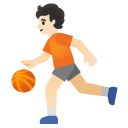


Appearance varies by platform and device. Google Noto, Twemoji, and OpenMoji are open-source.