⛹🏽
The Emoji
Person Bouncing Ball: Medium Skin Tone
U+26F9 U+1F3FD · :person_bouncing_ball_medium_skin_tone:
Trend 45
Meaning layers
- interpretation
- Used to signal athletic identity, gym culture, or hustle mentality. Also casually dropped when talking about staying active, playing pickup games, or flexing a sporty lifestyle. Sometimes used ironically for anyone trying too hard at something.
- tiktok usage
- Appears in sports highlight videos, fitness content, and pickup basketball edits. Sometimes used in caption text like 'just vibing ⛹🏽' to indicate casual athletic coolness.
- irony level
- 3 / 10
Platform meanings
- meaning
- Represents basketball culture, athletic energy, and sports content. Used in transition videos, sport highlight reels, and fitness motivation clips.
- trend usage
- Appears in trending sounds tied to basketball edits, 'day in my life as an athlete' vlogs, and POV sports content. Frequently paired with drill music edits.
- hashtags
- #basketball#ballislife#sportyvibes#hooper#activestyle
- virality score
- 52 / 100
Cultural meanings
🇺🇸
Western / Gen-Z
Represents basketball culture, athletic coolness, and hustle identity. The medium skin tone is seen as representative and inclusive, commonly used by mixed-race or Latino athletes and fans.
🇵🇰
Pakistan & India
Basketball is less dominant than cricket, but the emoji is used by urban youth who play or follow basketball, especially NBA fans. Represents modernity and an active lifestyle.
🌍
Middle East
Used by younger, urban populations who follow NBA and engage in basketball culture. Represents aspiration toward Western sports culture and physical fitness.
🌐
Global Neutral
Universally understood as a basketball or sports activity symbol. The skin tone modifier is generally interpreted as representing diversity without strong cultural specificity.
🇧🇩
Bangladesh
Primarily used by urban, educated youth familiar with NBA or international basketball. Signals a sporty, active identity somewhat distinct from mainstream cricket culture.
🇱🇰
Sri Lanka
Used by basketball-playing youth and NBA fans, representing an athletic niche identity. Less common than cricket-related emojis but growing with social media sports culture.
🇨🇳
China
Used among CBA and NBA fans, especially post-Yao Ming era basketball enthusiasm. Represents athletic aspiration and is popular in fitness and sports WeChat groups.
🇯🇵
Japan
Used in basketball club contexts and by NBA fans. Japan has a strong domestic basketball scene (B.League) so this emoji carries genuine sports meaning rather than ironic use.
🇰🇷
South Korea
Connected to rising Korean basketball culture and NBA fandom. Used by younger Koreans in sports contexts and occasionally by K-pop fans associating athletes with idol culture.
🇹🇼
Taiwan
Used by NBA fans and local basketball enthusiasts. Taiwan has a passionate basketball community so this emoji carries strong, sincere sporting connotations.
🇭🇰
Hong Kong
Common among NBA fans and local basketball players. Urban youth use it to signal athletic lifestyle within an active sports culture that includes street basketball.
🇵🇭
Philippines
Basketball is the national sport of the Philippines, making this one of the most culturally resonant sports emojis. Used constantly in basketball discussions, PBA fandom, and community games.
🇮🇩
Indonesia
Basketball culture is growing in Indonesia, particularly among urban youth. Used by NBA fans and local league followers, often paired with motivational content.
🇹🇭
Thailand
Used by Thailand's basketball community and NBA fans. Growing sports culture means this emoji is gaining popularity among younger, active social media users.
🇻🇳
Vietnam
Used by urban Vietnamese youth who follow NBA and international basketball. Represents a modern, active lifestyle and is part of growing sports culture on Vietnamese social media.
🇲🇾
Malaysia
Used in sports contexts with growing basketball popularity. Malaysian youth use it to represent athletic identity, and it appears in NBA fan communities and gym culture posts.
🇸🇦
Saudi Arabia
Used among male youth basketball players and NBA fans. Growing sports infrastructure in Saudi Arabia means basketball emojis are increasingly recognized and used.
🇦🇪
UAE
Popular in Dubai and Abu Dhabi's multicultural sports communities. Used by both expats and locals who engage with basketball and sports culture in the region.
🇪🇬
Egypt
Used by urban Egyptian youth who follow NBA and play basketball. Represents a niche but growing sports culture, often used in Cairo-based sports community content.
🇹🇷
Turkey
Turkey has a strong basketball tradition (BSL and EuroBasket), making this emoji genuinely meaningful in sports contexts. Used by Fenerbahçe, Anadolu Efes fans and national team supporters.
🇮🇷
Iran
Used by Iranian basketball fans and players, though basketball has a smaller footprint than football. NBA viewership among youth makes this emoji recognizable in sports communities.
🇳🇬
Nigeria
Nigeria has strong basketball roots with many NBA players, making this emoji culturally significant. Used by fans of players like Giannis-adjacent African talent and in Lagos sports communities.
🇿🇦
South Africa
Used in growing basketball communities and by NBA fans. The emoji is associated with urban youth sports culture and is gaining traction alongside rising local basketball leagues.
🇬🇧
UK & Ireland
Basketball is growing in the UK with the BBL. Used by NBA fans and local players, though football (soccer) emojis dominate sports contexts. Represents niche athletic identity.
🇫🇷
France
France has a rich basketball tradition with many NBA stars, making this emoji very relevant. Used extensively by fans of Tony Parker's legacy players and the French national team.
🇩🇪
Germany
Used in growing German basketball culture (BBL) and by NBA fans. Represents an athletic, modern identity and is part of the broader sports emoji vocabulary for German youth.
🇪🇸
Spain & Italy
Both countries have strong basketball cultures (ACB, Lega Basket) and NBA connections. This emoji carries genuine sporting weight and is used by fans of Gasol, Belinelli, and national teams.
🇧🇷
Brazil
Basketball is growing alongside Brazil's traditional football dominance. Used by NBA fans and participants in Brazil's NBB league, carrying an aspirational athletic identity.
🇲🇽
Mexico
Used in Mexico's growing basketball scene and by huge NBA fanbases in urban areas. Represents athletic identity and is popular in sports-adjacent lifestyle content.
🌎
Latin America
Across Latin America, basketball culture is growing rapidly, especially with NBA expansion outreach. This emoji represents urban youth athletic identity and is increasingly used in sports content.
🇦🇺
Australia & NZ
Australia has a strong basketball culture through the NBL and multiple NBA players. This emoji is used genuinely in sports contexts by fans and players, with medium skin tone resonating with multicultural communities.
How its meaning shifted
- 2010
Emoji did not exist in 2010. Sports activity emojis were limited and the concept of skin tone modifiers hadn't been introduced to the Unicode standard.
- 2015
Newly introduced with skin tone modifier support in Unicode 8.0. Early adoption was primarily by people appreciating the diversity-inclusive design. Usage was sparse and mostly literal.
- 2020
Established use in basketball culture on social media. Commonly found in NBA-related content, fitness posts, and athlete bios. Growing ironic use in 'playing games' metaphors.
- 2026
Mature emoji with stable, multi-layered usage. Integrated into basketball culture content, diversity-positive representation conversations, and athletic lifestyle branding. Ironic and metaphorical uses are well-established.
See it on every platform
Adjacent emojis
- Often confused with
- person playing handballperson cartwheelinghandball
- Can replace
- basketballperson runningflexed biceps
Share & embed
Frequently asked
01What does the ⛹🏽 Person Bouncing Ball: Medium Skin Tone emoji mean?
A person dribbling or bouncing a basketball, shown with medium skin tone (Fitzpatrick scale type 4). Used to represent basketball, sports activity, athleticism, and physical fitness.
02What does ⛹🏽 mean on TikTok?
Represents basketball culture, athletic energy, and sports content. Used in transition videos, sport highlight reels, and fitness motivation clips.
03What does ⛹🏽 mean on WhatsApp?
Telling someone you're heading to play basketball or are at the gym. Commonly used in group chats to organize pickup games.
04What does ⛹🏽 mean in Gen-Z slang?
Used to signal athletic identity, gym culture, or hustle mentality. Also casually dropped when talking about staying active, playing pickup games, or flexing a sporty lifestyle. Sometimes used ironically for anyone trying too hard at something.
05Is the ⛹🏽 emoji safe to use?
A person playing basketball or engaging in athletic activity. Completely safe, positive representation of sports and physical fitness.
06What does ⛹🏽 mean in texting?
Represents kinetic energy and physical expression. The act of bouncing a ball is associated with focus, rhythm, and controlled power — often evoking feelings of freedom and athletic identity.
07What is the shortcode for ⛹🏽?
The shortcode for Person Bouncing Ball: Medium Skin Tone is :person_bouncing_ball_medium_skin_tone:
08What does ⛹🏽 mean in dating?
Low direct flirt value, but can be used to show off an active lifestyle or invite someone to 'shoot hoops' as a casual date. Sometimes signals 'I'm fun and athletic, come play with me.'
Safety & usage
- Safe meaning
- A person playing basketball or engaging in athletic activity. Completely safe, positive representation of sports and physical fitness.
- Caution
- Rarely used toxically. In some contexts could be used to mock someone's athletic ability or imply someone is 'playing games' in a manipulative sense.
No significant safety concerns. The skin tone modifier (medium) is generally seen as inclusive and positive. No known use in hate speech or harmful contexts.
How it looks across platforms
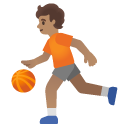


Appearance varies by platform and device. Google Noto, Twemoji, and OpenMoji are open-source.